

Call the number above now
Get connected to a licensed plumber for drain cleaning, 24/7.
Baking soda, vinegar, boiling water, salt, and dish soap: these work well for soft, recent clogs close to the drain opening — soap film, light grease, loose debris. They’re not effective against tree roots, collapsed pipes, heavy grease plugs, or a thick hair mass deep in the line, so know when to stop trying and call instead.
A slow sink or backed-up tub can derail your day fast. Most clogs don’t happen all at once — they build gradually as food scraps, soap residue, and hair collect inside the pipe, which is why catching the early signs matters.
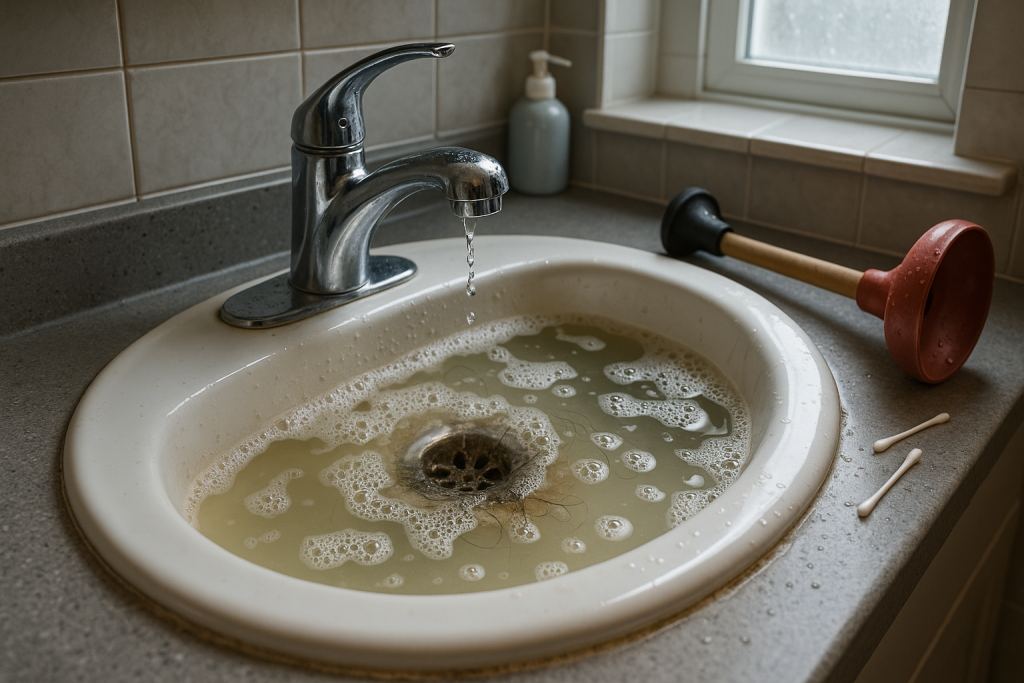
Early Signs Worth Watching
- Water drains slowly from one sink, tub, or shower
- Gurgling comes from the drain after water runs
- Odors rise from the opening
- Water pools around the drain before emptying
- A toilet bubbles when another fixture is used
- Multiple drains slow down at the same time
If the issue is limited to one fixture, a household remedy is often enough. If several fixtures are affected at once, the blockage may sit deeper in the system or connect to the sewer line — that’s a professional-service situation, not a repeat-the-remedy one.
Which Remedy Fits Which Problem
| Drain Issue | Best Home Remedy to Try | When to Stop and Call |
|---|---|---|
| Slow bathroom sink | Baking soda and vinegar | Water still pools after two attempts |
| Greasy kitchen sink | Dish soap and hot water | Water backs up or grease smell remains |
| Mild odor from drain | Baking soda followed by hot water | Odor returns quickly or smells like sewage |
| Tub draining slowly | Manual hair removal, then baking soda mix | Standing water remains after cleaning |
| Multiple clogged drains | Do not rely on home remedies | Call for plumbing support right away |
The Baking Soda and Vinegar Method
Start by removing visible debris around the opening, and scoop out any standing water so the mixture can actually reach the clog. Pour a half-cup of baking soda directly into the opening, follow with a cup of white vinegar, and cover the drain for 10 to 15 minutes while it fizzes.
Flush with boiling water if your pipes can handle it — for PVC, very hot tap water is usually the safer choice, especially in older plumbing. Run water for a minute to check the flow, and repeat once if the drain improves but is still slow. Don’t keep repeating past that; two rounds is the useful limit before you’re just wasting time while the real blockage sits there.
Grease, Hair, and Physical Removal
Greasy kitchen clogs respond better to a different mix — dish soap is built to break down oils, and salt adds light abrasion. Pour a half-cup of salt into the drain, add a generous amount of dish soap, let it sit 10 minutes, then slowly pour very hot water in and check the flow after a few more minutes.
For tubs and showers, remove hair first — no cleaner works well against a thick clump sitting right under the stopper. A zip-it tool or gentle drain snake handles this better than any chemical approach. After clearing visible hair, rinse and follow with the baking soda method to freshen the pipe.
A plunger can help when water is standing in the fixture — make sure there’s enough water to cover the cup, form a tight seal, and use steady pressure rather than force. If plunging causes water to rise in another fixture, stop; that points to a larger blockage than a plunger can fix.
What Not to Do
Never mix baking soda, vinegar, dish soap, or salt with chemical drain cleaners, bleach, or ammonia. The CPSC has documented severe skin and eye injuries from chemical drain cleaners on their own — many require federal hazard labeling and child-resistant packaging because of how caustic they are, and combining products can create dangerous fumes or unpredictable reactions on top of that risk.
Using too much force is another common mistake — aggressive plunging can splash dirty water or push pressure into another fixture, and forcing a drain snake can scratch pipes or get the tool stuck. If gentle cleaning doesn’t work, stop before it becomes a bigger repair. And don’t ignore a clog that clears then returns within days — that pattern usually means the buildup is deeper in the line than home remedies can reach.
Preventing the Next Clog
- Use strainers in kitchen and bathroom drains
- Throw food scraps in the trash, not the sink
- Keep grease and oil out of the drain entirely
- Remove hair from tub and shower strainers often
- Flush drains with hot water after heavy use
- Pay attention when a drain slows or starts to smell
Monthly maintenance helps too — a small amount of baking soda followed by a hot water rinse works better as a habit than as an emergency fix. If the same drain keeps slowing down despite this, there may be a pipe slope issue or deeper buildup that needs professional tools.
Frequently Asked Questions
How many times should I try the baking soda and vinegar method before giving up?
Two rounds is a reasonable limit. If the drain hasn’t meaningfully improved after that, the clog is likely too dense or too deep for this method, and repeating it further just delays the real fix.
Is it safe to use a plunger after trying baking soda and vinegar?
Yes, that’s a normal next step. Just make sure any standing chemical mixture has been flushed out first, and stop plunging if water starts rising in another fixture.
Can I combine dish soap with baking soda and vinegar for a stronger effect?
It’s better to use them separately for different problems — dish soap and hot water for grease, baking soda and vinegar for general buildup and odor. Mixing multiple products doesn’t add cleaning power and adds unpredictability.
If home remedies don’t clear it, Emergency Plumbing Squad connects you with a licensed plumber for drain cleaning, 24/7.
