Drain problems rarely fix themselves. A sink that empties slowly today can become a backed-up fixture tomorrow, especially when grease, hair, soap scum, food waste, or tree roots are already narrowing the pipe. Knowing the signs your drains need cleaning urgently can help you protect your home from overflow, sewage, water damage, and costly repair work.
The most common warning signs include slow water movement, recurring clogs, foul odors, gurgling noises, and standing water around a shower, tub, sink, or basement drain. Some symptoms point to a simple fixture clog. Others may signal trouble in the sewer line or a blockage affecting several parts of the plumbing system.
Emergency Plumbing Squad helps homeowners and property owners connect quickly with local plumbing professionals when a drain issue starts to look serious. If your drain keeps clogging, your shower is backing up, or several fixtures are draining poorly at once, Emergency Plumbing Squad can help connect you with professional drain cleaning services that may clear the blockage, reduce the chance of pipe damage, and restore safer flow through your plumbing.
Slow Sink Drains and Other Early Warning Signs
Slow sink drains are often the first sign that buildup is collecting inside the pipe. Water may still drain, but it takes longer than usual. You may notice the sink drain swirling slowly, bubbling near the opening, or leaving dirty residue behind after the basin empties.
A slow draining sink can happen in a bathroom, kitchen, laundry room, or utility area.
In bathrooms, hair, toothpaste, soap, shaving cream, and skin oils can cling to the inside of the pipe. In kitchens, grease, food scraps, coffee grounds, and detergent residue can create a sticky layer that traps particles over time. Once that layer grows thick enough, water has less room to pass.
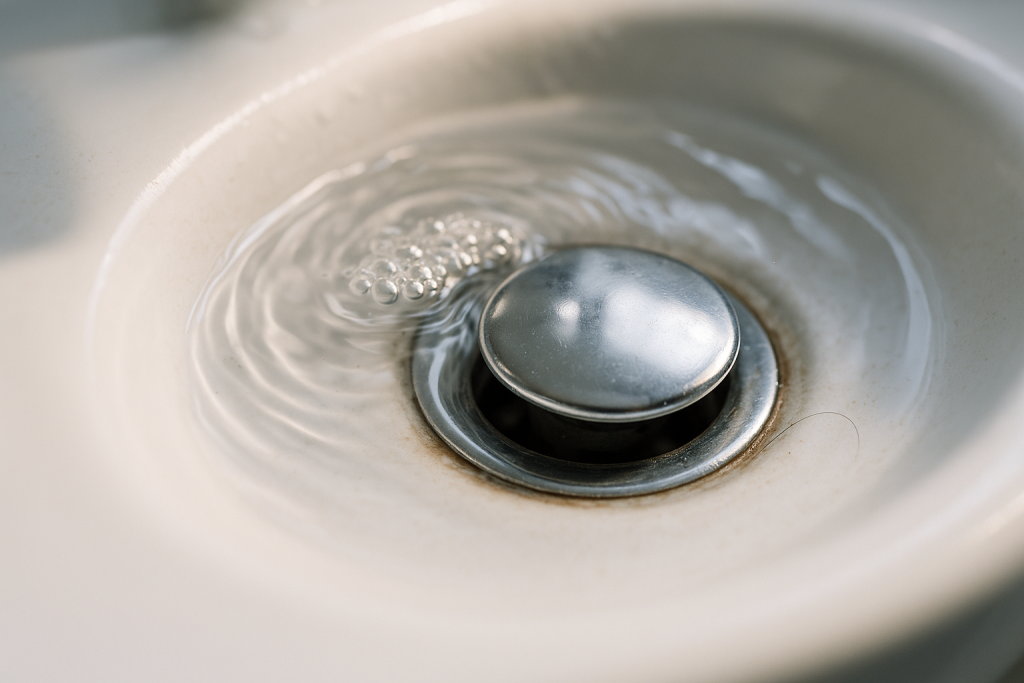
Slow-draining sinks or tubs should not be ignored when the problem keeps coming back. A single slow drain may point to a local clog near that fixture. Several slow drains throughout the home can point to a deeper plumbing issue that needs faster attention.
Watch for these early warning signs:
- Water takes longer to leave the sink, tub, or shower.
- The drain makes bubbling or sucking sounds after use.
- The same fixture needs plunging again and again.
- Water rises briefly before it finally drains.
- Bad smells come from the drain opening.
- A toilet, shower, or basement drain reacts when another fixture runs.
- Standing water appears where water usually clears fast.
These symptoms do not always mean a major plumbing emergency is happening right now, but they do mean the system is struggling. Prompt drain cleaning can stop a partial clog from turning into a full blockage.
What Each Drain Symptom May Mean
Not every drain problem has the same cause. Some clogs sit close to the fixture and may be caused by hair or food waste. Others form farther down the pipe, where regular plunging cannot reach. When a drain clog sits deeper in the system, the same problem keeps coming back because the source was never fully removed.
The table below shows common symptoms, what they often mean, and when to call for professional drain help.
| Warning Sign | What It May Mean | When to Get Help |
| Slow drainage from one fixture | Hair, soap scum, grease, or debris is narrowing the pipe near that drain. | Call if cleaning the stopper or strainer does not improve flow. |
| Frequent clogs in the same drain | A partial clog may be lodged deeper than a plunger can reach. | Call when the same drain backs up repeatedly. |
| Standing water in a shower or tub | The shower drain may be blocked by hair, soap buildup, or pipe debris. | Call quickly if water remains after use or rises during use. |
| Drain smell near sinks or floor drains | Organic waste, bacteria, dry traps, or sewer gas may be present. | Call if odors persist after cleaning and running water. |
| Drain gurgles after flushing or running water | Air may be trapped by a blockage or venting problem. | Call if gurgling happens in several fixtures. |
| Several slow drains at once | The main drain or sewer line may be restricted. | Call right away, especially if a basement drain backs up. |
| Sewage backup | A serious blockage may be preventing wastewater from leaving the home. | Call for emergency plumbing service immediately. |
Clogged drains are easier to handle when the cause is found early. Waiting too long can allow pressure, dirty water, and waste to move in the wrong direction. That is when a repair can become larger, messier, and harder to schedule around daily life.
Standing Water, Frequent Clogs, and Bad Drain Smells
Standing water in a shower, tub, sink, or floor drain should be treated as a warning. Water that does not clear properly means the pipe is blocked enough to slow normal flow. In a shower drain, this usually starts with hair and soap scum.
Over time, the buildup collects shampoo residue, body oils, minerals, and other debris until water pools around your feet.
Frequent clogs are another sign that basic fixes are not solving the real problem. If you clear a drain and it clogs again a few days later, the blockage may be farther inside the pipe. Repeated plunging may move some water, but it often leaves the main buildup behind. Chemical cleaners can also be harsh on certain pipes, especially older or weakened plumbing.
A bad drain smell can be just as important as slow flow. A sour, musty, or sewage-like odor may come from decaying waste trapped in the line. It may also point to a dry trap, bacteria growth, or sewer gas escaping where it should not. If the drain smell is paired with drain gurgles, slow drainage, or backups, the system may need professional drain inspection and cleaning.
Common causes behind these symptoms include:
- Hair and soap scum packed inside bathroom pipes.
- Grease and food waste hardening inside kitchen drains.
- Small objects caught in a sink drain, tub drain, or shower drain.
- Mineral buildup narrowing older pipes.
- Tree roots entering underground sewer lines.
- Collapsed, cracked, or misaligned pipe sections.
- Poor drain maintenance that allows buildup to collect for months or years.
Some of these causes are simple. Others require equipment that can reach deep into the line. Emergency Plumbing Squad can help connect you with local plumbing professionals who handle clogged drains, sewer problems, pipe concerns, and urgent repair needs.
When Slow Drains Point to a Sewer Line Problem
One slow fixture may not mean the sewer line is involved. Several slow drains at the same time are different. When sinks, tubs, toilets, showers, and the basement drain all start acting up, wastewater may be struggling to leave the home through the main line.
A sewer line problem can show up in several ways. You may flush a toilet and hear gurgling from the tub. You may run the washing machine and see water rise in a floor drain. You may notice sewage odors near lower-level drains or wet areas around the yard. These are signs that wastewater is not moving where it should.
Roots are one common cause of sewer trouble. Small root fibers can enter tiny cracks or loose pipe joints in search of moisture. Once inside, they can grow into a thick mass that catches paper, grease, waste, and debris. Other causes include pipe sagging, soil movement, old materials, heavy buildup, or foreign objects lodged in the line.
Professional drain cleaning can help identify whether the issue is isolated or system-wide. In many cases, a plumber may use equipment such as a drain snake, camera inspection, or hydro jetting to locate and clear the blockage. Jetting uses high-pressure water to cut through stubborn buildup and flush debris out of the line. It can be useful for grease, sludge, roots, and repeated blockages when the pipe condition allows it.
Sewer issues should be handled quickly because wastewater can create unsafe conditions inside the home. If sewage appears in a tub, shower, toilet, or basement drain, avoid using nearby fixtures and call for emergency plumbing services. Fast action can reduce contamination, limit water damage, and help protect flooring, walls, cabinets, and personal belongings.
What to Do Before Professional Drain Cleaning
When a drain problem appears, a few simple steps can help reduce damage while you wait for service. The right response depends on the severity of the issue. A slow bathroom sink is different from sewage backing up into a shower or basement drain.
For minor slow drainage, start by checking the visible parts of the fixture. Remove hair from the drain cover, clean the stopper, and clear any debris sitting near the opening. Run hot water for a short time if the drain is still moving. For kitchen drains, avoid pouring grease, oil, or food scraps down the sink. These materials can harden inside the pipe and make the clog worse.
Use a plunger only when it is safe to do so. A cup plunger can sometimes help a sink, tub, or shower drain. Create a seal, use steady pressure, and stop if water starts backing up from another fixture. That reaction can point to a deeper blockage.
Do not keep adding chemical drain cleaner if the first attempt fails. Repeated use can leave harsh liquid sitting in the pipe, which may create safety risks for anyone working on the drain later. Some cleaners can also damage certain pipes or fixtures. If you already used a chemical product, tell the plumber before work begins.
For urgent situations, stop using water in that area. Do not flush toilets, run laundry, or use the dishwasher if wastewater is backing up. Keep children and pets away from standing water, especially if sewage may be present. Move towels, rugs, storage boxes, and valuables away from wet areas when it is safe.
Emergency Plumbing Squad offers 24/7 access to plumbing help by connecting homeowners with local providers for clogged drains, backups, pipe problems, sewer concerns, and repair needs. Calling early gives the local plumbing provider a better chance to address the problem before it spreads.
Get Fast Help for Urgent Drain Problems
Fast action is the safest choice when a drain issue starts disrupting your home. A slow drain can often be cleared before it causes a backup, and a recurring clog can often be handled before it affects the wider plumbing system. If you notice warning signs, schedule professional drain cleaning and get your plumbing moving normally again.
