
A slow sink or backed-up tub can interrupt your day fast. Water that should disappear in seconds starts pooling around the drain, odors rise from the pipe, and basic tasks like washing dishes or taking a shower become frustrating. Many minor clogs can be handled safely with simple ingredients you already have at home, which is why home remedies for clearing blocked drains are often a smart first step when the problem is caused by soap film, light grease, or loose debris.
Baking soda, vinegar, boiling water, salt, and dish soap are often used because they are affordable, easy to apply, and gentler than harsh chemical cleaners. These home remedies work best when the clog is close to the drain opening and hasn’t turned into a deeper plumbing problem. If water is backing up into multiple fixtures, sewage odors are present, or the drain won’t clear after a few careful attempts, Emergency Plumbing Squad can help connect you with urgent plumbing support before the issue spreads.
Signs Your Drain Needs Attention
Most clogs don’t happen all at once. They build as food scraps, soap residue, hair, toothpaste, grease, and other materials collect inside the pipe. The first sign is often a drain that moves slower than usual. You may also hear gurgling after water runs, notice a sour smell, or see water rise before it finally goes down.
These warning signs matter because a clogged drain can shift from a small inconvenience to a messy backup. A kitchen sink may stop draining after grease cools along the pipe walls. A bathroom sink may slow down when hair, shaving cream, and soap cling together. A tub or shower may collect standing water around your feet during regular use.
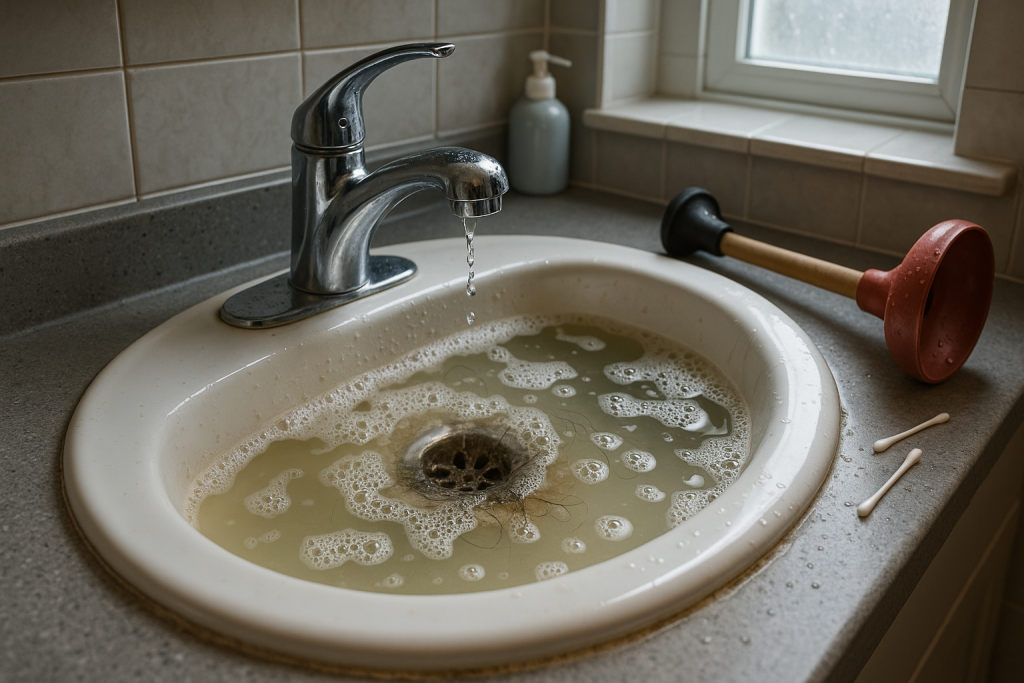
Watch for these early signs:
- Water drains slowly from one sink, tub, or shower
- Gurgling comes from the drain after water runs
- Odors rise from the opening
- Water pools around the drain before emptying
- A toilet bubbles when another fixture is used
- Multiple drains slow down at the same time
If the issue is limited to one fixture, a household remedy may be enough. If several fixtures are affected, the blockage may be deeper in the plumbing system or connected to sewer lines. That situation calls for professional service rather than repeated DIY cleaning.
Why Household Remedies Work on Some Clogged Drains
Household remedies are most useful for soft buildup. Baking soda can help loosen grime and reduce odors. Vinegar creates a fizzing reaction when it meets baking soda, which can help disturb residue near the drain opening. Boiling water can help clean drains naturally when the clog includes soap film or light grease. Dish soap can break down oily buildup, while salt adds mild abrasion.
These methods are not magic, and they cannot remove every blockage. They work best when the clog is small, recent, and close to the fixture. They are less effective against tree roots, collapsed pipes, heavy grease plugs, foreign objects, or thick hair masses deep in the line.
| Drain issue | Best home remedy to try | When to stop and call for help |
| Slow bathroom sink | Baking soda and vinegar | Water still pools after two attempts |
| Greasy kitchen sink | Dish soap and hot water | Water backs up or grease smell remains |
| Mild odor from drain | Baking soda followed by hot water | Odor returns quickly or smells like sewage |
| Tub draining slowly | Manual hair removal, then baking soda mix | Standing water remains after cleaning |
| Multiple clogged drains | Do not rely on home remedies | Call for plumbing support right away |
Chemical cleaners may seem faster, but they can be hard on pipes, create strong fumes, and cause splash hazards. They can also sit in standing water if the drain remains blocked. Gentle remedies are often safer for a first attempt, as long as you use them correctly and know when to stop.
Baking Soda, Vinegar, Salt, Dish Soap, and Boiling Water Methods
The classic baking soda and vinegar method is a good starting point for a slow drain. It is simple, low-cost, and works well for light buildup in bathroom sinks, tubs, and some kitchen sinks. Start by removing any visible debris around the opening. If there is standing water, scoop out as much as possible so the mixture can reach the clog.
Pour a half-cup of baking soda into the drain. Try to get it directly into the opening rather than leaving it on the surface. Follow with a cup of white vinegar. The mixture should fizz as it reacts. Cover the drain with a plug or cloth for 10 to 15 minutes so the reaction stays inside the pipe.
After waiting, flush the drain with boiling water if your pipes can handle it. For PVC pipes, very hot tap water may be safer than a full kettle of boiling water, especially if the plumbing is older. Run water for a minute to check the flow. If the drain improves but still seems slow, repeat the process once.
Greasy kitchen clogs often need a different approach. Dish soap is made to break down oils, so it can help when grease is part of the problem. Salt can add a light scrubbing effect, which may help loosen residue along the drain wall.
To try this method, pour a half-cup of salt into the drain. Add a generous amount of dish soap. Let it sit for 10 minutes, then slowly pour very hot water into the drain. Wait a few more minutes and run the faucet to see whether the flow improves.
For tubs and showers, remove hair first. No cleaner works well if a thick clump of hair is sitting right under the stopper. Use gloves and a simple plastic drain tool if you have one. After removing visible hair, rinse the area and use the baking soda method to freshen the pipe.
You can also use a plunger on a clogged drain, especially when water is standing in the sink or tub. Make sure there is enough water to cover the plunger cup. Create a tight seal and use steady pressure rather than wild force. If plunging causes water to rise in another fixture, stop. That can point to a larger blockage.
A drain snake can help with hair and debris close to the opening. Feed it gently into the drain, rotate it, and pull back slowly. Never force it. If the snake gets stuck or brings up sewage-smelling material, it’s time to call for plumbing service.
Do not keep repeating the same remedy over and over. If two rounds don’t clear the drain, the blockage may need a plunger, snake, or professional cleaning. Repeated pouring can waste time while the problem gets worse.
For a mild odor without a serious clog, baking soda followed by hot water may be enough. Some homeowners also add a few tablespoons of baking powder, but vinegar and baking powder should not replace the main method if the goal is to move buildup from the pipe. Stick with measured amounts, give the mix time to work, and flush thoroughly.
Avoid mixing store-bought cleaners with home remedies. Combining products can create fumes or unsafe reactions. If you already used a chemical cleaner and the drain is still clogged, tell the plumber before anyone works on the fixture.
Preventing Future Blocked Drains
The best drain cleaning routine is the one that keeps buildup from forming in the first place. Small habits can help keep it clear and reduce the chance of emergency repair. Kitchens, bathrooms, laundry areas, and utility sinks all need slightly different care because they collect different debris.
In the kitchen, scrape plates into the trash before rinsing. Do not put grease, oil, coffee grounds, rice, pasta, or eggshells down the sink. Even small amounts can collect over time. Grease may go down as a liquid, then cool and harden inside the pipe.
In the bathroom, use a hair catcher in the shower or tub. Clean it after regular use so hair doesn’t slip through. Wipe toothpaste, shaving cream, and heavy soap residue from the sink basin before rinsing. Once a week, run hot water for a short period to help move light buildup.
Simple prevention habits include:
- Use strainers in kitchen and bathroom drains
- Throw food scraps in the trash, not the sink
- Keep grease and oil out of the drain
- Remove hair from tub and shower strainers often
- Flush drains with hot water after heavy use
- Pay attention when your drain slows or starts to smell
Monthly maintenance can also help. Pour a small amount of baking soda into the drain, wait a few minutes, and rinse with hot water. This is better as a cleaning habit than an emergency fix. If the same drain keeps slowing down, there may be a pipe slope issue, a deeper clog, or buildup that needs professional tools.
What Not to Do When Trying Home Drain Remedies
Home remedies can be useful, but the wrong approach can make a clogged drain harder to fix. One common mistake is pouring several cleaners into the same drain without knowing how they react together. Baking soda, vinegar, dish soap, salt, and hot water are simple household ingredients, but they should still be used with care. Never mix them with chemical drain cleaners, bleach, ammonia, or other strong products.
Another mistake is using too much force. A plunger can help move soft clogs, but aggressive plunging may splash dirty water or push pressure into another fixture. A drain snake can also help, but forcing it into the pipe can scratch surfaces, damage older plumbing, or get the tool stuck. If the drain resists gentle cleaning, stop before the repair becomes bigger.
Don’t ignore repeated clogs. A drain that clears for a day and slows again may have buildup deeper in the line. It may also point to grease, roots, pipe damage, or a larger drainage issue. Repeating the same home remedy every week may cover up the warning signs without solving the problem.
Standing water also needs caution. If a sink, tub, or shower is full and will not drain, avoid adding more liquid. Remove what you can first, then use a plunger or call for help if the water does not move. If sewage odors, leaks, or multiple clogged drains appear, home remedies are no longer the right next step.
When to Call Emergency Plumbing Squad
Emergency Plumbing Squad helps homeowners connect with local plumbing providers for urgent problems, including drain cleaning needs that cannot wait. If your home remedies do not clear the drain, or if the problem feels larger than a simple clog, call Emergency Plumbing Squad to be connected with plumbing support. Fast action can limit water damage, reduce stress, and get your plumbing moving again with less disruption to your home.