
A sump pump often works quietly until heavy rain, snowmelt, or rising groundwater puts it under pressure. Common sump pump problems homeowners face can begin with warning signs such as a pump that hums without moving water, runs too long, fails to start, or cycles every few minutes. A stuck float switch, clogged discharge line, power outage, worn motor, or poor installation can leave a basement exposed when water levels rise.
Because these systems work hardest during severe weather, failures often appear when there is little time to react. Water can fill the sump pit faster than a damaged or undersized pump can remove it, increasing the risk of basement flooding. If the system stops working while water is rising, urgent sump pump help can help address the problem before flooding spreads.
Homeowners can check a few basic items before calling for service. Start with the power source, look for obstructions around the pump, and check whether water can leave through the discharge piping. Never work on a plugged-in pump or enter standing water when electrical equipment is nearby.
Understanding the warning signs can help you determine whether you are dealing with an obstruction, worn component, overwhelmed system, or pump that needs repair or replacement.
What to Do First when a Sump Pump Fails
When the water level is rising and the pump is not keeping up, focus on preventing damage. Check whether the unit is plugged into a working outlet and whether the breaker has tripped. If the pump uses a GFCI outlet, reset it once. A GFCI that trips again may indicate an electrical fault.
Next, look into the sump pit without reaching into it. The float should have room to rise and fall without catching on the basin wall, cord, pump housing, or discharge pipe. Debris around the intake can also restrict water flow.
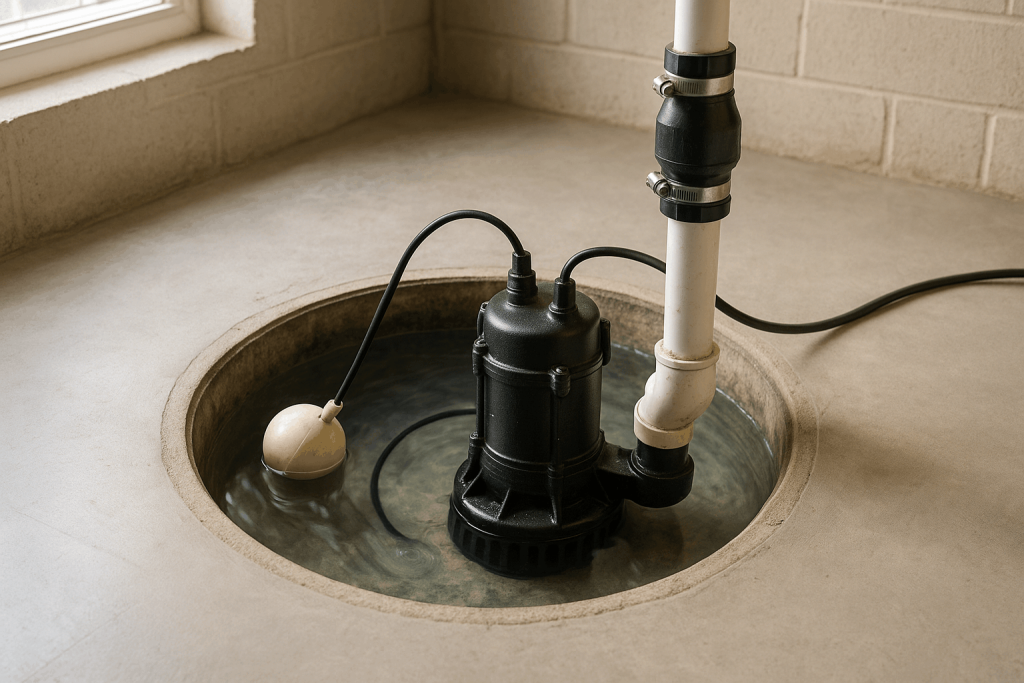
If you need to touch anything in the basin, unplug the pump first. Do not handle cords, switches, or plumbing components while standing in water.
Safe first checks include:
- Confirm that the pump is plugged in and the breaker has not tripped.
- Reset a GFCI outlet once, then stop if it trips again.
- Unplug the unit before removing visible debris from the sump pit.
- Check whether the float can move freely.
- Inspect accessible discharge piping for leaks, ice, crushing, or blockage.
- Call for plumbing service if the basin keeps filling, the motor only hums, or water enters the basement.
If a backup sump pump is installed, confirm that it has activated. Homes with battery backup should also check for an alarm or fault.
A unit that only works after the cord is moved, the float is lifted, or the breaker is reset may fail again during the next storm. Arrange service before heavy groundwater puts the system under another load.
How Pump Operation Works in the Sump Pit
A sump system collects groundwater before it reaches the basement floor. Drainage around or beneath the foundation directs water into a sump pit at the lowest practical point. As the level rises, the pump turns on and sends water through a discharge line to an outdoor drainage point.
The float switch controls when pump operation starts. As the float rises with the water, it activates the pump motor. The motor turns an impeller that moves water from the basin into the discharge piping.
A check valve keeps discharged water from flowing backward after the motor shuts off. Without a working valve, water in the discharge pipe may return to the pit, causing frequent cycling and unnecessary wear.
Because these components work together, a problem that looks like pump failure may come from elsewhere. A jammed float can keep a healthy motor from starting. A blocked outlet can prevent a running pump from moving water. A damaged check valve can cause constant cycling.
The float switch is one of the first components worth checking when a sump pump does not start automatically or refuses to shut off. Common sump pump problems include float-switch issues, clogged pumps, wiring problems, long running cycles, and broken check valves.
Sump Pump Power, Float Switch, and Motor Problems
A pump that does nothing when the pit fills may have lost power, but the float switch may also be stuck, wiring may be damaged, or the pump motor may have failed.
Check the outlet and breaker from a dry location. If another device works in the outlet but the sump pump remains silent, the problem is likely within the pump or its controls. Avoid opening electrical housings or attempting wiring repairs around a wet basement.
A stuck float switch can cause two different symptoms. In the off position, the pump never receives the signal to start. In the on position, the motor may continue running after the water level falls. Either can lead to sump pump failure.
A motor that rarely shuts off may be handling high groundwater, fighting a blocked discharge route, dealing with water flowing back through a failed check valve, or struggling because the pump is too small.
Grinding, rattling, scraping, or strong humming may indicate debris, worn components, an obstructed impeller, or motor trouble. A pump that hums while water continues rising should be treated as urgent because power is reaching the unit without adequate drainage.
Visible corrosion, a damaged cord, overheating, repeated shutdowns, and unreliable starting can point toward replacement. If the pump is unreliable during wet weather, arrange prompt service so a plumber can inspect the switch, motor, electrical supply, basin, and piping.
A plumber who works with sump systems can evaluate both the pump and connected plumbing. If water is near electrical components or a wiring fault is suspected, stay out of the area and arrange professional help. Electrical faults involving household wiring or circuits may require a qualified electrical professional.
Discharge Line and Check Valve Problems
A sump pump can sound normal while water barely leaves the pit. In that situation, inspect the discharge route. The pipe must carry water far enough from the foundation that it does not drain back toward the sump.
Exterior piping can become blocked by dirt, leaves, sediment, snow, or ice. Frozen discharge lines are a concern during thaw-and-refreeze cycles. Pipe sections can also be crushed, disconnected, poorly sloped, or damaged.
Improper installation can create the same symptoms as a clog. A poorly routed pipe can hold water and freeze. An incorrectly installed check valve can restrict flow or allow water back into the pit. A discharge point too close to the house can send water back toward the foundation.
| Problem | Warning Sign | What It Can Cause |
| Blocked discharge outlet | Pump runs but little or no water exits outside | Rising water in the sump pit and possible overflow |
| Frozen discharge line | Trouble appears during freezing weather | Restricted flow and continuous pump operation |
| Damaged or crushed pipe | Leaks, weak discharge, or visible pipe damage | Reduced pumping capacity and water escaping along the route |
| Failed check valve | Water rushes back into the pit after shutdown | Frequent cycling and added motor wear |
| Poor pipe slope | Water remains in exterior piping | Freezing, restricted drainage, and repeated backups |
| Discharge too close to the foundation | Water pools near the house after each cycle | Groundwater can return toward the basement drainage system |
Do not try to force a blockage through by repeatedly running the pump. Operating against a closed or frozen discharge route may strain the unit.
Gutters, downspouts, grading, and site drainage can also increase the water reaching the sump system. Keeping these drainage paths working properly is part of protecting the basement from flooding. Persistent drainage problems may require correction to grading, drainage, or discharge placement.
If the pit is rising or the pump keeps cycling because water cannot drain, arrange service promptly. A plumber can clear the line, repair damaged pipe, correct the check valve, or change the discharge route.
Overwhelmed Sump Pump, Improper Installation, and Storm Risks
An overwhelmed sump pump may be working but unable to remove water as quickly as it enters the pit. This is most likely during heavy rain, rapid snowmelt, or high groundwater.
A unit with too little capacity may run continuously while the water level climbs. An oversized pump can remove water quickly from a small pit and restart moments later, shortening the life of switches and motors. If the pump repeatedly cannot keep up or cycles excessively, have the system evaluated before severe weather.
Sump pump installation also affects performance. The unit needs a stable position, enough room for the float to move, suitable discharge piping, a properly oriented check valve, and dependable power. Sediment around the intake or uneven placement can interfere with drainage.
Power outages create another weakness. A standard electric sump pump cannot run without household power. A maintained battery backup or suitable standby system can provide added protection.
Routine checks help uncover problems before the next storm. Learning how to check your sump pump before wet weather can help you spot problems while there is still time to arrange service:
- Test the pump periodically by adding enough water to activate the float, then confirm that it starts, drains, and shuts off.
- Keep sediment and debris away from the pump intake and float.
- Inspect the outdoor discharge point before heavy rain or freezing weather.
- Check backup-system alarms and batteries according to the manufacturer’s instructions.
- Pay attention to changes in sound, cycle length, vibration, odor, or water level.
- Arrange service if the pump trips a breaker, fails to start, runs without moving water, or cannot keep pace with incoming groundwater.
An empty sump pit is not automatically a problem. Some pits remain dry for long periods. Arrange an inspection if the pump runs despite an empty pit, surrounding areas are wet but no water reaches the basin, or a system that previously collected water suddenly stops doing so.
Preventive checks before spring storms and snowmelt can reduce the chance of failure when the pump is needed most. They also give homeowners time to plan replacement before water reaches the basement floor.
Get Sump Pump Help from Emergency Plumbing Squad
A sump pump problem becomes urgent when the pit is filling faster than the system can drain it, the pump has stopped during heavy rain, or water is spreading into the basement. Stay out of standing water when electrical exposure may be present.
Emergency Plumbing Squad helps homeowners connect with local plumbing professionals for sump pump repair, maintenance, replacement, installation, and related plumbing needs. Emergency Plumbing Squad provides 24/7 nationwide support. Contractors and service providers are independent, and homeowners are responsible for verifying that the contractor they hire carries the licenses and insurance required for the work.
When you request help, describe what the pump is doing, whether the pit is filling, whether the home has electricity, and whether water has reached the basement floor.
If the sump pump has stopped working or flooding has begun, contact Emergency Plumbing Squad or use the location finder to connect with plumbing help in your area. Emergency Plumbing Squad states that its dispatch service operates 24 hours a day, seven days a week.