
A working sump pump helps control groundwater around a basement or lower level and sends it away from the foundation before the sump pit overflows. Knowing how to test your sump pump before rainy season gives homeowners and business owners time to catch a weak pump, stuck float switch, blocked discharge line, or backup problem before heavy rainfall.
Check the power supply, inspect the basin and pipe, and add water until the pump activates. Watch the full cycle. The pump should start at the proper water level, remove the water steadily, and shut off once the float drops.
Testing also lets you check the backup system, alarm, check valve, and outdoor discharge point. If the pump won’t start, makes unusual sounds, or leaves the water level too high, arranging prompt professional help before the next storm can reduce the risk of water damage and disruption.
How to Test Your Sump Pump, Float, and Sump Pit Safely
Start with a visual inspection before pouring water into the sump. The area around the basin should be dry, with no loose objects that could fall into the pit. Use a flashlight if the area is dark, and wear gloves if you need to remove debris.
Check that the pump’s plug is secure in the outlet. Don’t unplug electrical equipment while standing in water or when the outlet, cord, or hardware is wet. If you see damaged wiring, scorch marks, or moisture around electrical connections, stop the test and arrange professional service.
Look inside the sump pit. Remove loose dirt, gravel, or material that could interfere with the pump intake or float. The float switch needs room to move freely.
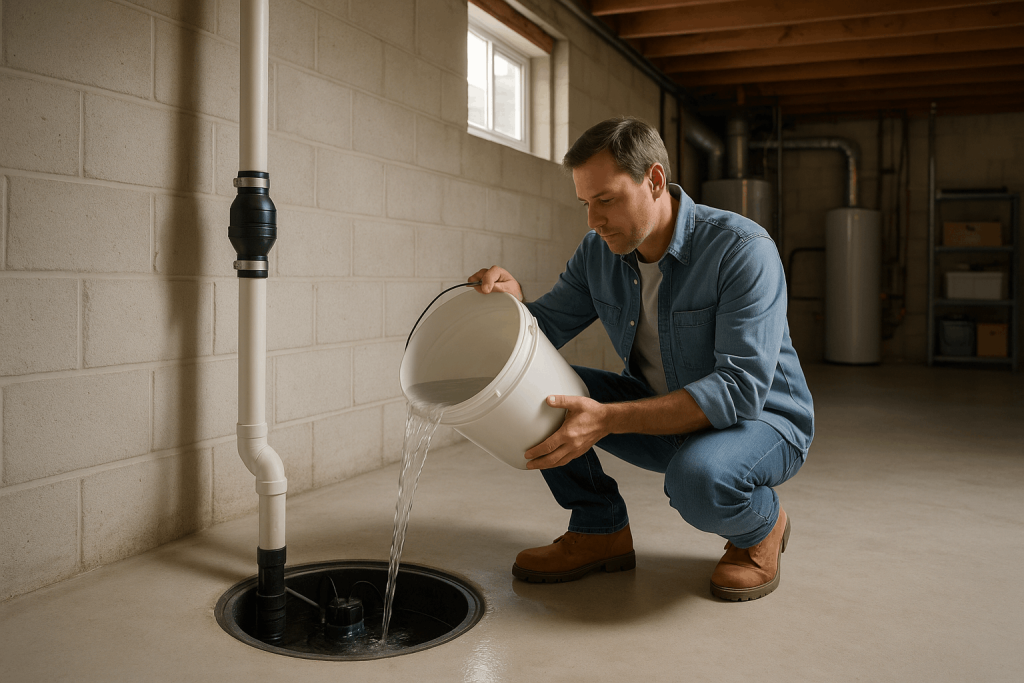
Inspect the discharge pipe and check valve. The pipe shouldn’t be loose, cracked, or leaking. Outside, confirm that the discharge point isn’t buried under leaves, soil, ice, or debris and directs water away from the foundation.
Once the visual checks are complete, test your sump pump with clean water:
- Pour water slowly into the sump pit. Add enough to raise the water level naturally. Don’t just pour liquid rapidly into the basin because you want to see how the float responds as the level climbs.
- Watch the float switch. It should rise without catching on the pump, pipe, power cord, or basin wall.
- Confirm that the pump starts. Once the water reaches the activation level, the motor should turn on without repeated clicking or a long delay.
- Watch the pump remove the water. A working unit should pump sump water through the discharge line at a steady rate.
- Check the shutoff. The motor should stop after the water falls and the float returns to its lower position.
- Look for water flowing back. A functioning check valve limits water from draining back into the pit when the cycle finishes.
Repeat the test if you’re unsure whether the first cycle was normal. A pump that activates consistently and discharges water properly is better prepared for wet weather.
What Normal Sump Pump Operation Should Look and Sound Like
A sump pump doesn’t need to be silent, but its operation should be predictable. When water enters the basin, the float rises until it activates the pump. You may hear a steady motor hum and water moving through the pipe. The level should fall until the pump shuts off.
The cycle shouldn’t involve grinding, repeated banging, screeching, or long periods of humming without water movement. Those sounds may point to debris around the impeller, a worn motor, or a blocked pipe.
Pay attention to how quickly the sump empties. Pump capacity varies by installation, so there isn’t one correct time for every property. Look for steady removal without the water rising toward the top of the basin.
During sustained rain, a pump may run often because groundwater is entering the sump continuously. A pump that starts and stops every few seconds can indicate a float problem, returning water, an incorrectly adjusted switch, or a system that isn’t keeping up.
A pump that runs when it isn’t raining isn’t automatically failing. Snowmelt, irrigation, a high water table, nearby drainage conditions, or saturated soil can send groundwater into the system. Sudden changes from the pump’s usual pattern are a stronger reason to investigate. These symptoms are among the warning signs homeowners commonly encounter when a sump system starts behaving differently.
Use the following signs as a quick comparison during pump maintenance:
| What You Notice | What It May Mean | What to Do |
| Pump starts, drains steadily, and shuts off | Normal operation | Continue routine testing and maintenance |
| Float rises but pump doesn’t start | Power, float switch, or pump problem | Check the safe, visible basics and arrange service if it remains inactive |
| Motor hums but little or no water leaves | Intake or discharge blockage, worn pump, or mechanical issue | Stop repeated testing and have the system inspected |
| Water returns to the pit after shutoff | Check valve or discharge issue | Inspect visible connections and schedule repair |
| Pump starts and stops every few seconds | Float, check valve, sizing, or water-entry problem | Have persistent short cycling evaluated |
| Grinding, rattling, or screeching develops | Debris, loose parts, or pump wear | Arrange service before heavy rain |
| Water keeps rising while the pump runs | Pump or discharge system may not be keeping up | Treat rising basement water as an urgent problem |
If testing produces standing water, repeated electrical trips, or a pump that won’t move water, don’t keep cycling the equipment. Move away from wet electrical components and arrange prompt help. Emergency Plumbing Squad helps homeowners and business owners access local service providers when a problem can’t wait.
Test the Backup System, Alarm, and Discharge Line
Storms can cause power interruptions while groundwater is entering the sump, so properties with a backup system should test that equipment separately.
For a battery backup pump, check the charge indicator and terminals. Corrosion, loose connections, or an aging battery can keep the unit from working when the primary pump loses power. Follow the manufacturer’s maintenance and replacement instructions.
If the system allows a manual backup test, confirm that the battery pump starts and removes water when the primary unit isn’t operating. Only unplug the primary pump if the area is dry and the manufacturer permits it. Restore power when the test is finished.
Check the alarm during the same visit. It may warn you about a high water level, loss of primary power, or a backup problem. An alarm that doesn’t sound during its test or shows a low-battery warning needs attention.
Water-powered backup pumps rely on municipal water pressure instead of a battery. Their water supply valve, plumbing connections, and discharge arrangement need to remain open and functional. Because installation requirements and backflow protection vary, problems with these systems are better handled by a qualified plumber.
Check discharge pipe fittings for leaks and confirm that the outdoor outlet is open. Water should be carried far enough from the building that it doesn’t collect beside the foundation and return to the drainage system.
Routine drain cleaning can help prevent leaves, sediment, and debris from restricting water movement. Don’t insert tools into a running pump or dismantle sealed equipment during a basic property-owner test.
How Often to Test Your Sump Pump and Perform Maintenance
Debris can enter the sump, a float can stick, a check valve can wear, and backup batteries lose capacity between storms.
Testing every few months helps you spot changes before heavy use. Check the primary unit before spring thaw or forecast periods of heavy rain. Homes with a finished basement, high water table, or flooding history may benefit from more frequent checks during wet periods. The same applies to commercial properties with below-grade areas, stored inventory, equipment, or past water intrusion.
A practical maintenance routine includes checking:
- Primary pump operation: Add water and confirm normal startup, pumping, and shutoff.
- Float movement: Make sure the float isn’t obstructed by the basin wall, pipe, cord, or debris.
- Sump pit cleanliness: Remove accessible dirt and loose material that may affect the intake or switch.
- Discharge line condition: Look for visible leaks, loose fittings, blockage, or damaged outdoor piping.
- Check valve performance: Watch for a large amount of water draining back after each cycle.
- Backup equipment: Test the backup pump and alarm according to the manufacturer’s instructions.
- Power supply: Keep plugs secure and electrical connections dry.
- Basement conditions: Look for damp areas, musty odors, new staining, or water collecting where it normally doesn’t.
Seasonal maintenance should include the surrounding property. Clear debris from outdoor drains and grates. Check downspout extensions and grading problems that let stormwater collect next to the building. Reducing water around the foundation can lower the workload on the sump system.
Keep a record of tests, battery changes, repairs, and installation dates. This can make performance changes easier to spot and give a plumber useful background.
Don’t wait for a storm warning to check a pump that has shown signs of trouble. Testing before the wet season gives you time to schedule maintenance or repair before water enters a vulnerable area.
Signs of Pump Failure and when to Call a Plumber
Some sump pump problems appear during a water test. Others show up as changes in sound, cycling, or water level. Acting before heavy rainfall can reduce flooding, property damage, and disruption.
A pump that doesn’t activate when the float rises needs immediate attention. Check only safe, obvious items, such as whether the plug has been pulled from a dry outlet or the float is visibly obstructed. Don’t open electrical components or repeatedly reset a breaker if it continues to trip.
A motor that runs without lowering the sump water is another warning sign. The pump may have an intake problem, damaged components, or a blocked or frozen discharge line. Continued operation without moving water can leave the property unprotected.
Arrange prompt plumbing service when a pump won’t start, runs continuously, short cycles, grinds loudly, leaks at the discharge, has a stuck float switch, or has a backup unit that doesn’t take over during testing. Addressing problems early gives a professional time to identify the cause before rainfall creates a more urgent situation.
The situation becomes urgent when water approaches the top of the sump pit, spreads across the floor, or rises despite the pump running. Keep away from wet electrical equipment and avoid powered cleanup equipment where water may contact an electrical source.
Emergency Plumbing Squad helps homeowners and business owners connect with local service providers for sump pump repair and other urgent plumbing needs, with support available 24/7 nationwide. A professional inspection can determine whether the problem involves the pump, float switch, check valve, discharge pipe, power arrangement, or another part of the installation.
Get Sump Pump Help from Emergency Plumbing Squad
Testing your sump pump before rainy season helps show whether your property’s protection system is ready for heavier groundwater. Add water to the pit, watch the float, confirm the pump starts and shuts off normally, check the discharge path, and test any backup equipment.
If the test reveals a pump failure, don’t wait until water enters the property. Strange sounds, slow drainage, constant cycling, failed alarms, and a rising sump water level are reasons to have the system inspected promptly.
Emergency Plumbing Squad connects homeowners and business owners with local providers for sump pump services and other plumbing needs across the United States, with assistance available 24 hours a day, seven days a week.
Use Emergency Plumbing Squad’s location finder to look for plumbing help near you, or visit the sump pump services page when your pump needs professional attention before the next storm.