
Call the number above now
Get connected to a licensed, verified plumber, 24/7.
The core defense is simple: slow the conversation down enough to verify the person, the price, and the scope of work — even during an emergency. Scammers rely on urgency to skip exactly those steps.
Water spreading across the floor, a backed-up drain, a sewer smell coming from the basement — in those moments, it’s tempting to call the first plumber who answers and hope for the best. That urgency is exactly what dishonest plumbers count on.
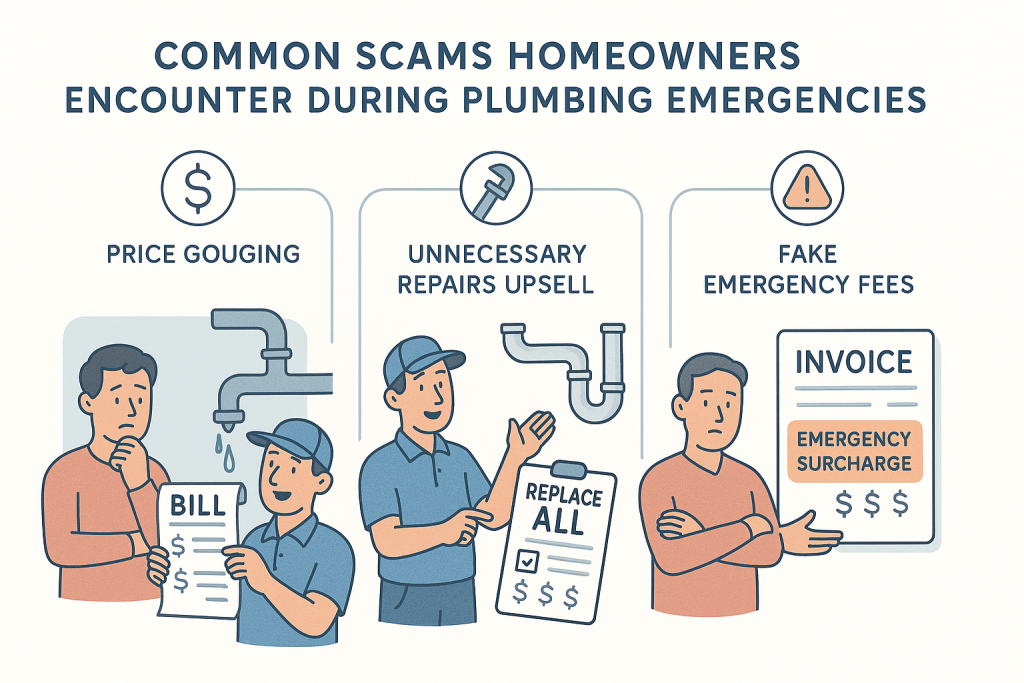
Common Scams to Watch For
A low phone quote followed by a sudden price jump once “unexpected problems” turn up on site is one of the most common patterns — some of those problems are exaggerated or invented entirely. A cash-only demand before any work begins is another: a dishonest plumber may take payment, then disappear or perform poor-quality work with no documentation to hold them to.
Unnecessary upselling is a third pattern — a simple drain blockage pushed into a major pipe replacement recommendation, or a small leak framed as an urgent full-system repair. Some repairs genuinely are serious, but a legitimate contractor can explain what’s wrong, show evidence, and give you real options rather than a single scary recommendation.
Red Flags on the Phone and at the Door
- Pressure to approve work immediately without a written estimate
- The plumber demands full payment before work begins
- The estimate is verbal only, with no written details
- The price changes sharply without a clear reason
- Refusal to show identification or license information
- No clear local presence or contact details
- Discouraging you from getting a second opinion
- A repair recommendation that sounds much larger than the visible problem
One red flag alone isn’t proof of a scam. Several together, especially combined with pressure to decide immediately, are worth pausing over — even mid-emergency.
Why License, Insurance, and Identification Actually Matter
A plumbing license confirms the person working in your home has met state or local requirements — and it’s checkable through official channels, not just claimed verbally. Insurance protects you if something is damaged during the job. And identification is basic home safety: confirm the person at your door matches the company you actually called, using a number you found yourself, not one handed to you on arrival.
Before approving work, ask for and verify:
| What to Verify | What to Ask For | Why It Helps |
|---|---|---|
| Company identity | Full business name, phone number, and website | Confirms who’s responsible for the job |
| Technician identification | Photo ID or company ID | Helps verify who’s entering your home |
| Plumbing license | License number or local registration details | Shows the provider can be checked through official channels |
| Insurance | Proof of liability coverage | Helps protect you if damage or injury occurs |
| Written estimate | Itemized pricing for service, labor, and parts | Reduces surprise fees |
| Work scope | Clear explanation of the problem and repair | Helps prevent unnecessary replacement work |
| Payment terms | Accepted payment methods and timing | Avoids cash-only pressure tactics |
The FTC’s own consumer guidance on hiring contractors warns against paying the full cost upfront — a partial deposit is standard, with the balance due only once work is finished to your satisfaction. A demand for full payment before anything starts runs against that guidance for a reason.
Multiple Quotes Are Your Best Protection
Even during an urgent repair, a couple of quick calls can tell you whether a price is fair. Be cautious of quotes far lower than the others — a very low number is sometimes used just to get in the door, with the price rising once the technician is inside. Be equally cautious of vague answers like “we’ll figure it out when we get there.”
Compare the structure of each quote, not just the total. A higher quote from a licensed, insured, well-reviewed provider is often safer than a cheap offer from someone avoiding written details entirely.
Questions Worth Asking Before You Approve Anything
- What exactly is causing the problem?
- Is this an emergency repair, or can part of it wait?
- What’s included in the estimate?
- Could the price change, and why?
- Are you licensed and insured for this type of work?
- Will I receive a written invoice?
- Is there a warranty on labor or parts?
Clear answers build trust. Evasive answers are a sign to slow down, not speed up.
Frequently Asked Questions
Is it normal for the price to change once the technician arrives?
Some price changes are legitimate — the technician finds something the phone quote couldn’t account for. But a sharp, unexplained jump with no clear reason is a red flag worth questioning.
Should I ever pay a plumber in cash only, upfront, before work starts?
No. A cash-only demand before any work begins, especially for the full amount, is one of the clearest warning signs of a scam. Legitimate providers accept traceable payment and don’t require full payment upfront.
How many quotes should I try to get during an emergency?
Even two or three quick calls can help you sense whether a price is reasonable. You don’t need a lengthy comparison process — just enough to catch an outlier price or vague answers.
Emergency Plumbing Squad connects you with a licensed, verified 24 hour plumber near me so you can move fast during an emergency without giving up your ability to make a safe, informed decision.
