
When a pipe bursts, a drain backs up, or water starts spreading through your home, it’s natural to want help right away. Fast service matters, but so does knowing who’s walking through your door. A qualified plumbing professional should have the right training, credentials, and proof of authorization to perform the work your home needs.

Knowing how to verify a plumber’s qualifications helps protect your property, your budget, and your safety. It can also help you avoid poor repairs, code problems, denied insurance claims, and unqualified workers who may not stand behind the job.

Emergency Plumbing Squad helps homeowners connect with local plumbing help when urgent issues can’t wait. Even in a stressful moment, you can still ask simple questions, request proof, and confirm that the person handling your repair is prepared for the job.

A few minutes of verification can make the difference between a repair that solves the problem and one that creates new ones.

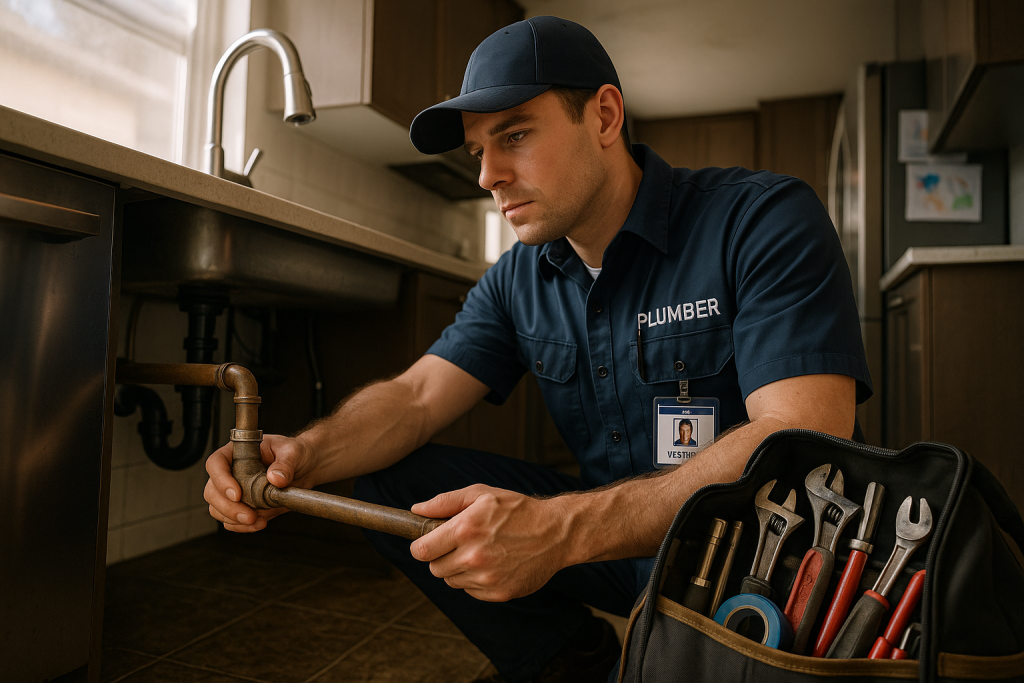
A verified plumber in a branded uniform works beneath a stainless-steel kitchen sink, official certification badge visible. Tools and realistic details, water spots, fingerprints, and homey background elements, emphasize professionalism, trust, and the importance of using certified plumbing experts in residential repairs.

Why Verified Plumbing Professionals Matter during Emergencies

Emergency plumbing work can involve water lines, sewer lines, gas-connected appliances, fixtures, water heaters, drains, and hidden pipes inside walls or floors. These systems affect daily comfort, property safety, and sanitation. When repairs are handled by someone without the right background, the risk rises quickly.

A qualified plumber understands how to diagnose the problem, follow local rules, use the right parts, and complete the work safely. This matters when you’re dealing with issues such as a burst pipe, major leak, sewer backup, failed water heater, clogged main drain, or flooding near electrical systems.

Unqualified workers may offer a fast fix, but speed alone isn’t enough. A poor repair can lead to repeat leaks, water damage, mold concerns, failed inspections, or unsafe conditions. If the work doesn’t meet local code, the homeowner may have to pay again to correct it.

Verified credentials also help create accountability. A person with a current license or registration number can usually be checked through a state, city, county, or plumbing board database. That gives you a way to confirm status before approving service.

Homeowners should feel comfortable asking for proof. A professional shouldn’t push back when asked for basic documentation. Clear answers show respect for your home and your decision.

Strong signs of a qualified provider include:

  • A current license or registration where required
  • Proof of insurance for the type of work being performed
  • Clear company name and contact information
  • Identification that matches the company you called
  • Written estimate before repair work begins
  • Willingness to explain the issue in plain language
  • Clear invoice after the job is complete

What a Plumbing License Means for Homeowners

A plumbing license shows that the worker has met requirements set by a state or local authority. Requirements vary by location, but licensing often involves training, supervised field experience, testing, and knowledge of local codes. Some areas also require renewals, continuing education, or proof of insurance.

License type can also matter. An apprentice may work under supervision. A journeyman may perform many types of repairs independently. A master plumber may have advanced experience and may be allowed to supervise larger projects, pull permits, or manage complex work. The names and rules vary by state, so always check local requirements.

A plumber license gives homeowners more than peace of mind. It helps confirm that the person working on the system has been reviewed by an official authority. That matters for repairs involving potable water, sewer systems, gas-connected fixtures, water heaters, or work that may require permits.

If a contractor can’t explain their license type or refuses to provide a license number, treat that as a warning sign. It doesn’t always mean the person is dishonest, but it means you don’t have enough information to approve the job.

Credential to Check What It Shows Why It Matters
Plumbing license The worker meets state or local requirements Helps confirm legal authorization for the work
Registration number The person or company can be found in an official database Gives you a way to confirm active status
Contractor license The business may be authorized to perform contracted work Helps identify the responsible company
Insurance Coverage may apply if damage or injury occurs Helps protect homeowners from added costs
Bonding, when available Financial protection may exist for certain claims Adds another layer of accountability
Certification Training in a specific skill, tool, product, or repair type Useful for water heaters, backflow, gas, or specialty work
Identification The person matches the company you contacted Helps prevent impersonation or confusion

Licensing doesn’t mean every repair will be perfect, but it gives you a stronger starting point. It also gives you a path to report problems if something goes wrong.

For larger work, ask whether permits or inspections are needed. A professional should know when permits apply and should be able to explain who’s responsible for them. If someone says permits never matter, pause before allowing work to continue.

How to Run a Verify License Search Online

A verify license search is one of the fastest ways to confirm basic credentials before work starts. Most homeowners can complete this step from a phone while waiting for the technician to arrive or before approving repairs on site.

Start by asking for the license number, registration number, full company name, and the plumber’s name. If the company is sending a technician, ask whether the license belongs to the person, the company, or the supervising contractor. Rules vary, so the name on the license should match the structure allowed in your area.

Next, go to the official licensing website for your state, city, county, or plumbing authority. Search for terms such as “plumbing license verification,” “contractor license search,” or “verify a license” with your state name. Use government or official board sites when possible.

Enter the license number exactly as provided. If the system allows search by name, try both the individual name and the company name. Check whether the license is active, expired, suspended, or under review. Also review the license type, issue date, expiration date, and any disciplinary notes shown in the database.

Follow these steps before approving emergency repair work:

  1. Ask for the full company name, technician name, and license number.
  2. Search the official state, city, county, or plumbing board database.
  3. Confirm that the name and license details match the person or business.
  4. Check the status, expiration date, and license type.
  5. Save a screenshot or write down the result for your records.
  6. Ask questions if anything looks unclear.
  7. Decline service if the person refuses to provide basic verification details.

Some states have well-known lookup systems, while others use city or county portals. Texas homeowners may encounter TSBPE resources, while other states use different boards or agencies. In Tennessee, homeowners may find contractor information through state license lookup resources, including the TDCI license verification portal. The right place to check depends on where the property is located.

If you can’t find the license, don’t assume the contractor is approved. Ask for clarification. A reputable service provider should help you identify the correct search method. If the answer keeps changing, or the worker tells you not to worry about it, that’s a sign to slow down.

How Certifications, Insurance, and Identification Add Protection

A license is one part of the qualification check. Certifications, insurance, and identification also help you decide whether the contractor is a safe choice.

Certifications may show extra training in specific areas. A plumber may hold certification for backflow prevention, gas line work, water heater installation, tankless systems, drain equipment, or manufacturer-specific products. Not every repair requires a special certification, but it can be useful when the job involves a specialty system.

Insurance is another major part of homeowner protection. Ask whether the contractor carries general liability coverage and, when employees are involved, workers’ compensation coverage where required. If a worker is injured or property is damaged during the job, insurance can affect how those costs are handled.

Identification matters because emergency calls often happen at night, during bad weather, or under stressful conditions. Before allowing anyone inside, confirm that the person matches the company you contacted. Look for a marked vehicle, company clothing, photo ID, work order, or a call from the office confirming who was dispatched.

You can also ask whether the person is a company employee or a contract technician. Either may be acceptable, but you should know who’s responsible for the work, the invoice, and any follow-up.

Be cautious if you notice any of the following:

  • The technician refuses to show identification
  • The license number doesn’t match the company or individual
  • The license status appears expired or inactive
  • The worker can’t explain the scope of work
  • The estimate is verbal only
  • The company asks for full payment before any work begins
  • The technician avoids questions about insurance
  • The repair seems much larger than the problem without explanation

A professional should welcome reasonable questions. They should explain what they found, what they recommend, and what happens next. Clear communication is part of qualified service.

Emergency Plumbing Squad focuses on helping homeowners get plumbing support quickly, especially for urgent issues such as leaks, drain backups, water heater problems, and pipe failures. Still, the homeowner should keep records, confirm credentials, and review the provider before work begins.

Questions to Ask before Hiring a Qualified Plumber

The right questions can reveal a lot about the person you’re about to hire. You don’t need technical training to ask for clear, direct answers. A qualified plumber should explain the problem in a way you can understand.

Start with the basics: “Are you licensed for this type of work in my area?” Then ask for the license number and insurance details. If the job may involve permits, ask whether permits are needed and who will handle them.

Next, ask about the diagnosis. A professional should be able to explain what’s causing the issue, what needs to be repaired now, and whether any additional work can wait. That matters during emergencies because some contractors may try to sell larger repairs before proving they’re needed.

Ask about pricing before work starts. The estimate should include the service fee, labor, parts, emergency fees, and any possible added charges. If the price may change after inspection, ask what conditions could cause that change.

A clear conversation could include questions like:

  • What license type do you hold for this work?
  • Can I see your license number and identification?
  • Are you insured for work inside homes?
  • What’s causing the plumbing problem?
  • Is this repair urgent, or can any part wait?
  • Will this require a permit or inspection?
  • What’s included in the written estimate?
  • Is there a warranty on labor or parts?
  • Who should I call if the issue returns?

These questions help you compare providers and avoid rushed decisions. They also show the contractor that you expect documentation, transparency, and professional service.

If you’re searching for a qualified plumber near you during an emergency, don’t let urgency remove your right to ask questions. Fast response and verified credentials should work together.

Call for Emergency Help with Confidence

Verifying credentials doesn’t have to take long. Ask for the license number, confirm the registration number through the proper board or local authority, review insurance, and make sure the person at your door matches the company you called. These steps help protect your home before repair work begins.

A qualified plumbing professional should be prepared to show documentation, explain the repair, provide written pricing, and answer questions without pressure. If any part of the process feels unclear, pause and ask for more information.

When you need urgent plumbing help, Emergency Plumbing Squad is available 24/7 to connect homeowners with local service support. Call now if you’re dealing with a burst pipe, clogged drain, sewer backup, water heater issue, leak, or another time-sensitive problem. You can move quickly while still making a smart, informed choice for your home.

Touch to Call!