

Call the number above now
Get connected to a licensed plumber for water pressure problems, 24/7.
Start by comparing hot and cold water at the same tap: if cold runs fine but hot is weak, the problem is on the hot side — usually the water heater, a valve, or sediment. If both are weak, the cause is more likely a pressure regulator or main supply issue affecting the whole house.
Low hot water pressure shows up one of three ways: at a single fixture, across every hot tap in the house, or suddenly after plumbing work or a repair. Figuring out which pattern you’re dealing with is the fastest way to narrow down the cause.
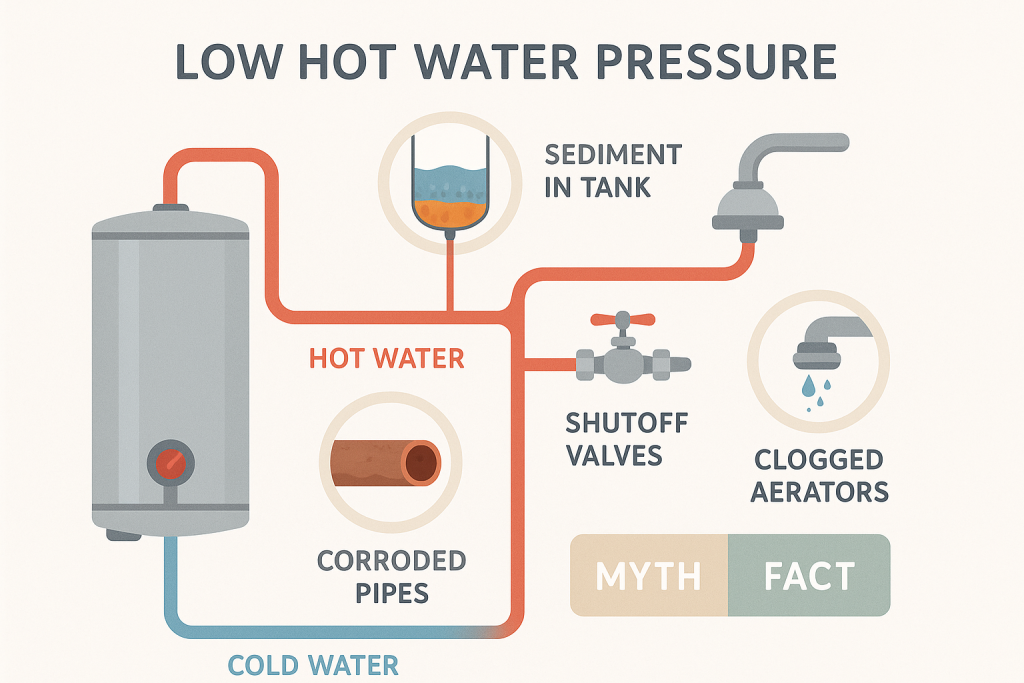
Quick Reference: Where the Problem Usually Is
| Problem Area | What You’d Notice | Likely Cause | Next Step |
|---|---|---|---|
| Water heater valve | Low pressure at all hot taps | Valve partially closed | Open gently or request service |
| One fixture | Low pressure only at one tap | Clogged aerator, valve, or hose | Clean fixture parts, check shutoff |
| Whole house | Hot and cold both weak | Pressure regulator or main supply issue | Call for pressure testing |
| Hot side only | Cold fine, hot slow | Heater, hot line, valve, or sediment | Inspect hot-side plumbing |
| After repairs | Sudden pressure drop | Closed valves or debris in lines | Check valves, flush fixture screens |
| Older plumbing | Gradual decline in flow | Corrosion or mineral buildup | Schedule plumbing inspection |
Sediment and Water Heater Problems
The water heater is one of the most common places low pressure originates. Minerals, rust particles, and debris collect inside the tank over time, restricting flow and clogging fittings — hard water accelerates this considerably. The U.S. Department of Energy notes that sediment buildup is a common cause of reduced water heater efficiency and performance, and recommends periodic tank flushing as part of routine maintenance.
- Hot water coming out slowly at several fixtures
- Rumbling, popping, or crackling sounds from the heater
- Cloudy, rusty, or gritty hot water
- Hot water that runs out faster than normal
- Pressure that improves briefly, then drops again
If you’re only getting about 5 minutes of hot water before it fades, that’s a related but distinct problem — it can point to sediment, a failing dip tube, a thermostat issue, a damaged heating element, or simply an undersized unit for your household. Low pressure and a short hot water supply happening together are worth a professional look rather than guessing.
Flushing the tank can help if sediment is the cause, but older units with corroded drain valves or weakened tank walls can develop new problems during a flush. If you’re also seeing rust, have a plumber handle it rather than attempting maintenance yourself.
Valves, Water Lines, and Pressure Issues
If the water heater doesn’t seem to be the source, check the path hot water takes through your home. A valve near the water heater, under a sink, or behind a washing machine may be partially closed — often after a repair, cleaning, or emergency shutoff. Turn accessible valves gently counterclockwise to confirm they’re fully open; don’t force a stuck one, since an old valve can break or start leaking.
A failing pressure regulator usually affects both hot and cold water together — if only hot water is weak, the regulator is a less likely culprit, though a plumber may still test it. Flexible supply hoses under sinks or behind appliances can also kink or pinch; a damaged hose should be replaced rather than reshaped.
Corroded Pipes and Fixture Blockages
Older galvanized steel pipes corrode from the inside, narrowing the opening and reducing flow over time — and loosened rust can travel downstream to clog nearby fixtures. Mineral deposits from hard water cause a similar gradual decline, which is why many homeowners don’t notice until pressure has dropped noticeably throughout the home.
If just one shower or faucet is weak, remove and clean the aerator or showerhead — white crust, grit, or debris commonly blocks these small openings. Soaking removable parts in white vinegar, then scrubbing and rinsing, often clears mineral buildup. If pressure returns, that fixture was the problem. If it stays weak, the restriction is likely deeper in the line.
Avoid using harsh chemical cleaners inside plumbing lines unless a plumber specifically recommends them for your system — they can damage older pipes, seals, fixtures, and appliance connections. Mechanical cleaning and targeted repair are the safer route for long-term performance.
Safe Checks to Try First
- Run only hot water at the affected fixture for a minute and watch whether flow changes.
- Compare the same fixture using cold water.
- Check other hot taps to see if the issue is local or whole-home.
- Confirm accessible valves are fully open.
- Remove and clean faucet aerators and showerheads.
- Inspect supply hoses for kinks or damage.
- Look around the water heater for leaks, rust, or moisture.
If the problem is isolated to one fixture, cleaning the aerator or supply line screen often solves it. If several hot fixtures are affected at once, the issue more likely sits in the heater, the hot water line, or a shared valve. A suspected faulty tempering valve — which mixes hot and cold to control outlet temperature — should be diagnosed by a plumber rather than adjusted yourself.
When to Call Instead of Keep Troubleshooting
- Hot water pressure drops suddenly, with no clear cause
- Hot is low but cold is fine throughout the house
- Low pressure appears right after water heater installation or repair
- You see puddles, leaks, rust, or moisture near the heater
- The water heater makes rumbling or popping sounds
- Multiple fixtures have weak hot water flow at once
Frequently Asked Questions
Why is my cold water fine but hot water weak?
That pattern points to something on the hot side specifically — usually the water heater, a hot-side valve, sediment, or the hot water line — rather than a whole-house pressure problem.
Can I flush my own water heater to fix low pressure?
You can, but be cautious with older units — a corroded drain valve can start leaking once opened, and a tank with internal rust may not respond well to flushing. If the heater is old or already showing rust, have a plumber handle it.
Is cleaning the aerator enough, or could the problem be bigger?
If pressure returns after cleaning, the aerator was the issue. If it stays weak afterward, the restriction is likely further back in the line, valve, or water heater, and needs a closer look.
Emergency Plumbing Squad connects you with a licensed plumber for water heater repair and pressure diagnosis, 24/7.
