

Call the number above now
Get connected to a licensed plumber for water heater repairs, 24/7.
If it’s only the hot water: rust is most likely coming from your water heater — usually a worn anode rod, internal tank corrosion, or accumulated sediment. If both hot and cold water are discolored, the source is more likely your home’s pipes or the municipal supply.
Rusty water is unsettling no matter when it shows up — mid-shower, filling a glass, running the dishwasher. When it’s only the hot tap, the water heater is almost always the place to look first.
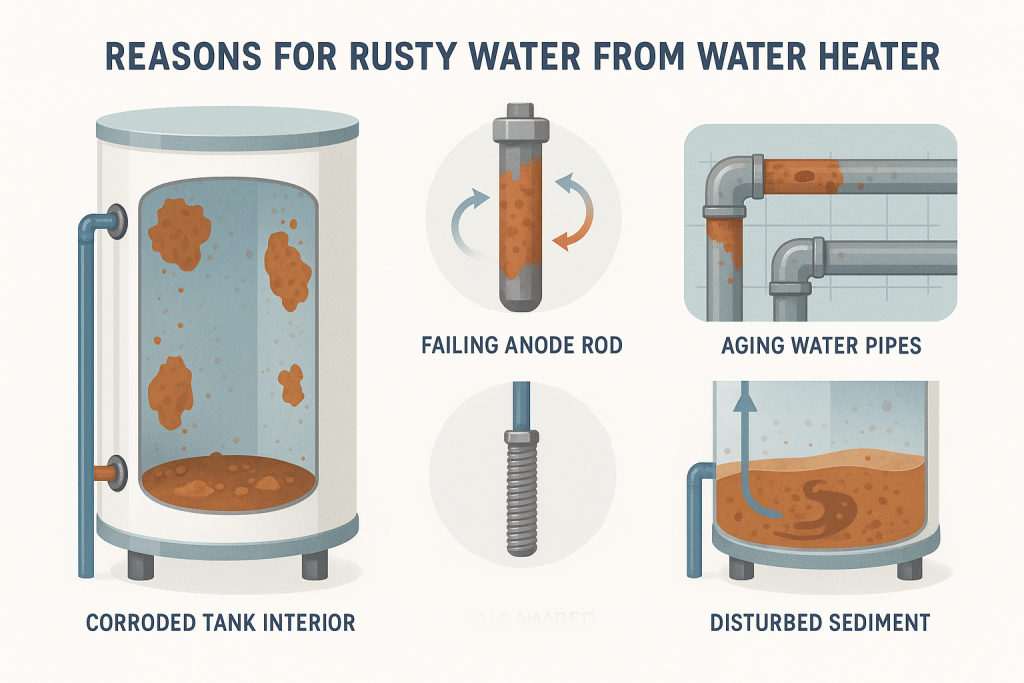
Why It Starts Inside the Tank
A water heater tank has a protective lining and a sacrificial anode rod, both of which wear down over time. Once that protection weakens, rust can form on the tank’s interior or on connected metal parts. The anode rod is designed to corrode before the tank does — literally sacrificing itself — so once it’s too worn, the tank and metal surfaces become the next target.
The progression is usually gradual: water starts slightly tinted, then turns brown, orange, or reddish over time. A metallic taste, stains in sinks or tubs, or small flakes settling in the basin are all part of the same pattern.
Telling the Heater Apart from the Pipes
- Test cold water, then hot water, at the same faucet
- Check several fixtures — a sink, a tub, the laundry area
- Note whether the water clears after running or stays rusty
- Look for rust stains, leaks, or moisture around the heater itself
- Check whether neighbors are seeing the same discoloration
Brown water that shows up right after a water main repair or hydrant flushing in the neighborhood usually points outside your home. Brown water that appears specifically after the heater has sat unused overnight often points to rust or sediment building up inside the tank.
What’s Usually Behind It
| Cause | What You May Notice | Why It Matters | Best Next Step |
|---|---|---|---|
| Worn anode rod | Gradual rusty water from hot taps | The tank loses corrosion protection | Inspect and replace the rod |
| Internal corrosion | Rusty water, flakes, or stains | The tank may be weakening | Schedule a plumber inspection |
| Sediment buildup | Cloudy, gritty, or brown water | Minerals trap heat and speed wear | Drain and flush the heater |
| Hard water minerals | Scale, reduced heating, repeated discoloration | Mineral deposits strain the system | Consider filtration or treatment |
| Aging tank | Rust near base, leaks, poor hot water | Replacement may be needed | Compare repair and replacement options |
| Rusty plumbing | Colored water from hot and cold taps | Pipes may be corroding | Inspect plumbing lines and supply |
Tank-style water heaters typically last around 8 to 12 years according to manufacturer and industry lifespan estimates, depending on maintenance, installation, and water quality. A newer heater showing rusty water often just needs the anode rod replaced or a flush. An older heater with rust, leaks, and declining performance together is a stronger signal toward replacement.
Beyond Discoloration
Rust particles can work their way into faucet aerators, showerheads, washing machine screens, and dishwasher inlets — when that buildup accumulates, water flow can slow down and appliances work less efficiently.
Watch for these signs that rust is affecting more than just color:
- Metallic taste from hot water
- Small flakes or grit in the water
- Reduced hot water pressure
- Rust or moisture around heater fittings
- Water pooling near the heater base
- Hot water running out faster than normal
What to Do Right Now
If cold water is clear and hot water is rusty, hold off on heavy hot water use until the heater’s been checked — running rusty water through appliances can push particles into screens and valves. Check around the base for visible rust, moisture, or leaking, but avoid touching any electrical parts or wet areas near wiring.
A drain and flush can clear sediment, but on an older heater with a corroded drain valve, forcing that yourself can create a new leak — better to have a plumber handle it. If it’s simply time for a thermostat check alongside the rust issue, a single visit can usually cover both.
Frequently Asked Questions
Is rusty hot water safe to use for bathing or cleaning?
For most healthy adults, small amounts of rust aren’t considered a confirmed health hazard, but it shouldn’t be ignored either. Households with infants, older adults, or anyone with sensitivities should treat persistent discoloration with extra caution and get it checked.
Will replacing the anode rod always fix rusty water?
Only if the rod is the actual cause. If the tank itself has already started rusting through, replacing the rod won’t reverse that damage — a plumber can tell you which situation you’re in.
How often should a water heater be flushed to prevent rust?
It depends on water hardness and usage, but periodic flushing to remove sediment is standard maintenance. If your heater hasn’t been serviced in years, have a plumber handle the first flush rather than risk a corroded drain valve.
Emergency Plumbing Squad offers 24/7 water heater repair for rust, leaks, and everything in between.
