
Call the number above now
Not sure if it’s a DIY job? Get connected to a licensed plumber, 24/7.
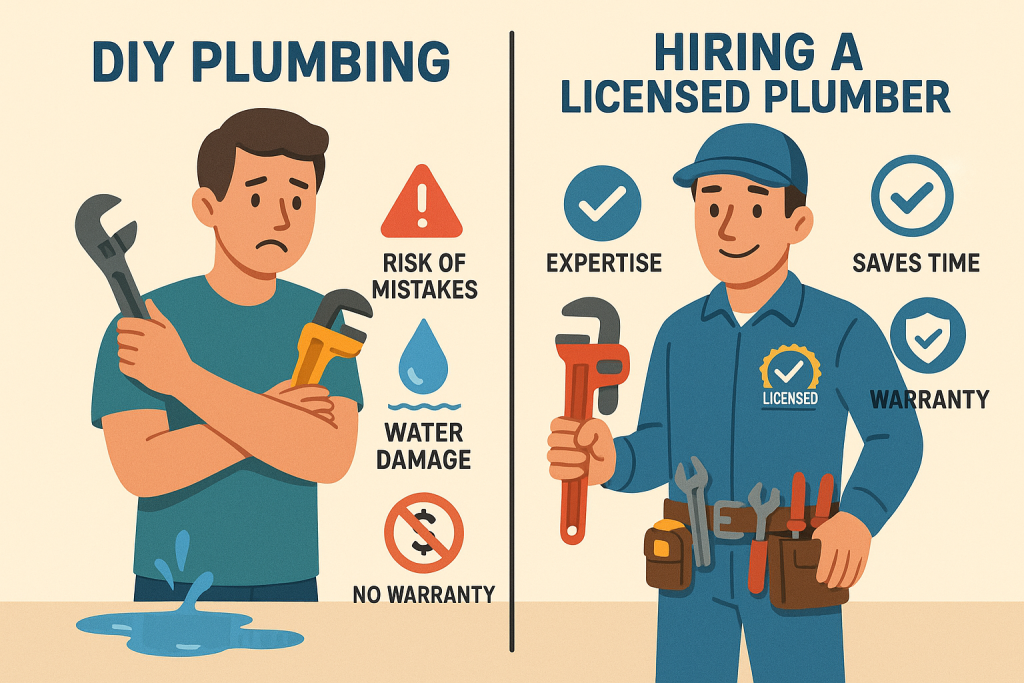
DIY is reasonable when: the water shuts off easily, the problem is visible, and the fix doesn’t involve cutting pipes, gas lines, or the water heater. Call a plumber when water is where it shouldn’t be, multiple drains back up at once, or the issue involves gas, electricity, or a sewer line.
A slow drain or a dripping faucet might be a fine weekend project. A sewer backup or a burst pipe isn’t. The right call depends less on how the problem looks and more on what happens if your fix doesn’t work.
DIY Jobs Most Homeowners Can Handle
Safe DIY repairs tend to share the same traits: the water shuts off easily, the problem is easy to see, the fix doesn’t require cutting pipes, and it doesn’t touch a gas line, water heater, or sewer line.
- Plunging a toilet
- Cleaning a sink stopper
- Tightening a loose showerhead
- Replacing a faucet aerator
- Using plumber’s tape on a minor threaded connection
- Replacing a worn flapper or adjusting a float in a running toilet
Shut off the water to the fixture before starting, and set a limit for yourself: if a part won’t move, the leak continues, or the clog comes back after one attempt, stop and call rather than keep pushing.
When to Call a Plumber Right Away
Call if you see water where it shouldn’t be — especially near walls, ceilings, floors, outlets, or appliances. A hidden leak can spread significantly before the visible damage catches up to it.
Also call if multiple drains are backing up at once. A single slow sink is often a local clog; several drains, gurgling toilets, or sewage odors together usually point to a sewer line problem — a different kind of job requiring different tools and handling. Water heater issues involving leaks, rusty water, popping sounds, or anything touching gas or electrical connections also belong to a trained technician, not a DIY attempt.
| Warning Sign | Possible Cause | Why DIY Is Risky | Best Next Step |
|---|---|---|---|
| Burst pipe or heavy leak | Broken pipe, frozen line, failed fitting | Water damage can spread quickly | Shut off water and call for emergency service |
| Sewage smell or backup | Blocked or damaged sewer line | Contaminated water can create health risks | Avoid contact and call a plumber |
| No water throughout the home | Main line issue or severe blockage | The source may be hidden or outside the fixture | Get professional diagnosis |
| Sudden low water pressure | Leak, corrosion, main line damage | Guesswork can miss the real cause | Schedule inspection and repair |
| Water stains on walls or ceilings | Hidden pipe leak | Damage may already be inside the structure | Call before opening walls |
| Water heater leak | Tank failure, valve issue, pressure problem | Heat, pressure, gas, or electrical hazards | Call a licensed provider |
Why a Failed DIY Repair Costs More Than It Looks Like It Will
An overtightened fitting, a cracked pipe, or an incorrectly seated seal can turn a small leak into a much bigger one — water travels under cabinets, behind walls, and beneath flooring long before it becomes visible. The CDC notes mold can begin growing on wet materials within 24 to 48 hours, so by the time you notice a hidden leak, the fix may involve not just plumbing work but drying equipment, flooring, drywall, and mold remediation.
DIY can also miss the real cause. A slow drain might not be hair or soap near the sink — it could be a deeper blockage further down the line. A faucet leak that looks like a worn washer could actually be corrosion or a pressure issue underneath. A plumber typically finds the actual cause faster because they know what to test first, rather than working through it by trial and error.
A Quick Self-Check Before You Decide
- Can I shut off the water quickly?
- Is the problem visible and easy to reach?
- Do I know what actually caused it?
- Do I already have the right tools?
- Can I complete this without cutting pipes?
- Is there any risk near electricity, gas, sewage, or the water heater?
- Would a failed repair damage walls, floors, or ceilings?
If any answer raises a concern, take the safer option. Water moves fast, and hidden damage can grow before you notice it — plumbing is less forgiving of a wait-and-see approach than most other home projects.
Once you decide to call, how to read plumbing service reviews correctly and how to avoid plumbing scams as a homeowner are worth a quick read before you hire — they cover what to look for and what to watch out for.
Frequently Asked Questions
Is it ever okay to try a DIY fix on a leak?
Yes, if it’s a small, visible leak you can shut off easily and reach without cutting into anything. If the leak is hidden, spreading, or near electrical components, call a plumber instead.
What’s the biggest risk of a failed DIY plumbing repair?
Water spreading unseen — behind walls, under cabinets, beneath flooring — before you realize the fix didn’t work. That hidden spread is often what turns a cheap repair into an expensive one.
How do I know if a clog is a simple fix or a deeper problem?
If plunging or a basic drain snake clears it and it doesn’t come back, it was likely local. If the clog returns quickly or multiple drains are affected, the blockage is probably further down the line and needs a professional.
If you’re unsure either way, Emergency Plumbing Squad connects you with a licensed 24 hour plumber near me who can tell you honestly whether it’s a DIY job or not.
