
Waking up to a sump pump alarm can be alarming, especially when heavy rain is falling and you can’t immediately tell whether water is entering the basement. Understanding why sump pump alarms go off at night can help you decide what to check, what you can safely handle yourself, and when the situation calls for professional plumbing help.
A sump pump alarm usually sounds because the water level in the sump pit has risen beyond its normal operating range or the system has detected a problem. The cause may be heavy rainfall, a clogged discharge pipe, a stuck float switch, a power outage, a failing pump, or trouble with a battery backup. In some cases, the alarm itself or its sensor is responsible.
Don’t ignore an alarm simply because the pump still seems to be running. Check the pit, watch the water level, and confirm that water is being moved away from the house. If the level continues rising or flooding begins, treat the situation as an urgent plumbing problem and consider professional sump pump help before water spreads further.
What the Water Level and Sump Pump Alarm Are Telling You
A sump pump alarm is designed to warn you when conditions around the system aren’t normal. Many alarms use a separate float or water sensor positioned above the level where the pump normally turns on. When water reaches that sensor, the alarm system sounds.
The alarm doesn’t always mean the sump pump has completely stopped. The pump may be running but unable to move incoming water fast enough. During a strong overnight storm, groundwater can enter the sump pit faster than a single pump can discharge it.
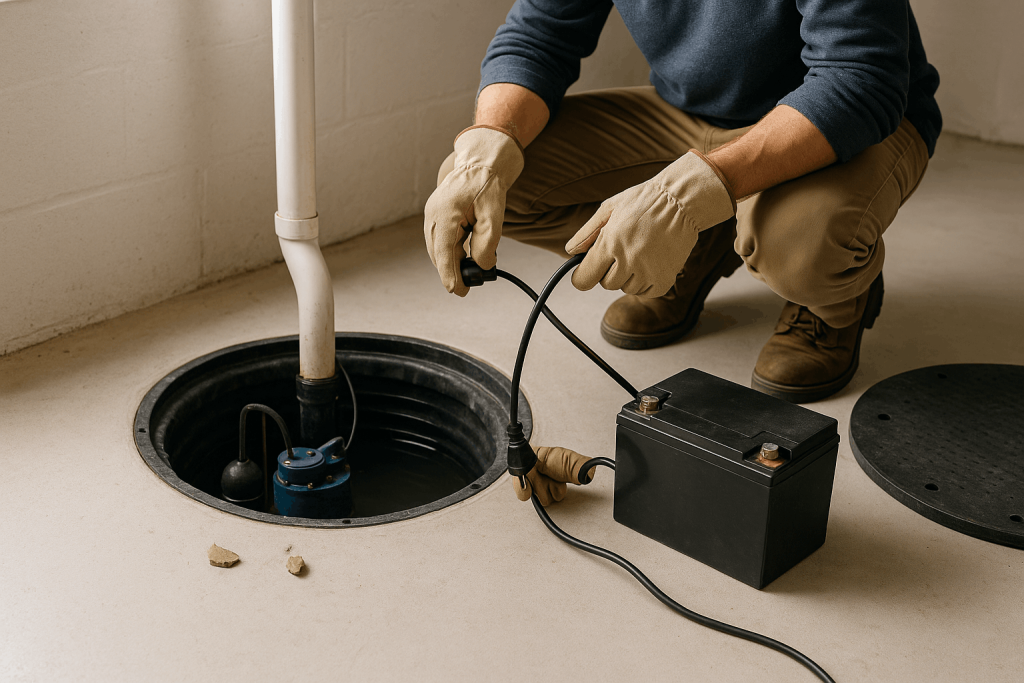
The sound may also point to a mechanical or electrical issue. A stuck float switch can prevent the unit from starting. A blocked discharge line can keep water from leaving the property. If the pump lost power, the pit can fill rapidly while the system remains inactive.
Use what you see and hear to narrow down the likely cause.
| What You Notice | Possible Cause | What to Do |
| Alarm sounds and water is rising | Heavy inflow or pump trouble | Watch the level closely and confirm the pump is moving water |
| Pump isn’t running | Power failure, stuck float, or failed unit | Check the plug and breaker if it is safe to do so |
| Pump runs continuously | High groundwater or discharge problem | Check whether water is leaving through the discharge line |
| Alarm starts during heavy rain | Water entering the pit faster than normal | Monitor the basement and prepare to call for help if the level keeps rising |
| Pump hums but little water leaves | Clog, obstruction, or mechanical problem | Avoid forcing the unit to run and arrange service |
| Alarm sounds after an outage | Backup or battery issue | Check the backup system’s status and restore normal power when safe |
A high-water alarm deserves prompt attention because the sump is often the last barrier between groundwater and the basement floor. Even when the situation settles after a few minutes, finding the reason for the warning can reduce the chance of another alarm during the next storm.
Why a Sump Pump Alarm Often Sounds at Night
There isn’t anything about nighttime itself that causes a pump alarm. The timing often comes down to weather, changing groundwater conditions, power problems, and the fact that homeowners aren’t watching the basement while they sleep.
A sump pump alarm going off after rain is especially common. Water doesn’t always reach the foundation immediately when a storm starts. Rain has to soak into the soil and move toward the drainage system. The sump pit may therefore start filling quickly several hours after rainfall begins.
Summer storms can create the same problem. If you’re wondering why a sump pump alarm goes off at night in summer, intense thunderstorms, saturated soil, and sudden power interruptions are common explanations. Warm-season storms can deliver a large amount of rain over a short period, putting extra demand on sump pumps.
A blocked or frozen discharge pipe can also trigger a high-water warning. The pump may switch on normally but have nowhere to send the water. A damaged check valve can create a similar cycle by allowing discharged water to flow back toward the pit.
Mechanical wear is another possibility. A float switch can stick against the basin wall, power cord, or discharge pipe. Debris can interfere with the pump intake. An older unit may run but move less water than it once did.
Problems outside the basement matter too. Poor drainage around the foundation may increase the amount of groundwater reaching the sump system. Water collecting near the house because of grading or drainage problems can place added demand on a waterproofing sump setup.
For homes with a crawl space instead of a full basement, the same warning signs apply. Rising water around the pump can still lead to moisture damage if the system can’t keep pace.
What to Do when the Pump Alarm Wakes You Up
Your first goal is to determine whether water is rising and whether the sump pump is operating. You don’t need to dismantle the unit or work on electrical components to make useful first checks.
If standing water has reached electrical outlets, extension cords, appliances, or the pump connection, don’t enter the area. Water and electricity create a serious shock hazard. Arrange professional help rather than attempting to reach submerged electrical equipment.
When the area is dry enough to approach safely:
- Look at the water level. Check whether the sump pit is unusually full and whether water is continuing to rise. Then listen for the pump. A normal cycle should include the unit starting, moving water, and shutting off as the level drops.
- Confirm that the pump has power. Make sure the plug hasn’t come loose. Check the appropriate breaker if it can be reached safely. If a breaker trips again after being reset, don’t repeatedly reset it.
- Watch the float switch. A float trapped against the pit wall or tangled with a cord may prevent normal operation. Don’t reach into moving equipment.
- Listen for unusual sounds. Humming without pumping, grinding, repeated rapid cycling, or silence when the water is high can point to a problem that needs repair.
- Check the discharge area. If accessible, look outside to see whether water is being discharged away from the foundation. Ice, soil, debris, a crushed pipe, or another obstruction can restrict flow.
- Check for basement flooding. Move belongings away from spreading water when you can do so safely. If the water level keeps climbing despite the pump running, contact an emergency plumber.
Silencing the sump pump alarm shouldn’t be your first response unless you’ve already identified what triggered it. A quiet alarm doesn’t correct a high-water condition.
Some controls have a silence or reset button that temporarily stops the sound. Follow the manufacturer’s instructions for your specific system. If the alarm starts again, the underlying condition is still present and needs attention.
Battery Backup and Power Failure Problems
A power outage can create two problems at once. Heavy weather may increase the amount of groundwater reaching the sump while cutting electricity to the primary unit.
A properly operating backup sump pump can provide temporary protection when normal electrical service is unavailable. Depending on the system, backup equipment may run from a battery or another power source. Its capacity can differ from the primary unit, so a backup may still struggle if water is entering the pit unusually fast.
If you hear a sump pump battery backup alarm going off, check the status indicators before assuming the primary pump has failed. The warning may signal that backup mode is active, the battery needs attention, or the backup system has detected another fault.
A sump pump battery beeping after a power outage may continue until normal power returns or the controller is reset according to the manufacturer’s instructions. Don’t disconnect the alarm simply to stop the sound without confirming the condition of the system.
Loose wire connections, damaged plugs, corrosion around terminals, and aging battery components can interfere with backup operation. Visible moisture or damaged electrical parts should be left alone. Don’t open electrical panels or attempt wiring repairs around a wet sump area.
Backup equipment also needs routine testing. A battery can appear normal while no longer holding enough charge to run the system for an extended outage. Follow the pump manufacturer’s testing and replacement instructions rather than waiting for a storm to find out whether the backup works.
Homes that experience frequent groundwater problems may use two sump pumps or a primary unit paired with a secondary system. Redundancy can reduce risk, but every pump and alarm still needs periodic inspection.
How to Reduce Nighttime Sump Pump Problems
Regular checks can catch small problems before a storm fills the pit. Pay particular attention before seasons when your area receives frequent rainfall or snowmelt.
The goal isn’t to perform complicated repairs yourself. Basic inspection helps you notice changes in the system and schedule service before the next high-water event.
- Keep the sump pit clean. Remove accessible sediment and loose debris that could interfere with the intake or float. The pump should sit securely and have enough room for its float mechanism to move.
- Test the pump periodically. When appropriate for your system, adding water to the pit can confirm that the unit starts automatically, drains the basin, and shuts off once the level falls.
- Check float movement. Make sure the float isn’t catching on the basin wall, discharge piping, electrical cord, or another pump.
- Inspect the discharge route. Water should leave the building and move away from the foundation instead of draining directly back toward it. Watch for crushed pipe, soil blockage, ice, or damaged fittings.
- Pay attention to cycling. A pump that starts and stops every few seconds, runs when little water is entering the pit, or never shuts off deserves inspection.
- Test backup equipment. Follow the manufacturer’s directions for testing the battery backup and alarm. Check accessible terminals for corrosion and replace aging components on the recommended schedule.
- Schedule repairs when performance changes. Don’t wait for the next downpour if the pump fails a test, makes unusual noises, or has recently struggled to lower the pit water.
After an alarm incident, continue checking the basement for a while even after the warning stops. Groundwater can keep entering the drainage system after the rain ends.
Repeated alarms also deserve investigation. If the sump regularly reaches its alarm level despite a functioning pump, the unit may be undersized for the amount of water entering the property, the discharge setup may be restricting flow, or drainage conditions around the home may need attention. Learning the warning signs of a weakening sump pump can help you recognize trouble before the next heavy rain.
Get Overnight Sump Pump Help from Emergency Plumbing Squad
A sump alarm at 2 a.m. doesn’t automatically mean your basement is about to flood, but it does mean the system needs attention. Check whether the pump is operating, watch the pit level, look for signs of a discharge problem, and confirm that the primary or backup system has power.
If rising water continues, the pump stops working, or water begins spreading across the basement floor, waiting until morning can allow the problem to grow.
Emergency Plumbing Squad helps connect homeowners across the country with local service providers for sump pump problems and other urgent plumbing needs.
Use the Emergency Plumbing Squad location finder to look for plumbing help near you and describe what you’re seeing, including whether the alarm is sounding, whether the pump is running, and whether the water level is still rising. Those details can help the plumbing professional understand the situation before assessing the system.