
A sump pump can show trouble before water reaches the basement floor. Knowing how to know if sump pump is failing can help you spot unusual noises, frequent cycling, standing water in the sump pit, or a pump that runs without moving enough water outside.
Some problems come from debris blocking the float or a clogged discharge outlet. Others point to worn components, electrical trouble, improper installation, or a pump that can’t keep up with incoming water. Acting promptly can help limit water damage and disruption, especially when you may need professional help for a failed sump pump.
Start by observing the pump from a dry area. Don’t handle electrical connections when standing water is present. If flooding is increasing, water has reached electrical equipment, or the pump has stopped during heavy rain, contacting a local plumbing professional is the safer choice.
Warning Signs Your Sump Pump May Be Failing
A functioning sump pump should start when water rises in the pit, move water through the discharge line, and shut off after the level drops. Changes in that routine can signal trouble.
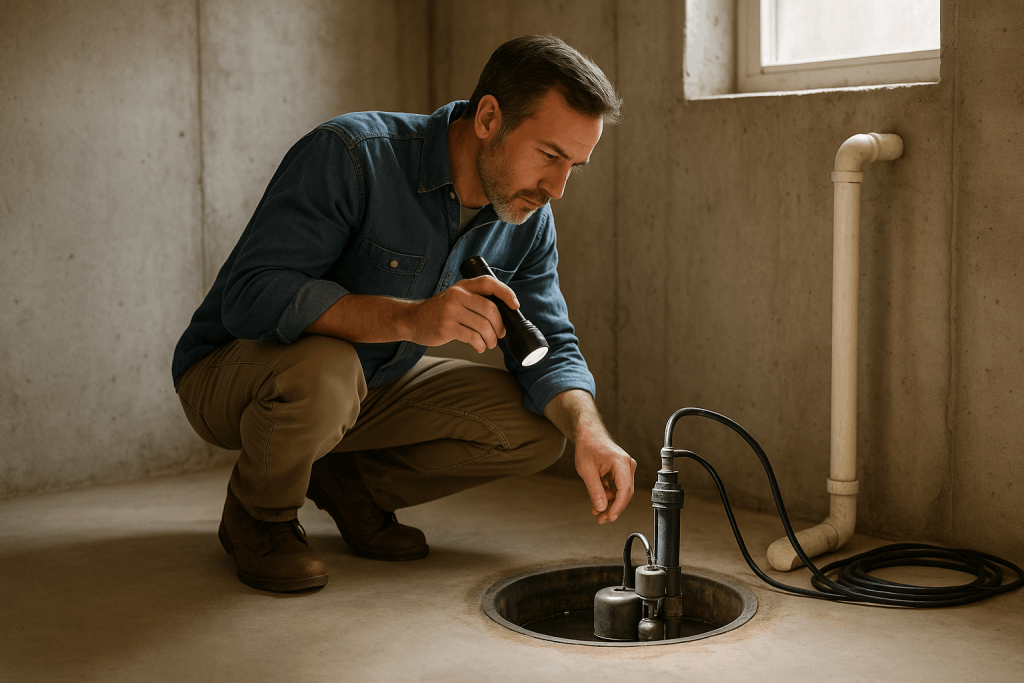
A pump that won’t turn on while the pit is filling may have a stuck float switch, lost power, or an internal failure. If electrical connections are dry and accessible, visually check whether the pump is plugged in and whether the breaker has tripped. Don’t repeatedly reset a breaker around standing water.
Other sump pump issues can be less obvious. Changes in sound, cycling, or alert behavior can also help explain what causes sump pump alarms to sound unexpectedly. Watch for:
- Unusual noises. Grinding, rattling, humming, or vibration may point to debris, a damaged impeller, loose parts, or a motor problem.
- Constant running. If the pump runs after the water level falls, the float or switch may be stuck, or the unit may be undersized.
- Frequent cycling. Repeated starts and stops may come from float problems, pit sizing, or water returning through the discharge piping.
- Standing water. If the pump runs but the water level barely moves, the discharge line may be restricted or the pump may not be moving water effectively.
- Water around the pit. Moisture on the surrounding floor can mean the system isn’t keeping up with groundwater.
- Foul odors. Stagnant water or debris can create odors around the sump basin.
- Visible rust or damage. Corrosion, damaged cords, or loose piping can affect reliable operation.
A pump may stay quiet during a dry period because there’s no water entering the pit. Silence alone doesn’t prove failure.
Check the Sump Pit, Float, and Pump Operation Safely
When the sump area is dry and there are no electrical hazards, a visual check can help narrow down the problem. Don’t disassemble the pump.
Check the sump pit for dirt, gravel, sediment, or objects that could restrict the float. The float needs room to move freely. If it becomes wedged against the basin wall, discharge pipe, or power cord, the switch may not activate the pump.
Look for changes in the piping. A tilted pump, loose fitting, or shifted discharge pipe may interfere with the float or indicate improper installation, which can cause cycling, poor drainage, vibration, and wear.
If the manufacturer allows water testing, slowly add clean water to the pit. The pump should start as the water rises, lower the level, and shut off. Stop the test if the pump runs without lowering the water.
Don’t repeatedly unplug, reset, or force the float when something isn’t working. A humming motor, repeatedly tripped breaker, or hot smell may indicate the need for pump repair or replacement.
| What You Notice | Possible Cause | Safer Next Step |
| Pump doesn’t start as water rises | Stuck float, power problem, failed switch, or pump failure | Visually check the float and power only from a dry area; arrange service if the cause isn’t obvious |
| Pump runs constantly | Stuck switch, high groundwater, undersized pump, or discharge issue | Check whether water is actually leaving the system and call for service if running continues |
| Pump starts and stops repeatedly | Float positioning, returning discharge water, or pit sizing problem | Have the system and check valve inspected |
| Pump runs but water remains high | Clogged discharge, damaged impeller, weak motor, or inadequate capacity | Stop relying on the pump and arrange prompt service |
| Grinding, rattling, or strong vibration | Debris, worn components, damaged impeller, or loose piping | Have the unit inspected before failure worsens |
| Water returns to the pit after shutdown | Check valve or discharge piping problem | Inspect the discharge setup and arrange repair |
| Pump won’t operate during an outage | Primary unit has no backup power | Consider a battery or other approved backup sump system |
When a Pump Runs but the Sump Pit Stays Full
A running motor doesn’t mean the system is working. If the pump runs but the water remains high, check the discharge point outside from a safe location. If water keeps rising or the pump isn’t moving water, arrange professional help promptly.
A clogged, frozen, crushed, disconnected, or poorly routed discharge line can prevent water from leaving. The pump may continue operating without lowering the pit.
From outside, look at the outlet without taking the plumbing apart. Mud, mulch, leaves, snow, ice, or debris can block it. Water should drain away from the structure rather than pooling beside the foundation.
The sump pump check valve limits water from flowing backward through the discharge pipe after shutdown. If you hear water rushing back toward the pit or the pump restarts almost immediately, the valve or discharge setup may need attention.
A clogged line or undersized pump can also strain the motor. During prolonged rain, the pit may fill faster than the unit can empty it.
If the water keeps rising, treat it as an active drainage problem and contact a plumbing professional. Waiting increases the chance of water spreading through the property.
What to Do During Sump Pump Failure and Basement Flooding
A sump pump failure becomes urgent once water spreads beyond the pit. Protect yourself first. Electrical shock and contaminated water can cause serious harm.
Stay out of pooled water if it has reached outlets, extension cords, appliances, a furnace, electrical equipment, or the service panel. Don’t enter a flooded area to unplug the pump. Shut off power only from a dry, safe location.
If a burst pipe or failed fixture is adding water, turn off the property’s main water supply only when the valve is safely accessible. A sump pump can’t compensate indefinitely for a major plumbing leak.
Sewer or drain backup requires added caution. Keep people and pets away and avoid contact with the water.
From a dry location, check whether the sump system is moving water. If the level is rising, the pump has stopped, or the cause isn’t clear, contact a plumbing professional rather than dismantling or repeatedly resetting the equipment.
Fast action is especially important when:
- Water is rising quickly or has reached the surrounding floor.
- The sump pump stops during a storm or heavy groundwater.
- The breaker trips repeatedly, the pump smells hot, or you hear electrical buzzing.
- The pump runs continuously without lowering the water.
- The discharge system is frozen, damaged, or blocked where you can’t safely clear it.
- Drain or sewer water is entering the space.
- You can’t determine why the system stopped without dismantling equipment.
When conditions are safe, photograph visible damage. Avoid moving contaminated materials through clean areas.
When Sump Pump Repair or Replacement Makes Sense
Not every problem requires a new pump. A plumber may be able to correct a blocked float, damaged switch, discharge restriction, check valve problem, or loose pipe.
Replacement may make sense when the unit has recurring failures, corrosion, motor problems, physical damage, or trouble keeping up despite a clear discharge system. A pump that has needed several repairs may be less dependable during heavy rain.
Age can inform the decision, but operating conditions matter too. A pump that cycles frequently because of high groundwater may wear faster than one used only a few times each year. Check the manufacturer’s service-life and maintenance guidance.
The replacement pump must also fit the property’s conditions. Basin dimensions, vertical lift, discharge piping, groundwater volume, and electrical setup all affect performance.
A backup sump system may provide added protection in properties with finished basements, occupied lower levels, equipment or inventory below grade, frequent groundwater intrusion, outages, or a history of flooding. Backup equipment should be tested periodically. Regular testing, clear discharge piping, and a properly operating float can also support better protection against basement flooding before severe weather arrives.
Routine attention can reduce surprise failures. Keep the pit free of debris, make sure the float moves freely, inspect visible discharge piping, and address new noises, cycling changes, or drainage problems while the area is dry.
Get Sump Pump Help from Emergency Plumbing Squad
A sump pump showing signs of failure is easier to address before water spreads through the property. If your unit won’t start, runs without removing water, cycles constantly, makes unfamiliar noises, or stops during heavy rain, don’t wait for flooding to confirm the problem.
Emergency Plumbing Squad helps homeowners and business owners connect with local providers for sump pump services and 24/7 emergency plumbing help across the United States.
When requesting help, explain what the pump is doing, whether the water is rising, whether it still has power, and whether water has reached the floor. Those details can help the plumbing professional understand the urgency.
If your property is taking on water or the pump has stopped during a storm, use Emergency Plumbing Squad’s location finder to connect with local plumbing help. Round-the-clock availability can help limit further disruption when a sump pump problem becomes an emergency.