
A plumbing crisis can cause damage fast. A burst water line, broken fixture, leaking pipe, failed water heater, or backed-up drain can send water across floors and into walls before you have time to think. The faster you respond, the better chance you have of limiting water damage and protecting your home or business.
The most important steps to minimize water damage during plumbing crisis situations are simple: stop the water flow, protect people from unsafe areas, remove standing water when safe, move belongings out of the affected space, and call for professional help. These first actions can reduce the spread of water while you wait for an emergency plumber.
Emergency Plumbing Squad provides 24/7 help for plumbing emergencies, leaks, burst pipes, fixture failures, water heater problems, and other urgent water issues. When water is spreading or you cannot find the source, do not wait. Quick service can help prevent bigger repair needs, mold growth, and structural damage.
Recognize Signs of Water Damage and Plumbing Emergencies
Water problems do not always start with a dramatic flood. Many begin with small clues that are easy to miss. A damp cabinet, stained ceiling, musty smell, soft flooring, or drop in water pressure can point to a hidden leak. When these signs appear, fast leak detection can help stop a small problem from turning into a larger emergency.
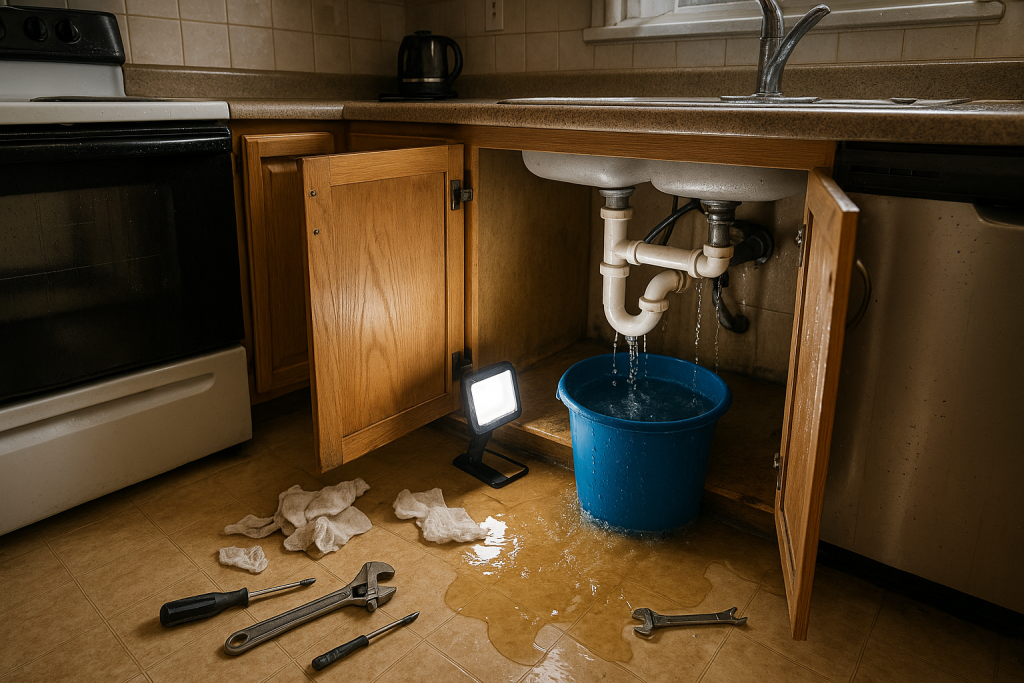
A visible water leak should always be taken seriously, especially if it is active, spreading, or located near electrical outlets, appliances, walls, or flooring. Even a small amount of water can soak into drywall, baseboards, insulation, cabinets, and subfloors. Once moisture moves into these materials, cleanup becomes harder.
A sudden loss of water pressure may also be a warning sign. It can mean water is escaping through a broken pipe or damaged supply line. If you hear hissing, dripping, rushing water, or gurgling inside walls or floors, there may be a hidden plumbing issue that needs immediate attention.
You should also watch for water near a water heater, washing machine, dishwasher, toilet, sink, tub, or main supply line. Appliance hoses and fixture connections can loosen or fail without much warning. In some cases, older pipes, worn valves, or clogged drains can create pressure that leads to sudden leaks.
Common warning signs include:
- Water stains on ceilings, walls, or floors
- Puddles under sinks, toilets, appliances, or water heaters
- Musty odors or damp indoor air
- Bubbling paint, swollen trim, or warped flooring
- Low water pressure across the home
- Running water sounds when fixtures are off
- Slow drains, gurgling toilets, or sewer odors
- A sudden increase in the water bill
If you see any of these signs, act quickly. Emergency Plumbing Squad can help identify the source, stop the leak, and reduce the risk of further damage.
Stop the Water Flow and Shut Off the Water Supply
When water is actively leaking or flooding, your first job is to stop the water flow. If you can do so safely, go straight to the shutoff valve. For a toilet, the valve is usually behind the toilet near the wall or floor. For a sink, look inside the cabinet under the basin. For a washing machine, check the wall valves behind the appliance.
If the leak is large or you cannot identify the source, shut off the main water supply. The main valve is often located near the water meter, in a basement, utility room, garage, crawl space, or along an exterior wall. Turn the valve clockwise until it stops. In some homes, the valve may be a lever that turns a quarter turn.
If there is water near outlets, cords, electrical panels, or appliances, do not walk through it. Water and electricity are a serious safety concern. Keep people and pets away from the area. If you can safely turn off power to the affected space from a dry location, do so. Otherwise, wait for professional help.
Once the water is shut off, remember that some water may still drain from pipes, fixtures, or appliances. Place simple buckets, pans, rags, or towels under active drips to catch what remains. This can help limit damage to floors and cabinets while you wait for service.
Use this quick response list during the first few minutes:
- Shut off the fixture valve if the leak is local.
- Shut off the main water supply if the leak is large or hidden.
- Keep away from standing water near electrical sources.
- Move children and pets away from the affected space.
- Place buckets, towels, or pans under drips.
- Avoid using fixtures connected to a backed-up drain or sewer line.
- Call Emergency Plumbing Squad for 24/7 emergency service.
If you smell gas near all your gas appliances or a gas water heater, leave the area and contact the proper emergency service first. Do not flip switches, use flames, or try to handle the issue on your own.
Remove Standing Water and Protect the Affected Area
After the leak is controlled, the next step is to remove standing water. The longer water sits, the more likely it is to spread into building materials. Fast removal can help reduce flooring damage, odors, mold risk, and damage restoration needs.
Start with safe areas only. Wear waterproof gloves and boots if available. Use towels, mops, rags, buckets, or a wet/dry vacuum to remove water from hard surfaces. A wet/dry vacuum can be helpful for larger puddles, but do not use a regular household vacuum. It is not designed for water and can be dangerous.
If water is clean and the area is safe, you may be able to handle a small spill yourself. If the water came from a sewer backup, toilet overflow, or contaminated drain, avoid direct contact and call professionals. Dirty water requires careful cleaning and may need specialized water extraction.
Move furniture, rugs, storage boxes, electronics, and personal items out of the wet area. If heavy furniture cannot be moved, place plastic, foil, or blocks under the legs to keep them from sitting directly on wet flooring. Remove items from cabinets if water has entered under sinks or around appliances.
Drying should begin as soon as possible. Open windows if weather allows. Use fans and dehumidifiers to move air and reduce moisture. Check under cabinets, around baseboards, behind appliances, and in nearby rooms. Water can travel farther than expected, especially through grout lines, under flooring, and along wall edges.
| Area Affected | What to Do First | Why It Matters |
|---|---|---|
| Bathroom floor | Mop, towel, or use a wet/dry vacuum | Helps protect flooring and baseboards |
| Kitchen cabinet | Remove items and dry the cabinet base | Prevents swelling and hidden mold |
| Carpeted room | Lift wet rugs and improve airflow | Reduces odor and moisture buildup |
| Basement | Remove standing water when safe | Limits spread to stored items and walls |
| Utility room | Check around water heater and appliances | Helps identify the leak source |
Even after visible water is removed, moisture may remain. If the room smells musty, feels damp, or shows stains after drying, schedule a professional inspection.
Use Temporary Repairs While Waiting for a Plumber
Temporary repairs can help slow a leak, but they are not a permanent fix. Their purpose is to limit water damage until a plumber arrives. If water is spraying, gushing, or coming from a hidden area, shut off the water supply first. Do not rely on tape or towels while pressure is still pushing water through a broken line.
For a small visible leak, heavy-duty tape, pipe repair tape, a rubber patch, or a cloth secured tightly around the pipe may reduce dripping for a short time. If water is coming from a loose connection under a sink, a bucket and towels can help protect the cabinet base while you wait. If a supply hose has failed, keep the water shut off to that fixture or appliance.
Leaks from water heaters should be treated carefully. If water is pooling around the heater, shut off the water supply to the unit if you can do so safely. For electric units, avoid standing water near the heater or electrical components. For gas units, watch for odors and call the right emergency service if gas is suspected.
Temporary repairs may also apply to drains. If a sink or tub is backing up, stop using that fixture. Do not keep running water to “test” the drain. If water is backing up from multiple fixtures, there may be a sewer or main drain problem. In that case, stop using plumbing throughout the property until a plumber checks the line.
Useful supplies to keep ready include:
- Flashlight
- Waterproof gloves
- Towels and rags
- Simple buckets or pans
- Wet/dry vacuum
- Pipe repair tape
- Rubber patch material
- Adjustable wrench
- Plunger
- Basic shutoff valve key if your home needs one
These items can help you respond faster, but they do not replace professional repair. Emergency Plumbing Squad can inspect the issue, provide proper service, and help prevent the same plumbing emergency from happening again.
Protect Belongings, Reduce Mold Risk, and Check for Hidden Damage
Once the water is under control, protect your belongings and check for hidden damage. Move important papers, electronics, furniture, rugs, clothing, and stored items to a dry area. If water reached personal belongings, separate wet items from dry ones so moisture does not spread.
Mold can begin developing when moisture stays trapped. Bathrooms, basements, cabinets, closets, carpets, drywall, and wood floors are common areas where dampness can remain after a leak. Strong airflow helps, but some materials may need more attention if they absorbed water.
Check areas that are easy to miss. Look under sinks, behind toilets, around bathtubs, near water heaters, behind washing machines, and along baseboards. If the plumbing crisis affected an upstairs bathroom or laundry room, check the ceiling below for stains or soft spots.
Take photos of visible water damage before moving too much around. Photos can help you track what happened and may be useful if you need to contact an insurance provider or damage restoration company. Keep notes about the time you noticed the issue, what you shut off, and what areas were affected.
If water touched walls, flooring, or cabinets, keep checking the area over the next few days. Watch for musty smells, swelling, bubbling paint, stains, or soft materials. These signs may mean moisture is still present.
To reduce mold and damage risk after the first cleanup:
- Keep air moving with fans if the area is safe.
- Use a dehumidifier in damp rooms.
- Remove wet rugs, mats, and soft materials.
- Clean and disinfect hard surfaces.
- Avoid closing up damp cabinets or closets too soon.
- Check nearby rooms for spreading moisture.
- Contact professionals if odors or stains remain.
Emergency Plumbing Squad focuses on stopping the plumbing source of the problem. If the damage is widespread, you may also need water extraction or restoration support to fully dry and repair the affected areas.
Prepare for the Worst Before the Next Plumbing Emergency
The best time to prepare for a plumbing emergency is before water is on the floor. A few simple habits can reduce risk and help you respond faster when something goes wrong.
Start by learning where your shutoff valves are located. Every adult in the home or key staff member in a business should know how to shut off the main water supply. If valves are stuck, corroded, missing, or hard to reach, schedule service so they can be repaired or replaced before an emergency.
Check hoses and faucets regularly. Washing machine hoses, dishwasher lines, icemaker lines, sink supply lines, and outdoor faucets can all leak or fail. Replace worn hoses and watch for rust, cracks, bulging, or dampness around connections.
Install mesh drain covers in sinks, showers, and bathtubs to catch hair, soap pieces, and debris before they enter the drain. This simple step can reduce clogs and lower the chance of backups. Avoid pouring grease, food scraps, wipes, paper towels, and hygiene products down drains or toilets.
Regular leak detection is also helpful. Look under sinks, near toilets, around the water heater, and behind appliances. Check ceilings below bathrooms and laundry areas. Small leaks are easier to repair when they are found early.
Emergency Plumbing Squad can help with inspections, leak repair, fixture problems, drain issues, and urgent plumbing services. Preventive care cannot stop every emergency, but it can lower your risk and help you respond with more confidence.
Call Emergency Plumbing Squad for 24/7 Plumbing Help
A water emergency can feel overwhelming, but fast action can limit damage. Shut off the water, stay away from unsafe areas, remove standing water when possible, protect your belongings, and call for help. The sooner the plumbing problem is fixed, the easier it is to stop water from spreading into floors, walls, cabinets, and personal items.
Emergency Plumbing Squad is available 24/7 for plumbing emergencies, burst water lines, hidden leaks, overflowing fixtures, water heater problems, drain backups, and urgent repair needs. Our team can help stop the source of the issue and provide clear next steps for protecting your home or business.
If water is spreading, a leak will not stop, drains are backing up, or you cannot find the source, call Emergency Plumbing Squad right away. Quick response can reduce stress, limit water damage, and help you get your property back to normal.