
Call the number above now
Get connected to a licensed plumber for urgent water damage situations, 24/7.
The five steps that matter most: stop the water flow, keep people away from unsafe areas, remove standing water once it’s safe to do so, move belongings out of the affected space, and call for professional help. Doing these in order limits how far water spreads while you wait for a plumber.
A plumbing crisis can cause damage fast — a burst line, broken fixture, leaking pipe, or backed-up drain can send water across floors and into walls before you have time to think. The faster you respond, the better your chances of limiting damage.
Recognize the Warning Signs Early
Water problems don’t always start with a dramatic flood. Many begin with small clues that are easy to miss:
- Water stains on ceilings, walls, or floors
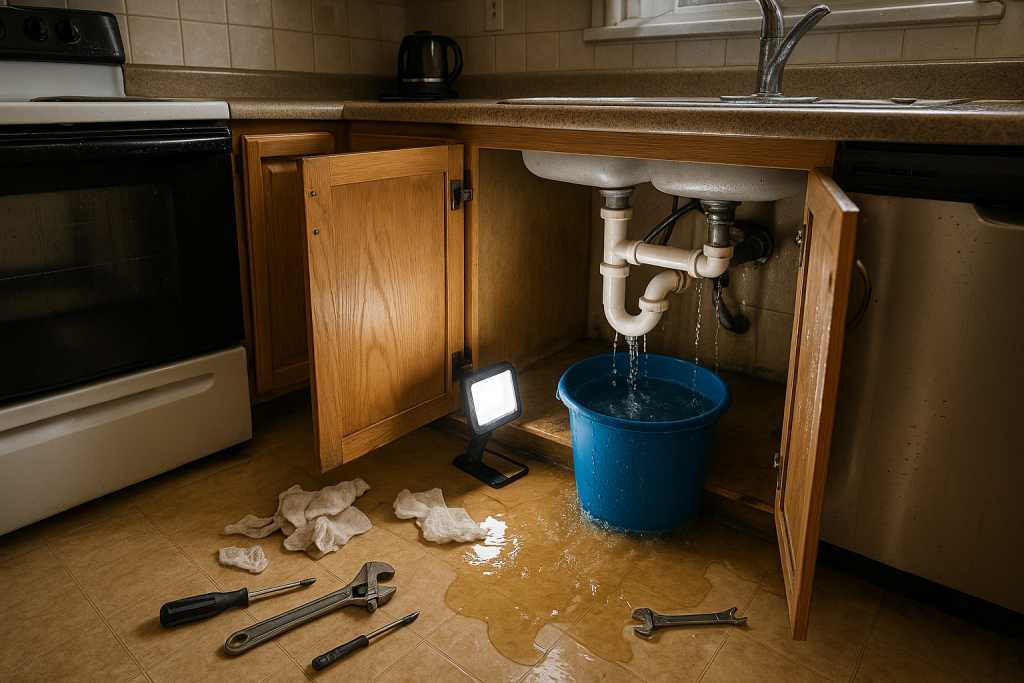
- Puddles under sinks, toilets, appliances, or water heaters
- Musty odors or damp indoor air
- Bubbling paint, swollen trim, or warped flooring
- Low water pressure across the home
- Running water sounds when fixtures are off
- Slow drains, gurgling toilets, or sewer odors
- A sudden increase in the water bill
If you notice any of these, act on it — waiting tends to turn a small problem into a bigger one.
Step 1: Stop the Water Flow
If you can safely reach it, go straight to the shutoff valve — behind the toilet, inside the cabinet under a sink, or on the wall behind a washing machine. If the leak is large or you can’t identify the source, shut off the main water supply instead. It’s usually near the water meter, in a basement, utility room, or along an exterior wall. Turn it clockwise until it stops.
If water is near outlets, cords, or a breaker panel, don’t walk through it — stay out of the area entirely and, if you can safely reach the breaker from a dry location, shut off power there. If you smell gas near an appliance or water heater, leave the area immediately and contact emergency services first, not the plumber.
If a pipe has actually burst, how to handle a burst pipe before help arrives covers the exact first steps in more detail.
Step 2: Remove Standing Water
The longer water sits, the more likely it is to soak into flooring, cabinets, and drywall — so remove it as soon as it’s safe. Use towels, a mop, or a wet/dry vacuum on hard surfaces (never a regular household vacuum on water). If the water came from a sewer backup or toilet overflow, don’t touch it directly — that’s contaminated water that needs professional extraction, not a mop.
| Area Affected | What to Do First | Why It Matters |
|---|---|---|
| Bathroom floor | Mop, towel, or use a wet/dry vacuum | Helps protect flooring and baseboards |
| Kitchen cabinet | Remove items and dry the cabinet base | Prevents swelling and hidden mold |
| Carpeted room | Lift wet rugs and improve airflow | Reduces odor and moisture buildup |
| Basement | Remove standing water when safe | Limits spread to stored items and walls |
| Utility room | Check around water heater and appliances | Helps identify the leak source |
Step 3: Move Belongings Out of the Water’s Path
Move furniture, rugs, boxes, electronics, and personal items out of the wet area. If heavy furniture can’t be moved, place plastic, foil, or blocks under the legs to keep it off wet flooring. Check under cabinets, behind appliances, and along baseboards — water travels farther than it looks, especially along grout lines and under flooring.
Step 4: Watch for Hidden Mold Risk
Standing water and trapped moisture can begin promoting mold growth within just 24 to 48 hours, according to CDC guidance on water damage cleanup — which is exactly why fast drying matters as much as fast water removal. Run fans and a dehumidifier if the area is safe and power isn’t affected. Watch bathrooms, basements, cabinets, closets, carpets, and drywall over the next few days for musty smells, swelling, or soft materials — signs that moisture is still trapped even after visible water is gone.
Step 5: Call for Professional Help
Temporary measures — a towel, a bucket, a piece of tape — can slow a leak, but they aren’t a fix. If water is spreading, a leak won’t stop, drains are backing up, or you can’t find the source, that’s the point to call rather than keep improvising.
Not sure whether what you’re facing actually rises to the level of an emergency? What counts as a plumbing emergency at home can help you decide, and how weather causes plumbing emergencies is worth a look if the crisis started during a storm or cold snap.
Before the Next One Happens
Learn where your shutoff valves are before you need them — every adult in the home, or key staff at a business, should know how to use the main shutoff. Check washing machine hoses, dishwasher lines, and sink supply lines periodically for cracks or bulging, and install mesh drain covers in sinks and tubs to catch hair and debris before it causes a clog.
Frequently Asked Questions
How fast can water damage actually spread?
Faster than most people expect — water follows the path of least resistance through flooring, baseboards, and wall cavities within minutes, and mold can begin developing within 24 to 48 hours of standing moisture, per CDC guidance.
Is it safe to clean up water myself?
Clean water from a supply line is generally safe to clean up yourself once the source is shut off. Water from a sewer backup or toilet overflow is contaminated and should be handled by professionals, not mopped up directly.
What should I do if I can’t find the source of a leak?
Shut off the main water supply rather than continuing to search — that stops the damage from spreading while a plumber locates the actual source.
Emergency Plumbing Squad connects you with a licensed 24 hour plumber near me any time a plumbing crisis puts your home or business at risk.
