A burst pipe can send water through your home or business within minutes. It can soak flooring, damage walls, ruin belongings, and create safety risks if the water reaches outlets, appliances, or electrical panels. The faster you act, the better chance you have of limiting water damage before professional help gets there.
Knowing how to handle burst pipe before help arrives can help you stay calm and take the right steps. Your first goals are to shut off the water, stay away from unsafe areas, protect valuables, and call for emergency plumbing service. You do not need to fix the pipe yourself. You only need to slow the damage until a plumber can make the pipe repair.
Emergency Plumbing Squad helps homeowners and businesses respond to burst pipes, small leaks, standing water, and urgent plumbing problems 24/7. If water is spreading or you cannot find the source, call right away. Quick service can help reduce damage cleanup, protect affected areas, and get your plumbing system back under control.
Why Burst Pipes Happen and Why Damage Spreads Fast
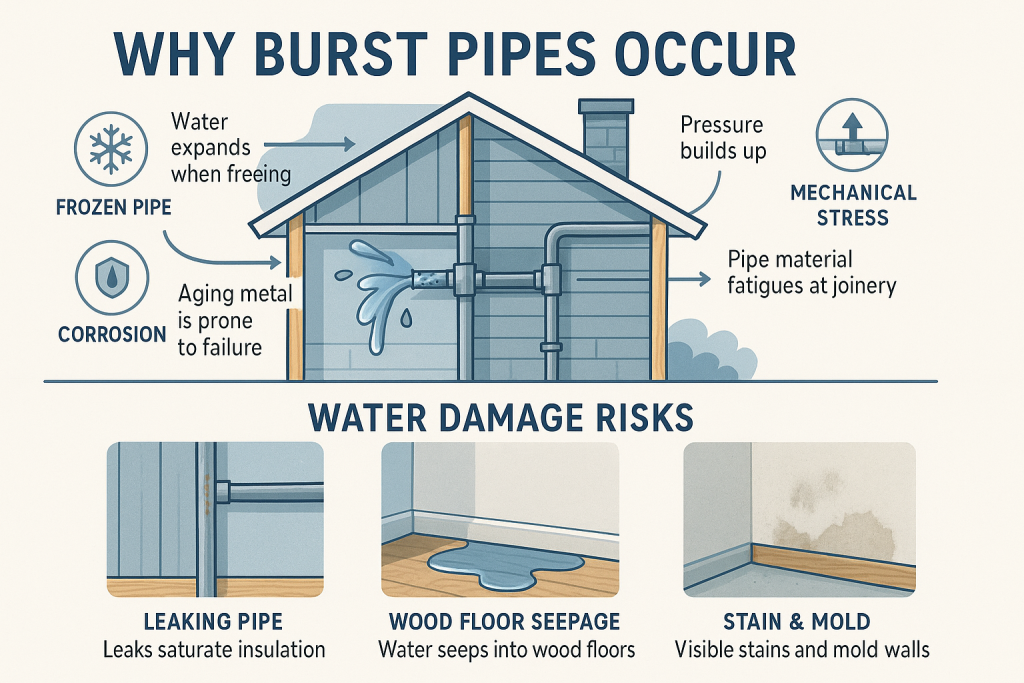
Burst pipes can happen for several reasons. Freezing weather is one of the most common causes. When water freezes inside a pipe, it expands. That pressure can split the pipe or weaken the line until it breaks. Once the frozen section thaws, water may rush through the damaged area.
Old or weakened plumbing can also fail. Corrosion, loose fittings, high water pressure, shifting ground, clogs, and worn pipe materials can all raise the chance of a burst. In some cases, a pipe may show signs of trouble first. You may notice a small leak, a damp spot, low water pressure, rust, or a hissing sound behind a wall. In other cases, the break happens suddenly.
Water damage spreads quickly because water follows the easiest path. It may run under flooring, behind baseboards, through ceilings, into cabinets, and across lower rooms. Even if the visible water looks limited, moisture may already be moving into hidden spaces.
A burst pipe may also affect more than one area. For example, a broken pipe in an upstairs bathroom can damage the bathroom floor, the ceiling below, nearby walls, and lights or fixtures in the lower room. A burst line in a basement can damage stored items, equipment, furniture, and foundation-adjacent materials.
The sooner you stop the water supply, the less water can enter the property. That one step can make a major difference while you wait for Emergency Plumbing Squad to arrive.
Shut Off the Main Water Supply and Check Electricity Risks
The first step is to shut off the water. Look for your home’s main water supply valve. It is often found in a basement, crawl space, garage, utility room, or near the water meter. In some homes, it may be outside near the foundation or in a covered meter box.
Turn the valve clockwise until it stops. If the valve is a lever, turn it so the handle sits across the pipe instead of in line with it. This should stop the main water supply and prevent more water from feeding the burst. If the break is near one fixture, you may also be able to use a local shut-off valve under a sink, behind a toilet, or near an appliance. Still, if water is moving fast, the main shut-off is usually the safer choice.
After shutting off the water, open a nearby faucet to relieve pressure and let remaining water drain from the line. This can help slow dripping from the damaged area. Do not keep turning water on and off to test the pipe. Wait for a professional plumber to inspect it.
Electricity is the next concern. If standing water is near outlets, cords, appliances, or your circuit breaker, stay away from the wet area. Do not touch electrical devices while standing in water. If you can safely shut off power from a dry location, do so. If you cannot, wait for help.
Use these first-response steps when a pipe bursts:
- Shut off the main water supply.
- Stay out of standing water near electrical sources.
- Turn off power only if you can do it safely from a dry area.
- Move people and pets away from affected areas.
- Open a faucet to relieve pressure after the water is shut.
- Call Emergency Plumbing Squad for 24/7 emergency service.
- Avoid using fixtures until the damaged pipe is checked.
Acting quickly helps stop the flow immediately and gives the plumber a safer area to inspect.
Start Temporary Damage Control While You Wait
Once the water is off and the area is safe, you can start controlling the mess. These steps are not a replacement for professional pipe repair, but they can help reduce water damage before help arrives.
Place buckets, pans, or towels under active drips. If water is coming through a ceiling, place a container below the drip and keep people away from the area. A sagging ceiling can mean water is collecting above it, so do not stand directly under a bulging section.
For a small visible leak, you may be able to wrap the damaged area with a towel, rubber patch, or pipe repair tape to slow dripping. If you have the right materials and it is safe, you may also use a repair sleeve as a short-term measure. Do not rely on this as a permanent fix. A sleeve or wrap may slow water, but the pipe still needs professional repair.
If water is still present in the line, keep catching drips as it drains. Move soaked towels out of the area and replace them with dry ones. If water is flowing toward carpet, wood flooring, furniture, or cabinets, use towels or barriers to redirect it.
A DIY burst response should focus on safety and damage control. Do not cut into walls, remove pipe sections, or attempt repairs that require tools you are not trained to use. Burst pipes can involve pressure, hidden damage, and fragile pipe sections. A rushed repair can make the damage worse.
| Step | What to Do | Why It Helps |
|---|---|---|
| Shut off water | Turn off the main shut-off or local valve | Stops more water from entering the broken line |
| Relieve pressure | Open a nearby faucet after shutoff | Helps drain remaining water from the pipe |
| Catch drips | Use buckets, towels, or pans | Limits water spread on floors and cabinets |
| Move belongings | Lift or relocate items from wet areas | Reduces personal property damage |
| Use a temporary wrap | Apply tape, rubber, or sleeve only if safe | Slows minor dripping until a plumber arrives |
| Call for service | Contact Emergency Plumbing Squad | Gets professional repair started quickly |
These steps can lower stress while you wait, but the damaged pipe still needs to be inspected and repaired properly.
Remove Standing Water and Protect Affected Areas
Standing water should be removed as soon as it is safe. Water left on floors can seep under baseboards, soak into subfloors, damage cabinets, and raise the risk of mold. Fast action can also make damage cleanup easier later.
Start with hard surfaces. Use towels, a mop, or a wet/dry vacuum. Do not use a regular household vacuum on water. If the water is near electricity, wait until the area is safe. If the water may be contaminated, avoid direct contact and wait for professional cleanup help.
Move furniture, rugs, storage boxes, electronics, papers, clothing, and other belongings to a dry area. If heavy furniture cannot be moved, lift the legs onto blocks, foil, or plastic if you can do so safely. Remove wet rugs and mats from the room so moisture does not stay trapped against the floor.
Airflow matters too. Open windows if the weather allows. Run fans and a dehumidifier if the area is safe and power is not affected. Thoroughly drying the space helps reduce odors, swelling, and mold risk. Check closets, cabinets, corners, and rooms below the burst. Water can travel farther than expected.
After the first cleanup, check for hidden moisture. Look for damp drywall, soft flooring, bubbling paint, stains, musty smells, or warped trim. These signs may mean the burst caused damage inside materials.
To protect affected areas, follow this cleanup list:
- Remove standing water from safe areas first.
- Move valuables, rugs, electronics, and papers to dry rooms.
- Keep wet items away from dry belongings.
- Run fans or dehumidifiers only when safe.
- Check cabinets, baseboards, and rooms below the burst.
- Photograph visible water damage for your records.
- Watch for stains, odors, or soft materials over the next few days.
If the damage is widespread, you may need restoration support in addition to plumbing service. Emergency Plumbing Squad can address the plumbing source so the water stops, then you can move forward with drying and repairs.
When Professional Plumbing Service Is Needed Right Away
A burst pipe is almost always a plumbing emergency. Even when the water is shut off, the damaged line needs proper repair before the system can safely run again. Turning the water back on too early can restart the leak and cause more damage.
Call Emergency Plumbing Squad right away if water is spreading, the main shut-off will not work, the burst is behind a wall, or water is near electrical areas. You should also call if you hear water running after the supply is off, see sagging ceilings, notice water stains in lower rooms, or lose pressure throughout the property.
Some leaks look small but still need service. Small leaks can become bigger when pressure returns. A damp wall or slow drip may point to a hidden break. If a pipe froze before it burst, other nearby pipes may also be weak or frozen. A plumber can inspect the system and check for related risks.
Professional service can include locating the damaged section, stopping the leak, replacing broken pipe, checking nearby fittings, testing pressure, and confirming the repair. In some cases, the plumber may also check the drain, water heater connections, fixture valves, or supply lines if the issue affected nearby systems.
Businesses should call quickly because water can interrupt operations, create slip risks, damage inventory, and affect restrooms or work areas. Homeowners should also act fast, especially if the burst affects an upstairs room, finished basement, kitchen, laundry area, or bathroom.
Emergency Plumbing Squad is available day and night. When a burst pipe puts your home or business at risk, fast professional service can help limit damage and restore normal use sooner.
Prepare for Burst Pipes Before They Happen
You cannot prevent every plumbing problem, but preparation can make a burst easier to handle. The best time to locate your shut-off valve is before water is on the floor. Make sure everyone in the home, or key staff in a business, knows where the valve is and how to use it.
Cold weather protection matters too. Insulate exposed pipes in basements, garages, crawl spaces, attics, and exterior walls. During freezing weather, keep indoor temperatures steady and open cabinet doors under sinks so warm air can reach pipes. If you leave the property during cold weather, do not turn the heat off.
Pay attention to early signs of trouble. Rust, damp spots, low pressure, noisy pipes, stains, and small leaks should not be ignored. A quick repair before a pipe fails can prevent a larger emergency later.
Keep basic supplies in an easy-to-reach place. Helpful items include towels, buckets, a flashlight, gloves, a wet/dry vacuum, pipe repair tape, a rubber patch, and the phone number for Emergency Plumbing Squad. Having these items ready saves time when stress is high.
Regular plumbing service can also help. Older homes, commercial properties, and buildings with past leaks may benefit from inspections. A plumber can check exposed pipes, valves, pressure issues, and worn areas before they become urgent.
Preparing ahead does not remove every risk, but it helps you respond faster and with more confidence if a pipe bursts.
Call Emergency Plumbing Squad for Burst Pipe Help
A burst pipe can cause damage quickly, but fast action can make the situation easier to manage. Shut off the water, stay away from electrical hazards, protect affected areas, remove standing water when safe, and call for professional help.
Emergency Plumbing Squad provides 24/7 emergency plumbing service for burst pipes, water leaks, pipe repair, drain problems, and urgent water damage concerns. Our team can respond quickly, locate the damaged line, make the repair, and help you understand the next steps.
If a pipe bursts in your home or business, do not wait for the damage to spread. Call Emergency Plumbing Squad right away for fast service and practical support when you need it most.