Hair in the drain may seem like a small problem until the water starts pooling around your feet, the sink drains slowly, or the bathroom begins to smell unpleasant. A few loose strands can catch on soap scum, conditioner, shaving cream, toothpaste, and mineral buildup. Knowing how to remove hair buildup from drains can help you fix minor clogs safely before they put extra strain on your plumbing.
Many clogs can be handled with simple tools, hot water, baking soda, vinegar, or careful plunging. Others need professional drain cleaning, especially when the blockage sits deeper in the line or keeps coming back.
Why Hair Clogs Drains so Quickly
Hair clogs are common in showers, tubs, and bathroom sinks because those drains collect loose strands every day. Hair rarely travels through the pipe by itself. It sticks to residue from soap, shampoo, conditioner, body oils, shaving products, and toothpaste. Once that first layer catches, it becomes easier for more hair and debris to collect in the same spot.
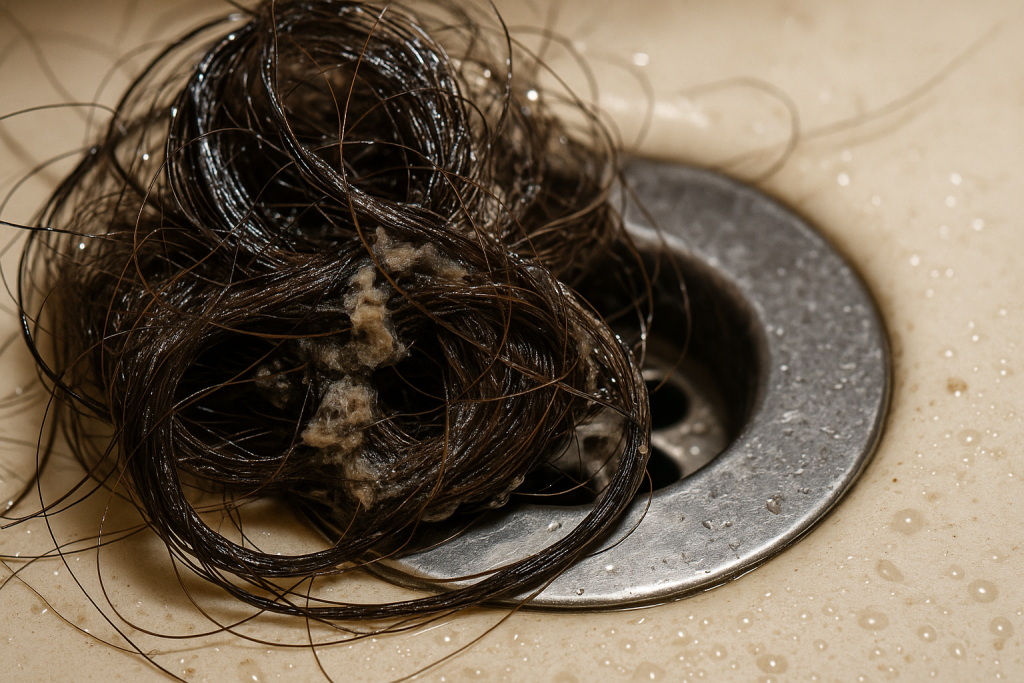
A shower drain is especially prone to this problem because it handles warm water, soap, and hair at the same time. The warm water may move loose residue at first, but as the drain cools, greasy buildup can settle inside the pipe. Hair then wraps around that residue and creates a net that catches lint, dirt, and skin cells.
Bathroom sink drains can clog in a similar way. Short hair from shaving, grooming, or brushing can slip past the stopper and gather around the pop-up assembly. A tub drain may collect longer strands that twist around the crossbars under the drain cover.
Common signs of a hair clog include:
- Water draining slowly from the shower, tub, or sink
- Standing water around the drain after use
- Gurgling sounds while water drains
- Bad odors coming from the drain
- A clog that improves briefly, then returns
- Soap scum or grime collecting near the drain opening
Don’t ignore these warning signs. A slow drain can turn into a full blockage, and repeated backups may point to a deeper plumbing issue. If several drains slow down at once, the problem may involve the main sewer line rather than one small bathroom clog.
Safe Home Remedies with Baking Soda, Vinegar, and Boiling Water
For a mild clog, start with a gentle method before using a harsh drain cleaner. Home remedies can help loosen soap scum and light hair buildup near the drain opening. They work best when the water still drains, even slowly.
A common method uses baking soda, vinegar, and hot water. Baking soda can help absorb odors and loosen grime. Vinegar reacts with baking soda and creates fizzing action that may disturb residue around the clog. Boiling water can help flush loosened material through metal pipes, though you should avoid pouring boiling water into PVC pipes if you are unsure they can handle the heat. Grease can make drain residue stickier, especially in kitchen lines where oils and food particles collect along pipe walls.
| Method | Best For | How It Helps | Use With Care When |
| Baking soda and vinegar | Light buildup and odors | Loosens grime near the drain opening | Water is fully backed up |
| Hot or boiling water | Soap scum and greasy residue | Flushes loosened debris | Pipes are PVC or older |
| Zip-it tool | Hair near the drain opening | Pulls hair out physically | Drain parts feel fragile |
| Plunger | Soft clogs close to the fixture | Uses suction to move the clog | Chemical cleaner is already in the drain |
| Flexible drain snake | Deeper hair clogs | Reaches farther into the pipe | You feel hard resistance |
To try the baking soda and vinegar method, remove any visible hair from the drain cover first. Pour about half a cup of baking soda into the drain. Follow it with half a cup of vinegar. Let the mixture fizz for 10 to 15 minutes. After that, flush the drain with hot water. If you have metal pipes and know they are in good condition, boiling water may be suitable. For PVC pipes, use hot tap water instead.
Repeat the process once if the drain improves but still runs slowly. If nothing changes, the clog is probably too dense or too deep for this method.
Never mix vinegar, baking soda, or any home remedy with chemical drain cleaner. Chemical reactions can release fumes, splash back, or damage plumbing materials. If you already poured a chemical cleaner into the drain, do not use a plunger or add another product. Stop and call a plumber if the drain remains blocked.
Remove Hair with a Zip-It Tool, Hair Catcher, or Drain Snake
Physical hair removal is often the most effective way to clear a bathroom clog. Instead of trying to dissolve the blockage, you pull the hair out of the drain. This works well when the clog is near the drain opening or caught around the stopper.
A zip-it tool is a thin plastic strip with small barbs along the sides. You slide it into the drain, move it gently, then pull it back out. The barbs grab tangled hair and pull it up. It is inexpensive, simple to use, and safer than forcing a metal object into the drain.
Start by wearing gloves and placing paper towels or a trash bag nearby. Remove the drain cover or stopper if you can do so safely. Insert the zip-it tool slowly. If it reaches a bend, do not force it. Wiggle it lightly, then pull it back out. You may remove a clump of hair, soap scum, and other debris. Throw the debris away instead of rinsing it back down the drain.
After hair removal, run hot water for a minute or two to check the flow. If water drains normally, clean the drain cover and put it back in place.
For clogs beyond the reach of a zip-it tool, a flexible drain snake may help. A drain snake can reach deeper into the pipe and either pull the clog back or break it apart. Feed the snake slowly into the drain. When you feel resistance, rotate the handle and apply light pressure. The goal is to catch the hair, not jam it farther down.
A hair catcher is better for prevention than removal, but it can save you from repeat clogs. Place one over the shower or tub drain and clean it after each use. If someone in the household has long hair, thick hair, or sheds heavily, this simple step can prevent many future clogs.
Plunging It and Using Drain Cleaner the Right Way
Plunging it can help when the clog is soft and close enough for suction to move it. A plunger works by creating pressure that shifts the blockage. It’s a good choice for a tub, shower, or sink that drains slowly but is not packed with solid debris.
Use the right plunger for the fixture. A flat cup plunger works for sinks, tubs, and showers. Add enough water to cover the rubber cup. Block the overflow opening with a wet cloth so pressure stays in the drain. Place the plunger over the opening and press down firmly to create a seal. Pump several times with steady force, then lift the plunger to see whether the water moves.
If the water begins draining, run hot water to flush the pipe. If the drain still backs up, try a zip-it tool or drain snake next.
Drain cleaner should be used carefully. Some products are made to break down organic matter, including hair, but they can be harsh on pipes, finishes, and skin. Repeated use may weaken older plumbing, especially if the cleaner sits in the pipe for too long. Chemical cleaners can also make the job more dangerous if a plumber needs to remove the trap or snake the line afterward.
Follow these safety rules if you use a drain cleaner:
- Read the label and use only the recommended amount
- Never mix two cleaners
- Do not use a plunger after adding cleaner
- Keep children and pets away from the area
- Ventilate the room
- Call a plumber if the cleaner fails to restore drainage
If you prefer to remove hair from a shower drain without chemical products, use a zip-it tool, drain snake, hot water, and regular drain cover cleaning. These methods are safer for routine maintenance and reduce the chance of pipe damage.
When Hair Buildup Needs Professional Drain Cleaning
Some clogs are too stubborn for home methods. If hair buildup has been growing for months, it may sit farther down the drain line than a household tool can reach. The blockage may also include grease, mineral scale, soap residue, or small objects. When that happens, repeated DIY attempts can waste time and may push the clog deeper.
Call Emergency Plumbing Squad if the same drain keeps clogging, water backs up after plunging, or you smell sewage near the drain. You should also get help if several fixtures drain slowly at the same time. Multiple slow drains can signal a sewer problem, and that needs fast attention.
Local plumbing professionals have tools that go beyond store-bought options. A technician may use drain cleaning tools, high-pressure water jetting, sewer and drain jetting, or clog detection methods to locate and clear the blockage. Professional clog detection can be especially useful when a clog keeps returning because it may reveal damaged pipes, roots, heavy buildup, or issues in the sewer line.
Professional drain cleaning can also protect the rest of the home. Standing water in a shower or tub may overflow if the clog worsens. A blocked sink can leak around fittings under the cabinet. A sewer backup can create sanitation problems and damage floors, walls, and belongings.
Emergency Plumbing Squad helps connect homeowners with fast plumbing help when a drain problem can’t wait. Whether you have a clogged shower, a backed-up tub, a blocked bathroom sink, or a deeper sewer concern, Emergency Plumbing Squad can help connect you with a local plumber who can assess the blockage and recommend the right next step.
Prevent Hair Clogs and Know when to Call
The best way to deal with drain hair is to stop it before it reaches the pipe. A few small habits can make a big difference, especially in busy bathrooms.
Use a hair catcher in every shower and tub. Clean it often so water can still pass through. Brush loose hair before showering when possible. Remove visible hair from the drain cover instead of rinsing it down. Flush bathroom drains with hot water weekly to help move soap residue before it hardens. Once a month, remove the stopper or drain cover and clean the area where hair collects.
Avoid treating the drain like a disposal point. Do not rinse clumps of hair, cotton, dental floss, thick shaving cream, or heavy oils down the sink or shower. These materials can stick to hair and make clogs worse.
A small maintenance routine can help prevent emergency calls, but it won’t solve every problem. If you have tried safe home methods and the drain still runs slowly, it is time for professional help. The same is true if you notice gurgling, bad odors, repeated backups, or water rising in another fixture when one drain is used.
For urgent clogged drains, Emergency Plumbing Squad can help you find plumbing support 24/7. Call when water stops moving, a clog keeps returning, or you want the drain cleared without risking pipe damage. Fast service can restore flow, protect your plumbing, and help you avoid a small bathroom clog turning into a larger repair.