Grease can look harmless when it’s hot and liquid, but it can create serious trouble once it enters a kitchen drain. As grease cools, it thickens, sticks to the inside of pipes, and begins collecting food scraps, soap residue, and other debris. Over time, that buildup narrows the pipe opening and makes it harder for water to move through the sink drain.
For many homeowners, the first sign is a slow kitchen sink. Then come gurgling sounds, foul odors, standing water, or a backup that stops meal cleanup altogether. Understanding how grease affects kitchen drain pipes can help you spot the problem early, change the habits that cause buildup, and know when a clog needs professional attention.
Why Grease Creates Problems Inside Drain Pipes
Grease doesn’t move through plumbing the same way water does. When cooking grease, bacon grease, butter, sauces, and oil are rinsed down a kitchen sink, they may seem to disappear. Inside the drain pipe, the temperature drops. The grease cools, thickens, and begins coating the pipe walls.
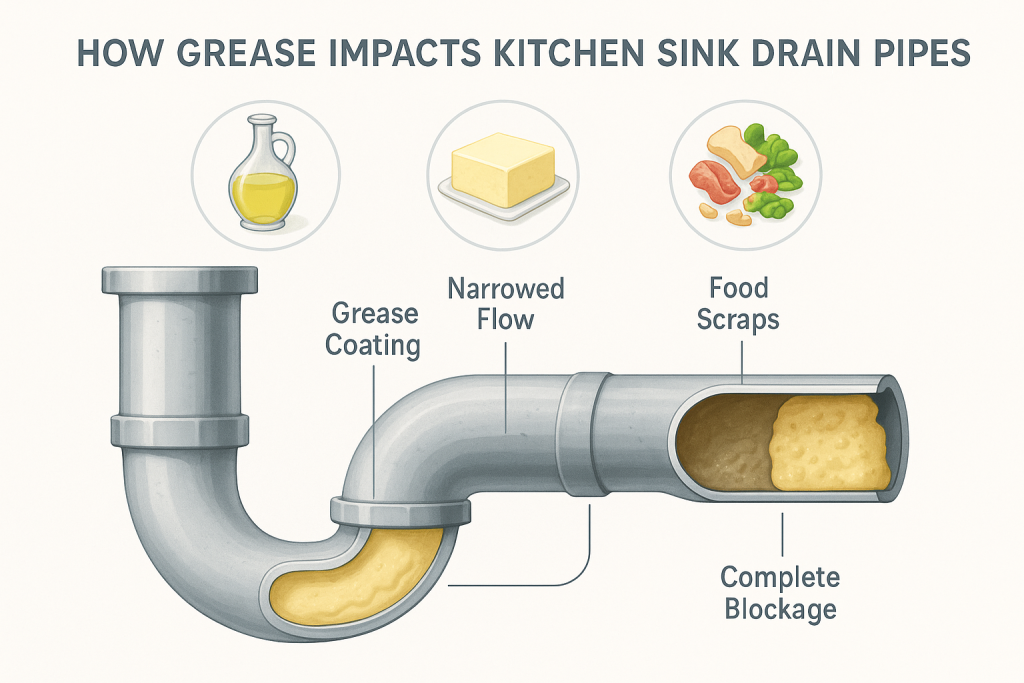
That sticky coating attracts other materials. Small food particles, coffee grounds, starches, soap scum, and bits of trash can cling to the grease layer instead of washing away. Each rinse adds a little more buildup. Over time, the pipe opening gets smaller, drainage slows, and the sink becomes more likely to back up.
FOG, which stands for fats, oils, and grease, is one of the most common causes of kitchen drain clogs. It can affect newer plumbing, but older pipes are often at greater risk because rough interior surfaces give grease more places to cling. Once buildup hardens, water pressure from the faucet usually won’t remove it.
| Grease Source | What Happens in the Drain | Possible Result |
| Bacon grease and meat drippings | Cool quickly and harden on pipe walls | Thick grease buildup and clogged pipes |
| Cooking oil | Coats the drain and traps food particles | Slow drainage and foul odors |
| Butter, sauces, and gravy | Leave residue that sticks to existing buildup | Recurring kitchen sink clogs |
| Greasy dishwater | Carries small amounts of fat into the pipe | Gradual narrowing of drain pipes |
| Food scraps mixed with grease | Bind together into a dense obstruction | Backups that may need professional cleaning |
A grease clog often starts small, but it rarely stays that way. The longer it remains in the pipe, the harder it becomes to clear without proper drain cleaning equipment.
Common Kitchen Habits and Prevention Tips for Grease Clogs
Many grease problems begin with routine cleanup habits. Pouring grease down the drain is the most obvious one, but it isn’t the only cause. Even rinsing greasy pans under hot water can send enough residue into your pipes to create buildup over time.
Hot water can keep grease liquid for a short distance, but it does not keep it liquid forever. Once the grease cools farther down the line, it can stick in a harder-to-reach area. Dish soap may break grease apart during washing, but it does not make the problem disappear from the plumbing system.
Garbage disposals can also give homeowners a false sense of protection. A disposal can grind some food scraps into smaller pieces, but it does not remove grease from wastewater. In fact, small food particles can combine with grease and form dense clogs inside kitchen pipes.
- Pouring grease, oil, or pan drippings into the kitchen sink after cooking
- Rinsing greasy pans without wiping them first
- Using hot water to push fat down the drain
- Putting oily food scraps into the garbage disposal
- Washing coffee grounds, rice, pasta, or flour into greasy drains
- Ignoring small drainage changes until the sink stops working
These habits can create problems slowly, which is why many homeowners do not connect a clog to months or years of grease exposure. A small amount may not cause an immediate backup, but repeated buildup can restrict the drain until the sink struggles to empty.
The safer habit is simple. Keep grease out of the drain whenever possible, and treat oily cookware before washing it. A few extra seconds during cleanup can help protect your pipes and reduce the chance of an urgent plumbing call.
Preventing grease clogs starts with better disposal habits. Never pour grease directly into the drain, even if it is hot or mixed with soap. Instead, let it cool and place it in the trash in a sealed container.
For small amounts of grease left in a pan, wipe the surface with a paper towel before washing. This reduces the amount of residue that reaches the sink. Scrape food scraps into the trash before rinsing plates, and avoid sending starchy foods down the drain because they can thicken and cling to grease.
Cold weather can make grease cool faster inside plumbing, which is one reason some drains seem to clog more often during winter.
Homeowners who cook often may benefit from a grease trap, especially if large amounts of oil or fat are handled in the kitchen. A grease trap separates FOG from wastewater before it enters the plumbing line. It must be cleaned and maintained to work properly.
- Cool grease first. Let pan drippings harden before disposal.
- Use a container. Pour grease into a can, jar, or disposable cup, then place it in the trash once sealed.
- Wipe cookware. Remove oily residue with a paper towel before washing.
- Protect the sink. Use a drain strainer to catch food scraps.
- Flush with care. Run hot water after normal dishwashing, but do not rely on it to clear grease.
- Schedule maintenance. Professional drain cleaning can help when slow drainage keeps returning.
Some homeowners use baking soda and vinegar for light odor control or minor residue, but that mixture will not remove a heavy grease clog. Chemical drain cleaners can also be risky because they may damage pipes, create fumes, or fail to clear the full blockage. If the drain stays slow after basic cleaning, professional service is the safer choice.
Warning Signs Grease Is Building up in Your Kitchen Drain
Grease buildup usually gives warning signs before a full blockage occurs. Catching those signs early can help you avoid water damage, bad smells, and a sink that becomes unusable during a busy day.
Slow drainage is often the first clue. If the kitchen sink takes longer to empty after washing dishes, grease may be narrowing the pipe. The problem may start as a slight delay, then become standing water that takes minutes to clear.
Gurgling sounds can also point to a developing clog. When air struggles to move around buildup in the drain pipe, it can create bubbling or gurgling noises. Foul odors are another common sign because grease traps food scraps and allows bacteria to grow inside the drain.
You may also notice recurring clogs that return after plunging or using a mild cleaning method. That often means the obstruction was only partly moved, while the grease coating remains inside the pipe. If multiple drains begin acting up, the issue may be farther down the plumbing line or near the sewer connection.
Hair buildup in nearby bathroom drains can create similar slow-drain symptoms, so it helps to separate grease issues from other blockage sources.
Call a plumber if you notice:
- Standing water in the kitchen sink
- Water backing up after the dishwasher runs
- Strong odors coming from the drain
- Gurgling sounds after water drains
- Recurring clogs that keep coming back
- Water rising in another fixture when the sink is used
Fast action matters. A small clog is easier to clear than a hardened blockage that has spread deep into the line. Emergency Plumbing Squad can help connect you with a local plumbing professional who can inspect the issue, remove the obstruction, and help protect your plumbing from further damage.
How Grease Can Affect the Sewer System
Grease problems do not always stop at the kitchen sink. When grease moves beyond the home’s drain pipes, it can collect in larger sewer lines. There, it may combine with grease from nearby homes and businesses, forming large obstructions that affect the sewer system.
These blockages can cause wastewater to move in the wrong direction. In a home, that may mean backups through sinks, floor drains, tubs, or toilets. Outside the home, sewer blockages can create sanitation problems and costly repairs for the community.
Grease can be especially difficult in sewer lines because it does not break down quickly. It sticks, hardens, and collects debris. The larger the mass becomes, the harder it is to remove. That is why cities often warn residents not to pour grease into drains and why plumbers take FOG-related clogs seriously.
If you suspect a sewer issue, do not wait for the problem to get worse. Warning signs may include several slow drains, sewage odors, water backing up in lower-level fixtures, or a kitchen sink that clogs again soon after cleaning. These symptoms can point to a deeper blockage that needs professional inspection.
Emergency Plumbing Squad can help connect you with plumbers who respond to urgent backups and stubborn drain issues using equipment designed to locate and clear the problem. Depending on the situation, a plumber may use camera inspection, drain snaking, or hydro jetting to break through grease buildup and restore proper flow.
When to Call Emergency Plumbing Squad for Grease Clogs
Some grease clogs can be reduced with better habits and routine maintenance. Severe blockages need a plumber. If water is backing up, the sink will not drain, or the clog keeps returning, professional help can prevent further damage and reduce the risk of a larger plumbing emergency.
Emergency Plumbing Squad focuses on helping homeowners find fast, reliable support for drain problems, pipe blockages, leaks, and urgent plumbing repairs. When the issue involves grease, the goal isn’t to push the clog farther down the line. The goal is to find the source, clear the buildup, and help the drain work the way it should.
A plumber may inspect the line to see where the obstruction is located. If the grease clog is close to the sink, mechanical cleaning may be enough. If the buildup is deeper or spread across the pipe, hydro jetting may be recommended to wash away hardened grease and debris. For recurring problems, camera inspection can help identify pipe damage, sagging lines, or heavy buildup that needs a stronger plan.
Keep Grease Out of Your Drain before Trouble Starts
Grease clogs can disrupt your kitchen, damage your pipes, and lead to larger plumbing problems when they are ignored. A slow, smelly, or noisy sink is often your first warning that buildup is forming inside the drain. Acting early can help you avoid backups, water damage, and the stress of an urgent repair.
If your kitchen sink is draining slowly, backing up, or clogging again after basic cleaning, Emergency Plumbing Squad is ready to help connect you with local plumbing support. We can help you find prompt drain cleaning support to clear stubborn grease buildup, restore proper flow, and help protect your plumbing from future problems.
Contact us when you need dependable service and want your kitchen back to normal fast.
