A slow sink can interrupt your day fast. Water pools in the basin, rinsing takes longer, and odors may start to rise from the drain. In many homes, the problem starts small, then builds quietly inside the plumbing until the sink barely drains at all.
The common causes of slow draining sinks usually come down to buildup, debris, or a blockage somewhere in the drain line. Hair, soap scum, food scraps, grease, toothpaste, and small objects can all collect inside sink drains over time. Some problems stay near the stopper or p-trap, while others move farther into the drain pipe or sewer line.
Emergency Plumbing Squad helps homeowners connect with plumbing support for clogged drain problems, slow drain issues, and urgent plumbing concerns 24/7. Knowing what might be causing the slowdown can help you decide whether a simple cleaning may work or whether it is time to call for professional inspection and repair.
How Sink Drains Slow Down Over Time
Most sink clogs do not happen all at once. They form in layers. Each time water runs through the drain, it carries soap, hair, dirt, oils, shaving residue, toothpaste, food particles, or cleaning products with it. Some of that material rinses away, but some sticks to the inside of the drain pipe.
As buildup thickens, the opening inside the pipe gets smaller. Water still moves, but it cannot flow as freely. That is why many homeowners notice a sink draining slowly even when there does not seem to be a visible blockage.
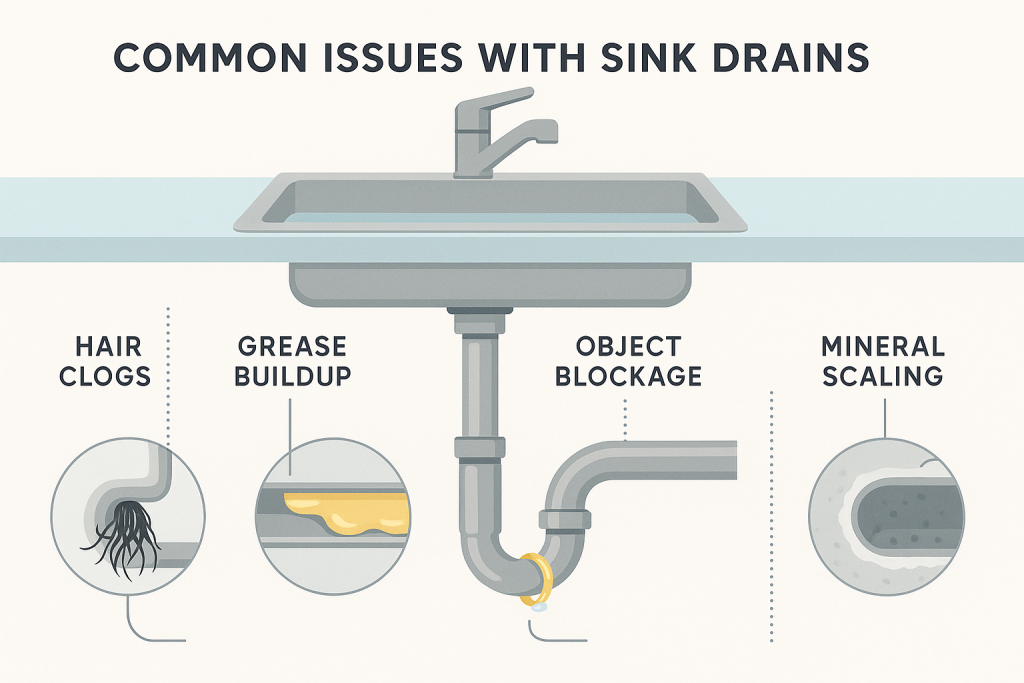
Bathroom sinks often slow down due to hair, soap, toothpaste, cosmetics, and debris trapped around the stopper. Kitchen sink problems are often tied to grease, food scraps, coffee grounds, and dish soap residue. In both areas, the p-trap under the sink can collect enough debris to restrict water flow.
Early warning signs can help you decide when a slow drain needs attention.
- Water pooling around the drain before it disappears
- Gurgling or bubbling sounds from the sink
- Foul odors near the drain opening
- Water draining faster after plunging, then slowing again
- More than one fixture draining slowly in the same area of the home
A single slow bathroom sink may point to a local clog near the stopper or p-trap. Multiple slow drains in the home may point to a deeper plumbing or sewer issue that needs faster attention.
Bathroom Sink Clogs from Hair, Soap Scum, and the Stopper
Bathroom sinks deal with small debris every day. Hair from shaving or grooming, soap residue, toothpaste, skin oils, and cosmetic products can all move toward the drain. The stopper catches some of it, but it can also become the place where buildup starts.
Hair is one of the most common causes of a bathroom sink blockage. Even a small amount can wrap around the stopper mechanism or catch on rough spots inside the drain. Once hair sticks in place, soap scum and debris cling to it. Over time, this creates a sticky mass that slows water and may lead to a clogged drain.
Soap scum can be just as troublesome. Bar soap, hand soap, shaving cream, and face wash may leave behind residue. When soap mixes with minerals in water, it can form a film that coats the inside of the pipe. That film traps hair and dirt, making the drain narrower with every use.
If the sink drains slowly but no blockage is visible, the stopper should be checked first. Many bathroom sink stoppers can be lifted or removed for cleaning. A plastic drain cleaning tool may pull out hair near the drain opening. Hot water can help rinse away light residue, but it will not always clear a thick clog.
Avoid forcing sharp objects into the drain. Scratching, puncturing, or loosening pipe parts can turn a slow drain into a leak. If the bathroom sink keeps slowing down after cleaning the stopper, the clog may be in the p-trap or farther along the line.
Kitchen Sink Problems from Food Scraps and Grease
A slow draining kitchen sink often starts with what goes down the drain after meals. Tiny food scraps may seem harmless, but they can collect in bends, joints, and rough sections of the drain pipe. When grease is present, the problem gets worse.
Grease does not stay liquid for long. It may rinse down the sink when warm, then cool and cling to the inside of drain pipes. That sticky coating grabs food particles, coffee grounds, rice, pasta, eggshell pieces, and other debris. The result is a thick buildup that slows water and creates odors.
Garbage disposals do not prevent every blockage. They grind food into smaller pieces, but those pieces can still collect inside the plumbing. Grease, fibrous vegetables, starches, and coffee grounds are especially likely to cause trouble because they can clump together or cling to pipe walls.
| Sink Area | Common Source of Buildup | What It Can Cause | Helpful Prevention Step |
| Bathroom sink | Hair, soap scum, toothpaste, shaving residue | Slow drain near the stopper or p-trap | Clean the stopper and use a drain cover |
| Kitchen sink | Grease, food scraps, coffee grounds, dish residue | Drain pipe buildup and foul odors | Throw grease and scraps in the trash |
| Laundry or utility sink | Dirt, lint, pet hair, cleaning products | Debris trapped in the drain line | Use a strainer and rinse with plenty of water |
| Multiple fixtures | Main line or sewer blockage | Recurring drainage trouble across the home | Schedule a professional inspection |
To reduce kitchen sink clogs, scrape plates into the trash before rinsing. Let grease cool in a container, then dispose of it with household waste. Use a sink strainer to catch food scraps, and clean it often. Running hot water after normal dishwashing may help with light residue, but it should not be used as a way to send grease down the drain.
P-Trap Buildup and Debris Trapped Under the Sink
The p-trap is the curved pipe beneath the sink. Its shape holds a small amount of water, which helps block sewer odors from entering the home. That same curve also makes it a common place for debris trapped in the drain to settle.
A p-trap problem may cause water to drain slowly, odors to rise from the sink, or small objects to block flow. Jewelry, toothpaste caps, hair ties, food scraps, soap pieces, and other items can get stuck there. Once debris collects in the p-trap, more buildup can form around it.
Some homeowners clean the p-trap themselves. The usual process involves placing a bucket underneath, loosening the slip nuts, removing the curved pipe, and clearing the buildup. This can work well for soft clogs near the sink. Still, it is not the right choice for every home.
Call for help if the pipe is corroded, the fittings will not loosen, water leaks after reassembly, or the clog returns quickly. Older plumbing may be fragile, and forcing parts loose can damage the line. If cleaning the p-trap does not fix the problem, the blockage is likely farther into the drain pipe.
A p-trap can also reveal a pattern. If it fills with debris again and again, the issue may be tied to daily habits, poor pipe slope, heavy buildup, or a deeper obstruction. A local plumbing professional can clear the line and help identify why the sink keeps slowing down.
When a Drain Snake Helps and When It Can Make Problems Worse
A drain snake can be useful for some small clogs caused by hair or soft debris near the drain opening. When used carefully, it may pull out material that a plunger cannot move. It can also help clear a partial blockage in the p-trap area.
Drain snakes have limits. If the clog is made of hardened grease, heavy soap scum, mineral buildup, or a foreign object, the snake may only poke a small hole through the obstruction. Water may drain better for a short time, then slow again as debris shifts back into place.
DIY snaking can also damage plumbing when too much force is used. The cable may scratch older pipes, separate weak joints, or push a blockage farther down the line. Chemical drain cleaners can add risk because they may sit in the pipe when the clog does not clear, which can create safety concerns during repair.
Simple steps may help with a minor slow drain.
- Remove and clean the sink stopper when possible
- Use a mesh strainer to catch hair, food, and debris
- Flush the drain with hot water after normal use
- Use a plunger gently on localized sink clogs
- Avoid pouring grease, coffee grounds, or thick products into the sink
Professional help is the safer choice when the sink keeps backing up, the clog returns after snaking, water drains slowly in several fixtures, or sewage odors are present. These signs may point to a blockage deeper in the plumbing system or sewer line.
Call Emergency Plumbing Squad for Persistent Slow Drain Issues
A slow sink may seem small, but repeated drainage problems can point to a larger issue. Grease buildup, soap scum, hair, debris, a p-trap problem, or a deeper line blockage can all get worse if ignored. Fast action helps reduce the chance of water damage, odors, leaks, and urgent repair needs.
Emergency Plumbing Squad connects homeowners with plumbing help for drain cleaning, clogged drains, sewer concerns, pipe problems, and other urgent plumbing needs. Service is available 24/7, so you do not have to wait until normal business hours when a sink will not drain or water starts backing up.
If your sink is still draining slowly after basic cleaning, or if multiple drains are slowing down at once, call Emergency Plumbing Squad. A local plumbing professional can inspect the drain, identify the likely source of the blockage, clear the line, and help restore steady water flow before the problem grows.