A plumbing emergency can make any homeowner feel rushed. Water may be spreading across the floor, a drain may be backing up, or a sewer smell may be coming from a bathroom or basement. In those moments, it’s easy to call the first plumber who answers and hope the problem gets fixed quickly.
That urgency is exactly what dishonest plumbers rely on. Some use pressure, vague pricing, fake credentials, or unnecessary repair recommendations to turn a stressful situation into an expensive scam. The good news is that you can protect your home, your budget, and your peace of mind with a few smart steps before work begins.
How to avoid plumbing scams as a homeowner? Emergency Plumbing Squad helps homeowners connect with local plumbing support when urgent problems can’t wait. Still, every homeowner should verify who they hire, ask the right questions, and understand the warning signs of a poor or unsafe service experience.
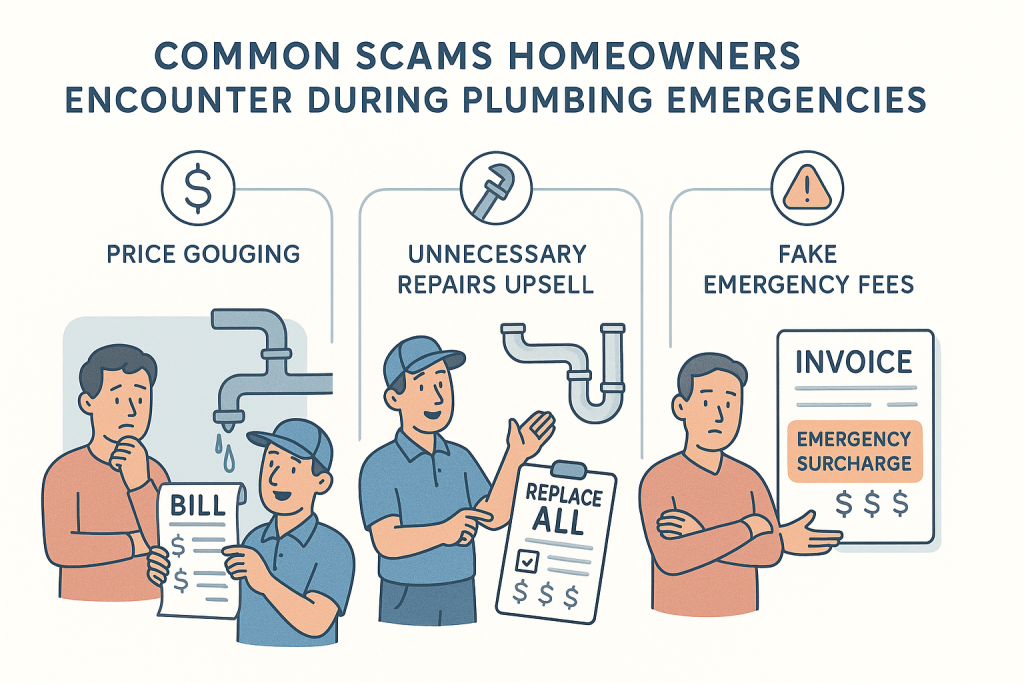
Common Plumbing Scams Homeowners Face during Emergencies
Plumbing scams often happen when time feels limited. A burst pipe, overflowing toilet, clogged drain, failed water heater, or sewer backup can leave homeowners feeling like they need to approve work immediately. Scammers use that pressure to push decisions before you have time to check their background.
One common scam starts with a low phone quote. The price sounds reasonable, so the homeowner agrees to the visit. Once the person arrives, the cost suddenly increases because of “unexpected problems.” Some of those problems may be exaggerated or completely made up.
Another common tactic is the cash-only demand. A dishonest plumber may ask for full payment before starting work, then disappear, perform poor-quality repairs, or refuse to provide documentation. A trustworthy service should be willing to explain pricing, provide written details, and accept traceable payment methods.
Unnecessary upselling is another issue. A simple drain blockage may become a pushed recommendation for major pipe replacement. A small leak may turn into an urgent claim that a full system repair is needed. Some repairs are truly serious, but the contractor should be able to explain what’s wrong, show evidence, and provide options.
A scam can also involve fake credentials. Someone may claim to be licensed, insured, or connected to a known company without proof. Before anyone begins work inside your home, ask for the company name, contact information, license details, and proof of insurance.
Emergency Plumbing Squad’s role is to help homeowners find plumbing support quickly, but smart hiring habits still matter. The safest path is to slow the conversation down enough to verify the person, the price, and the scope of work.
Red Flags to Watch for When Calling a 24-Hour Plumber
When you search for urgent help, the first person who answers may not always be the right person for the job. A reliable plumber should communicate clearly, explain the situation, and respect your right to ask questions. If the conversation feels rushed or confusing, pay attention.
A major red flag is pressure to approve work immediately without a written estimate. Emergencies need fast action, but fast service shouldn’t mean unclear pricing. You should know the service fee, labor rate, possible after-hours charge, and what the technician expects to inspect before work starts.
Another warning sign is vague identification. A professional should be able to provide a company name, phone number, license information, and clear contact details. Be careful if someone arrives in an unmarked vehicle, refuses to show identification, or gives only a first name.
Poor communication is also a concern. If the person avoids direct answers, gets annoyed when you ask about pricing, or refuses to explain the repair in plain language, don’t ignore that feeling. A reputable service understands that homeowners need clarity during stressful calls.
Watch for these warning signs:
- The plumber demands full payment before work begins
- The estimate is verbal only, with no written details
- The price changes sharply without a clear reason
- The person refuses to show identification or license information
- The company has no clear local presence or contact details
- The technician discourages you from getting another opinion
- The repair recommendation sounds much larger than the visible problem
One red flag doesn’t always prove a scam, but several together should make you pause. During a water leak or drain backup, your goal is to stop damage while still making a safe hiring decision.
Why a Plumbing License, Insurance, and Identification Matter
A plumbing license gives you a way to confirm that the person working on your home has met state or local requirements. Requirements vary by location, but legitimate professionals should be able to explain what applies in your area and provide proof when asked.
Insurance also matters. Plumbing work can involve water lines, gas lines, walls, flooring, fixtures, and sewer connections. If damage happens during the job, you want to know that the provider has coverage. An insured contractor gives homeowners added protection from unexpected costs tied to accidents or property damage.
Identification is part of basic home safety. Before allowing anyone inside, confirm that the person matches the company you called. Ask for a photo ID, business card, or work order. If something doesn’t match, call the company directly using the number you found yourself, not a number handed to you at the door.
Use this table to review what to verify before approving work.
| What to Verify | What to Ask For | Why It Helps |
| Company identity | Full business name, phone number, and website | Confirms who’s responsible for the job |
| Technician identification | Photo ID or company ID | Helps verify who’s entering your home |
| Plumbing license | License number or local registration details | Shows the provider can be checked through official channels |
| Insurance | Proof of liability coverage | Helps protect you if damage or injury occurs |
| Written estimate | Itemized pricing for service, labor, and parts | Reduces surprise fees |
| Work scope | Clear explanation of the problem and repair | Helps prevent unnecessary replacement work |
| Payment terms | Accepted payment methods and timing | Avoids cash-only pressure tactics |
If the person refuses to provide basic information, you have a good reason to stop the process. A qualified professional shouldn’t be offended by reasonable questions.
How Multiple Quotes Protect You from Overpaying
Requesting multiple quotes is one of the simplest ways to avoid plumbing scams. Even during an urgent repair, a few quick calls can help you understand whether a price is fair. You may not have time for a long comparison, but you can still ask for basic pricing details from two or three providers.
A quote should include the service fee, labor rate, parts, after-hours charges, and any conditions that could affect the total. Some repairs can’t be priced fully until the technician inspects the issue, but the company should still be able to explain how pricing works.
Be careful with quotes that are far lower than the others. A very low price can be used to get approval, then the cost may rise once the person is inside your home. Also be careful with estimates that are too vague. “We’ll figure it out when we get there” is not enough when you’re trying to make a safe decision.
A homeowner guide for urgent plumbing calls should include this simple rule: compare the structure of the quote, not only the number. A higher quote from a licensed, insured, well-reviewed provider may be safer than a cheap offer from someone who avoids written details.
When comparing quotes, look for:
- Clear service fees and labor rates
- Written pricing before repair work starts
- Explanation of possible extra charges
- Proof that the plumber is licensed and insured
- A professional tone with no pressure tactics
- A realistic arrival window
- Willingness to answer questions
Emergency Plumbing Squad help people find timely plumbing support. If you’re facing an urgent problem, calling for help quickly makes sense. Just don’t let speed replace basic verification.
Questions to Ask before Approving Repair Work
Good questions can stop a bad decision before it costs you money. A professional plumber should be willing to explain what they found, why the repair is needed, and what options are available. You don’t need to understand every technical detail, but you should understand the problem well enough to approve the work with confidence.
Start with the diagnosis. Ask what caused the issue and how the plumber confirmed it. If there’s a clogged drain, ask whether the blockage appears local to one fixture or connected to a larger sewer line. If there’s water near a heater, ask whether the source is a valve, pipe, tank, or fitting.
Next, ask about the repair plan. Some problems have more than one possible solution. A short-term fix may stop the immediate water problem, while a larger replacement may prevent the issue from returning. The plumber should explain the difference without pressuring you.
Ask these questions before work begins:
- What exactly is causing the problem?
- Is this an emergency repair, or can part of the work wait?
- What’s included in the estimate?
- Could the price change, and why?
- Are you licensed and insured for this type of work?
- Will I receive a written invoice?
- Is there any warranty on labor or parts?
These questions help you learn whether the contractor is focused on solving your plumbing issue or pushing you into a larger sale. Clear answers build trust. Evasive answers are a sign to slow down.
Get Help without Rushing into the Wrong Decision
Plumbing emergencies are stressful, but you still have the right to ask questions, verify credentials, and understand pricing before work begins. A trustworthy plumber will respect that. They will provide identification, explain the repair, offer written pricing, and show proof of license and insurance when required.
To avoid plumbing scams, stay alert for pressure tactics, cash-only demands, vague estimates, and repair recommendations that aren’t explained clearly. Consider only contractors who are willing to document the job and answer questions in plain language.
If you have water spreading, a clogged drain, sewer backup, burst pipe, or another urgent problem, Emergency Plumbing Squad can help connect you with local plumbing support. Call now for 24/7 assistance and take the next step toward safe, timely service without giving up your ability to make an informed choice.