Winter can be tough on a home’s plumbing. A sink that drained fine in the fall may start to slow down once temperatures drop, and a shower drain that only had a small amount of buildup can become a bigger problem during a cold snap.
Understanding why drains clog more in winter helps homeowners spot problems early and prevent damage before water backs up into the home. Cold weather changes how grease, soap residue, food particles, hair, and water behave inside drain pipes. It can also increase the risk of frozen pipes, blocked outdoor drains, and septic trouble in homes with private systems.
Emergency Plumbing Squad helps homeowners across the country connect with 24/7 plumbing help for drain cleaning, emergency repair, sewer backups, water heater issues, and urgent pipe problems.
If your drain slows down, smells bad, gurgles, or stops moving water during winter, fast action can help protect your home and reduce the chance of a larger plumbing emergency.
How Cold Weather Turns Minor Drain Buildup Into Clogs
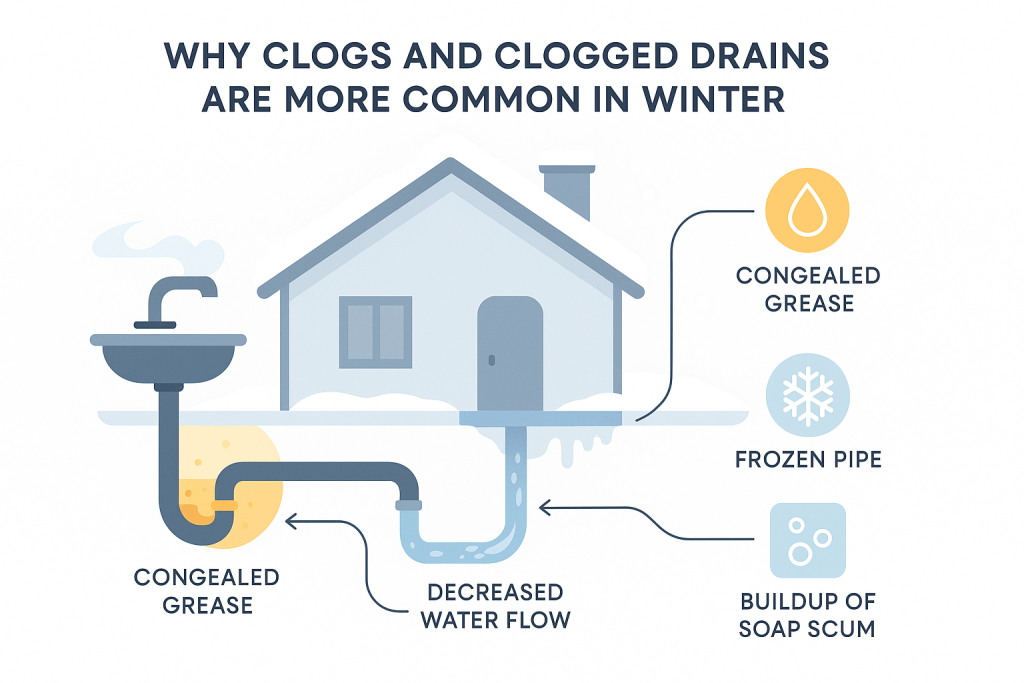
Most winter drain clogs do not appear out of nowhere. They usually start with buildup that was already inside the line. The drop in temperature can turn that buildup into a thicker, stickier blockage that water struggles to move past.
Grease is one of the biggest problems. In warm conditions, grease may move farther down the drain before it cools. In winter, grease hardens faster once it reaches cold drain pipes.
It coats the inside of the line, catches crumbs and food scraps, and slowly narrows the opening. After enough buildup forms, even normal dishwashing can send water back into the sink.
Bathroom drains face a similar issue. Hair, soap scum, shaving residue, toothpaste, and skin oils can cling to pipe walls. Cold water makes some residue thicker, so debris sticks more easily instead of washing through the drain. A bathtub not draining in cold weather or a shower drain holding standing water may point to buildup that has tightened as temperatures dropped.
Cold temperatures cause pipes to contract slightly, which can add stress to older joints, weak seals, and already restricted lines. Water may also move more slowly through chilly sections of plumbing, giving debris extra time to settle. These conditions do not always cause a clog by themselves, but they can make an existing problem worse.
Outdoor drains bring another winter concern. Leaves, dirt, ice, and snow buildup can collect around drains, gutters, downspouts, and basement entry drains. When snow melts and refreezes, water may have nowhere to go. That can lead to pooling near the foundation, basement moisture, or water backing up through low drains.
Common Winter Drain Problems by Fixture
Each fixture in the home has its own winter risks. A kitchen sink clog usually has different causes than a shower drain clog, and a toilet clogged in cold weather may point to a deeper issue in the drain or sewer line. Knowing what each symptom may mean helps you decide whether to try a safe maintenance step or call for plumbing help.
| Problem Area | Common Winter Cause | Warning Signs | Best Next Step |
| Kitchen sink | Grease, oils, and food scraps hardening in cold drain pipes | Slow draining, bad odors, water backing up into the sink | Stop using the drain and schedule professional cleaning if flow does not improve |
| Shower or bathtub | Hair, soap scum, and residue sticking to cold pipe walls | Standing water, gurgling, drain odors | Remove visible debris and avoid harsh chemical drain products |
| Bathroom sink | Toothpaste, soap, hair, and small debris collecting in the P-trap | Slow flow, bubbling, recurring odors | Check the stopper area and call if the clog returns |
| Toilet | Blocked branch line, frozen line section, or sewer backup | Weak flush, rising water, nearby drains gurgling | Do not keep flushing. Call a plumber if other drains are affected |
| Outdoor drains | Leaves, ice, snow, mud, and refreezing runoff | Pooled water, icy drain covers, water near the foundation | Clear surface debris and get help if water cannot drain away |
A single slow drain is often a local clog near that fixture. Several slow drains at once may point to a larger drain or sewer issue. If your kitchen sink, shower, and toilet are all acting up during a cold spell, the problem may be farther down the system.
The P-trap under a sink can also collect debris in winter. This curved pipe holds water to block sewer gas from entering the home. When buildup gathers there, odors and slow flow may appear. A dry or frozen P-trap can also create smell and drainage issues, especially in rarely used fixtures or cold areas of the home.
How to Prevent Frozen Pipes, Outdoor Drains, and Clogged Drains
Winter prevention starts with keeping water moving and reducing what goes down the drain. Small habits can lower the risk of drain clogs, frozen pipes, and emergency repair calls during cold weather.
- Keep grease, oils, coffee grounds, and food scraps out of kitchen drains.
- Use drain strainers in showers, tubs, and bathroom sinks to catch hair and debris.
- Run warm water after heavy sink use to help rinse residue through the line.
- Clean visible debris from outdoor drains, gutters, and downspouts before storms.
- Open cabinet doors under sinks on very cold nights so warm air reaches pipes.
- Insulate exposed pipes in garages, crawl spaces, basements, and exterior walls.
- Keep indoor heating steady during freezing temperatures, even when away from home.
- Know where the main water shutoff valve is in case a pipe bursts.
Water heaters also matter during winter. If hot water is inconsistent, greasy residue and soap buildup may not rinse as well. A water heater that struggles during cold weather can make daily plumbing use harder on the drain system. Maintenance can help reduce sudden problems, especially in busy households.
For outdoor drains, prevention means keeping water routes open. Remove leaves before snow covers them. Clear ice from drain grates when it is safe to do so. Make sure downspouts direct water away from the home. If water repeatedly pools in the same area, the drain may need cleaning or repair before the next freeze.
Homes with septic systems need extra care. A frozen septic line or frozen septic field can cause slow drains, sewage odors, and backup risks. Avoid driving over the septic field, compacting snow above it, or sending large sudden volumes of water into the system during very cold weather. If drains slow across the home and you use a septic system, call for help before wastewater backs up indoors.
What to Do when a Clogged Drain Gets Worse in Winter
When a clogged drain gets worse in winter, the right response depends on the signs you see. A slow bathroom sink may be manageable at first, while a toilet backup or sewer smell needs faster attention.
Start by stopping use of the affected fixture. Continued water flow can push wastewater onto floors, cabinets, walls, or ceilings. If a kitchen sink is backed up, avoid running the dishwasher, since many dishwashers drain through the kitchen line. If a bathroom drain is backing up, avoid using nearby fixtures until you know whether they share the same line.
Do not pour boiling water into a drain if you suspect frozen pipes. Sudden temperature changes can stress some materials and may not thaw the blockage safely. Chemical drain cleaners can also create problems. They may sit on top of a clog, damage older pipes, or make the work more hazardous when a plumber opens the line.
Safer first steps include removing visible hair from a shower drain, checking the sink stopper for buildup, and clearing debris from an outdoor drain cover. A plunger may help with some simple clogs, but it should be used carefully. If plunging causes water to rise in another fixture, stop and call for service.
Call for plumbing repair when you notice any of these warning signs:
- More than one drain is slow or backed up.
- You hear gurgling from drains or toilets.
- Water backs up into a tub, shower, floor drain, or sink.
- You smell sewage near drains or outside the home.
- A drain problem appears during freezing temperatures.
- You suspect a frozen line, sewer backup, or frozen septic issue.
Winter plumbing problems can move quickly. A slow drain can turn into a backup, and a frozen section of pipe can create pressure that leads to leaks or burst pipes. Calling early gives a plumber a better chance to clear the problem before water damage spreads.
When Winter Plumbing Needs Professional Repair
Some drain issues need equipment and experience that household tools cannot provide. Professional plumbers can locate the blockage, choose the right cleaning method, and check whether cold weather has caused pipe damage.
A drain snake may clear some clogs, especially when the blockage is close to the fixture. For heavier buildup, plumbers may use stronger cleaning equipment designed for the pipe size and clog type. In cases involving grease, sludge, tree roots, or sewer lines, inspection tools can help identify the cause before repair work begins.
Hydro jetting may be used in some situations to clear heavy buildup from drain and sewer lines. This method uses high-pressure water to clean the inside of the pipe. It is not the right choice for every system, especially if pipes are damaged, fragile, or frozen, so a plumber should inspect the line first.
Winter repair may also involve thawing a frozen section safely, improving pipe insulation, checking sump pump drainage, or repairing leaks caused by freeze damage. If the problem involves outdoor drains, the plumber may need to address ice, debris, grading concerns, or blocked discharge lines.
Plumbers also look for patterns. A recurring kitchen clog may mean grease has coated the line. A shower drain frozen with standing water may mean a cold section of pipe needs insulation or rerouting. A toilet clogged in cold weather along with other slow drains may point to a main line issue. A sink not draining in cold weather may be a local trap problem or a deeper blockage.
Emergency Plumbing Squad helps homeowners connect with local plumbing professionals for urgent drain cleaning and repair needs. Through its nationwide network, Emergency Plumbing Squad can help connect you with plumbing support for clogged drains, sewer backups, frozen pipes, water heater problems, burst pipes, and other plumbing emergencies day or night. That matters in winter, when waiting until morning can allow water damage, odors, or freezing to get worse.
Call Emergency Plumbing Squad for 24/7 Drain Help
Winter drain problems are easier to manage when you act before a slow drain becomes a full backup. Grease, soap scum, hair, ice, snow, and cold drain pipes can all work together to block water flow. Paying attention to early signs can help protect your home and reduce repair costs.
If your drain is slow, gurgling, frozen, or backing up, Emergency Plumbing Squad is ready to help 24/7. Our nationwide emergency plumbing support is built to connect homeowners with help for problems that need fast attention, including drain cleaning, sewer line issues, frozen pipes, water heater trouble, and urgent repair work.
Call Emergency Plumbing Squad when winter plumbing problems cannot wait. A trained plumber can inspect the issue, restore flow, and help you prevent the same drain problem from returning during the next cold snap.
