
A working sump pump can greatly reduce the risk of water damage during heavy rain, snowmelt, or periods when the water table rises. Knowing how to prevent basement flooding with a sump pump means looking beyond the pump itself and making sure the installation, discharge route, power supply, and routine testing all support reliable operation.
Basement flooding can also have several causes. A sump pump may control groundwater, but it won’t repair a broken supply pipe, stop a sewer backup, or correct runoff that repeatedly flows toward the house. Identifying the source helps determine whether the solution involves the pump, exterior drainage, plumbing repair, or urgent sump pump help.
Start with the Right Sump Pump Installation
A dependable setup begins with a sump pump suited to the amount of water the property receives. The pump sits in a pit at a low point in the basement or crawl space, where perimeter drainage can direct groundwater into the basin. Once the water reaches a set level, a float switch activates the pump and sends the collected water outdoors.
Sizing matters. A unit that can’t keep pace with incoming groundwater may run continuously while the water level continues rising. An oversized unit can cycle frequently if the pit is too small, which may increase wear. Pumping height, discharge pipe length, groundwater volume, and the home’s drainage layout all affect which equipment makes sense.
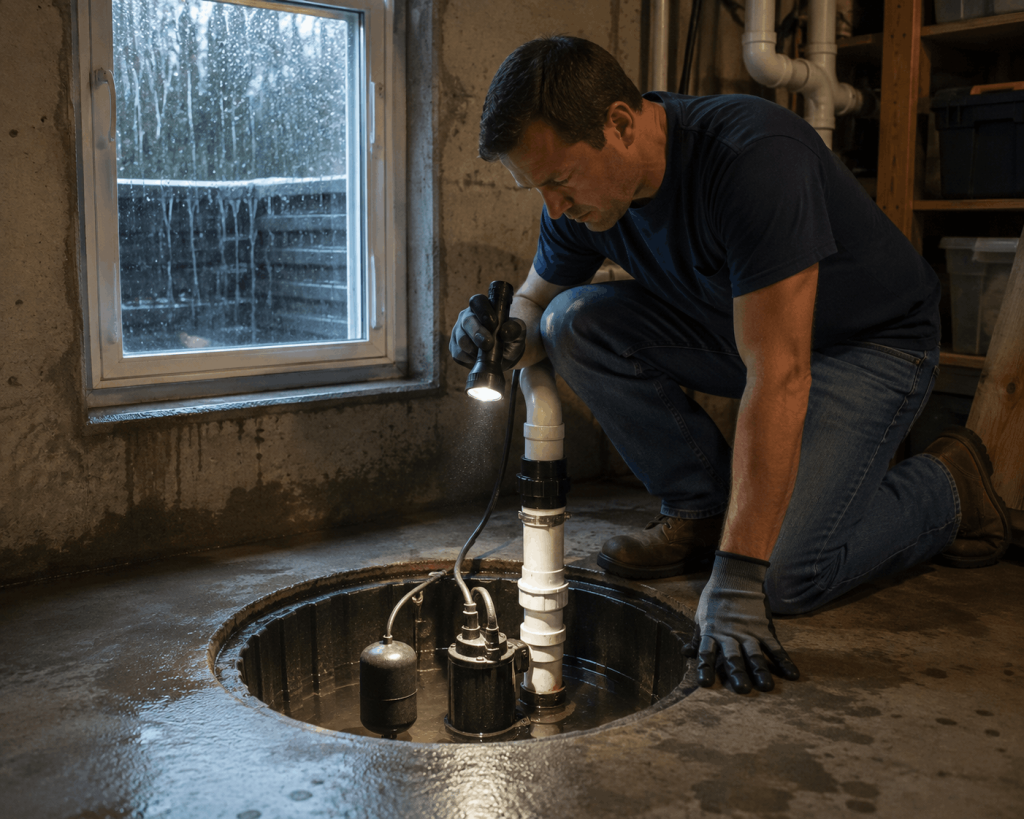
A professional pump installation should also account for the float switch, check valve, electrical supply, basin size, and discharge piping. The float needs room to move freely without catching on the pump, basin wall, cords, or other components. A check valve helps stop water in the pipe from flowing back into the pit after the pump shuts off.
The following parts work together to protect the basement:
- Primary sump: Handles normal groundwater entering the pit and should have enough pumping capacity for the property’s typical conditions.
- Float switch: Starts and stops the pump as water rises and falls. A blocked or failed switch can leave a working pump inactive.
- Check valve: Limits water from returning through the discharge pipe after each pumping cycle.
- Pump alarm: Warns homeowners when water reaches an unusual level or when certain system problems occur.
- Backup equipment: Provides another way to remove water if the main pump loses power or stops operating.
The sump pit should stay accessible so the pump can be inspected and tested. Dirt, gravel, and other debris can interfere with the impeller or float mechanism. A sealed or properly fitted basin cover may also help keep debris out while reducing exposure to standing water in the pit.
| Basement Water Issue | Can a Sump Pump Help? | What Else May Be Needed |
| Rising groundwater during heavy rain | Yes, when the system has adequate capacity | Routine testing and a clear outdoor discharge route |
| High seasonal water table | Yes | Reliable perimeter drainage and backup protection |
| Surface runoff flowing toward the house | Only after water reaches the drainage system | Improved grading, gutters, or exterior drainage |
| Leaking plumbing pipe or fixture | No | Plumbing repair and water shutoff when appropriate |
| Sewer or drain backup | No | Drain or sewer diagnosis and repair |
| Water entering through a window well | Limited | Window-well drainage, covers, grading, or other exterior work |
A plumber can assess whether an existing system is properly sized or whether worn equipment, a small basin, or poor discharge routing is reducing its ability to keep the basement dry.
Build a Drainage System That Moves Water Away
The pump handles water after it reaches the pit. Good exterior drainage reduces how much water reaches the foundation in the first place.
Start with the ground around the property. Soil should direct surface water away rather than allowing it to collect beside basement walls. Low areas next to the foundation can hold rainwater, giving moisture additional opportunities to move into surrounding soil.
Gutters and downspouts also play a major role. Clogged gutters can overflow beside the house, while short downspouts may release large amounts of roof runoff close to the foundation. Keeping gutters clear and extending downspouts toward a suitable drainage point can reduce unnecessary water around the basement.
Some properties use a French drain or another perimeter drainage arrangement to collect groundwater and direct it toward the sump. When that drainage path becomes obstructed, damaged, or poorly pitched, water may remain against the foundation instead of reaching the pit efficiently.
The drainage system and pump should work together. Even a powerful pump can’t correct every exterior water problem. If runoff repeatedly pools against the building during storms, addressing grading or drainage can reduce pressure on the pump and lower the risk of water intrusion.
The discharge line deserves the same attention. Once the pump removes water from the pit, that water needs to go far enough away that it doesn’t immediately soak back toward the foundation. An outlet located too close to the house can create a cycle where the same water is pumped repeatedly.
Discharge piping should also remain open during wet and freezing weather. Leaves, soil, ice, crushed pipe, or other obstructions can restrict flow and force the pump to work harder. In severe cases, the pump may run without being able to move enough water out of the basement.
Local rules may affect where sump water can be discharged. Requirements vary, and some municipalities restrict connections to sanitary sewer systems or prohibit discharge that creates hazards on sidewalks, streets, or neighboring property. A local plumbing professional can help determine a practical route that fits the property and applicable requirements.
Add a Battery Backup System for Power Outages
Heavy storms can create two problems at once: rising groundwater and a loss of household power. Without another power source or secondary pump, an electrically powered primary unit may stop while water continues entering the basin.
A battery backup can provide temporary pumping capacity when the main system loses electricity. Depending on the setup, the backup pump may also activate if the primary equipment fails or can’t keep up with incoming water.
Backup capacity should reflect the conditions around the property. Properties that receive steady groundwater during storms may need greater pumping capacity and battery runtime than properties where the sump operates only occasionally. The vertical distance water must be lifted and the discharge arrangement also affect pump performance.
A backup system should be treated as working equipment, not something that can be installed and forgotten. Batteries age, terminals can corrode, chargers can fail, and backup float switches can become obstructed. Status lights or alarms can help reveal problems before the next outage.
Test the secondary pump periodically by following the manufacturer’s instructions. Confirm that it activates, moves water through the discharge pipe, and shuts off correctly when the level drops. Battery terminals should stay clean and secure, and replacement should follow the equipment manufacturer’s recommended schedule.
A generator may provide another source of power in some homes, but the installation and operating requirements differ from a dedicated backup pump. Property owners who experience frequent outages or rapid groundwater accumulation should have a plumber assess the complete setup rather than assuming one backup option will fit every situation.
Adding an alarm provides another layer of awareness. If water rises unusually high in the pit, an audible or connected alarm can give you time to check the pump or request service before water reaches the basement floor.
Test and Maintain Your Sump Pump before Storms
Routine testing is one of the simplest ways to spot signs of pump failure before heavy rain arrives. Waiting until water is already rising leaves little time to deal with a stuck float, failed motor, blocked outlet, or dead backup battery.
Testing usually involves carefully adding water to the pit until the float rises enough to activate the pump. Watch the cycle from start to finish. The pump should start without excessive delay, lower the water level, and shut off after the float drops.
Then check the outdoor outlet. Water should leave the pipe freely and move away from the foundation. If the pump runs but little or no water appears outside, the line may be obstructed, disconnected, or frozen.
Regular maintenance should include:
- Clear loose debris from the sump pit and make sure the float can move without hitting cords, pipes, or the basin wall.
- Listen for grinding, rattling, humming, or other sounds that are different from the pump’s normal operation.
- Check the discharge connection and visible piping for leaks, loose fittings, or signs of damage.
- Confirm that the check valve limits water from draining back into the basin after the pump stops.
- Test the backup pump and alarm separately so you know they can operate when the main equipment can’t.
- Inspect accessible battery connections for corrosion or looseness and follow the manufacturer’s battery replacement instructions.
- Look at the outdoor discharge point after storms and during freezing weather to make sure it remains open.
Testing is especially useful before seasons with frequent rain or snowmelt and after a long period when the pump hasn’t operated. It also makes sense after electrical work, basement renovations, or anything else that may have disturbed the pump’s outlet, cord, piping, or float.
Repeated cycling deserves attention too. A pump that starts every few minutes may simply be responding to unusually high groundwater, but the pattern can also point to discharge water returning to the pit, a check-valve problem, or an undersized system.
Maintenance can’t prevent every mechanical failure. It can give property owners a better chance of finding visible problems while there’s still time to arrange repair.
Watch for Warning Signs of Pump or Discharge Problems
A sump system usually gives some indication when it isn’t working normally. Recognizing those signs early can help prevent basement water from turning into a larger flooding problem.
One warning sign is a pump that runs continuously. During severe rain, extended operation may be expected. If it continues long after groundwater conditions improve, the float may be stuck, water may be flowing back through the discharge, or the pump may be struggling to move enough water.
Frequent short cycles can be another common sump pump problem. The pump may start, remove a small amount of water, stop, then start again almost immediately. Problems with the check valve, basin size, float setting, or discharge arrangement may contribute to that pattern.
Pay attention when the pump makes unfamiliar sounds. Grinding can point to debris or worn internal parts. Humming without normal pumping may mean the motor is receiving power but the impeller can’t move. A pump that stays completely silent as water rises may have an electrical, switch, or motor problem.
Water remaining high in the pit after the pump operates should also be investigated. Check the outlet for an obvious obstruction if it is safe to do so, but don’t dismantle electrical or plumbing components in standing water.
Conditions become more urgent when water reaches the basement floor. Keep people and pets away from flooded areas near outlets, electrical panels, appliances, or extension cords. Don’t enter standing water when electrical contact may be possible. If the source appears to be a broken plumbing line and the main shutoff can be reached safely, shutting off the building’s main water supply may help limit additional damage.
A sump pump also won’t solve every active flood. Water from a burst pipe, failed water heater, backed-up sewer, or leaking fixture calls for a different plumbing response. Identifying whether the water is coming from groundwater or the plumbing system helps determine the right repair.
When a pump repeatedly trips a breaker, won’t start, can’t keep up with rising water, or leaves the basement wet, seek professional plumbing help promptly instead of repeatedly resetting or modifying equipment without knowing the cause.
Find Sump Pump Help with Emergency Plumbing Squad
A sump system works best when the pump, drainage, discharge piping, power supply, and backup equipment are all ready to operate together. Regular checks can catch many problems early, but worn pumps, faulty switches, blocked lines, and active flooding may require professional service.
Emergency Plumbing Squad provides access to plumbing help for sump pump service and other urgent plumbing problems, helping property owners connect with local service options through its nationwide location network. When a plumbing emergency causes stress or threatens further property damage, clear access to professional help can make it easier to respond quickly.
If your pump won’t activate, can’t keep up with rising water, or shows signs that repair or replacement may be needed, contact Emergency Plumbing Squad or use the location finder to connect with local plumbing help. Service is available 24/7 for urgent plumbing problems, so you can seek assistance when a sump pump fails unexpectedly or water starts rising.