When your hot water suddenly stops working, the reset button on an electric water heater may seem like the fastest fix. In some cases, it can restore heating after the unit trips its safety control. In other cases, it points to a deeper issue such as a faulty thermostat, damaged heating element, wiring problem, sediment buildup, or moisture near electrical parts.
Knowing how to reset a water heater safely can help you respond without putting yourself, your home, or the unit at risk. The process is not complicated, but it does involve electricity, hot water, and internal components that need careful handling.
Emergency Plumbing Squad helps homeowners handle urgent water heater problems with 24/7 plumbing support. If the reset button keeps tripping, will not press, or does not restore hot water, call for service instead of continuing to reset the unit. A trained plumber can inspect the system, find the cause, and recommend safe heater repair or replacement when needed.
Why an Electric Water Heater May Need a Heater Reset
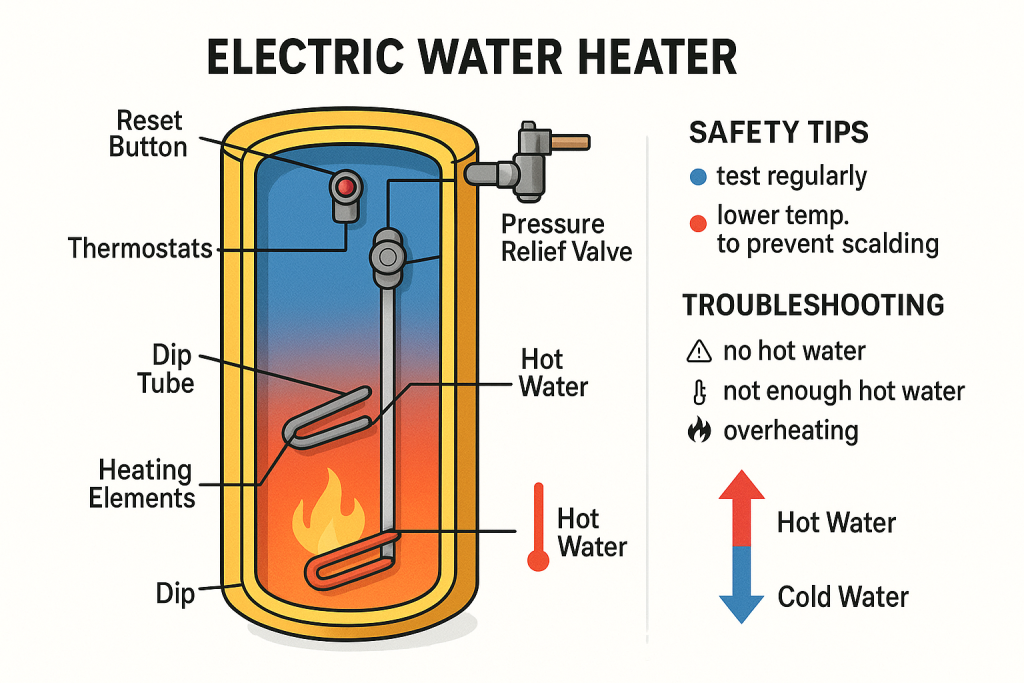
An electric water heater has a built-in safety control that shuts the unit down when it senses overheating. Many homeowners call it the reset button, but it is also known as a high-limit switch or thermal switch. Its job is to stop the heater before the water gets too hot or the unit becomes unsafe.
A one-time trip can happen after a power surge, temporary thermostat issue, or minor electrical interruption. If the unit heats normally after one reset and the problem does not return, it may not require immediate repair. Repeated reset issues are different. They often mean the heater is protecting itself from a condition that needs attention.
Common causes of a tripped reset include:
- A thermostat that is set too high or not reading temperature correctly
- A faulty thermostat that keeps calling for heat
- A worn heating element that overheats or shorts out
- Loose or damaged electrical wiring
- Sediment buildup inside the tank
- Moisture, leaks, or condensation near electrical parts
- A power surge or tripped breaker
Sediment is a frequent problem in areas with hard water. Minerals settle at the bottom of the tank and force heating components to work harder. Over time, that extra strain can cause overheating and trip the safety control.
A thermostat can also cause trouble. If it fails, the heater may keep heating past the safe temperature. The reset function shuts the system down to reduce the risk of scalding water or damage to the unit.
Do not treat frequent resets as normal heater maintenance. If your water heater keeps needing to be reset, Emergency Plumbing Squad can inspect the thermostat, heating element, wiring, tank condition, and related plumbing to find the source.
Reset Issues and Warning Signs to Check First
Before pressing anything, look for warning signs. Some water heater problems should be handled by a professional right away, especially when water and electricity may be close together.
If the hot water heater stopped working after a storm or outage, the reset may be simple. If it stopped after strange noises, leaking, a burning smell, or repeated breaker trips, the problem may be more serious.
| Warning Sign | What It May Mean | Safe Response |
| No hot water after a power surge | High-limit switch may have tripped | Reset once after following safety steps |
| Reset button trips again | Thermostat, element, or wiring issue | Stop resetting and call for service |
| Breaker trips repeatedly | Electrical fault or short | Leave power off and call a plumber |
| Burning smell or scorch marks | Overheated wiring or damaged parts | Do not use the heater |
| Water near the tank or panels | Leak or moisture near electrical components | Avoid contact and call Emergency Plumbing Squad |
| Rumbling or popping noises | Sediment buildup in the tank | Schedule inspection and maintenance |
| Water is too hot | Thermostat or safety control issue | Turn power off and request repair |
Look around the heater for puddles, rust, visible leaks, wet insulation, or moisture on the floor. If any water is near the access panels or wiring area, do not open the unit. Water and electrical parts can create a shock hazard.
Also check the breaker panel. If the breaker is tripped, reset it only once. If it trips again, leave it off. Repeated breaker trips can signal a wiring fault, damaged element, or other electrical issue that requires repair.
If you notice anything that feels unsafe, call Emergency Plumbing Squad. The company provides 24/7 emergency plumbing service and water heater repair support for urgent hot water problems.
Safety Steps before You Press the Reset Button
Safe repairs begin before the access panel comes off. Electric water heaters use high voltage, and the tank may hold very hot water. Taking a few minutes to prepare can prevent injury and help you decide whether the task is safe to continue.
First, turn off power to the water heater at the breaker. Do not rely on the unit being cold or inactive. Electricity may still be present until the breaker is off. If the breaker is not clearly labeled, stop and call a professional.
Next, let the water cool if the heater recently ran. This lowers the risk of burns if hot water releases while you are near the unit. Clear the area around the heater and make sure the floor is dry. Remove storage items, cleaning products, and anything that could make you trip.
Use proper safety equipment. Insulated gloves, safety glasses, and a flashlight can help you work more carefully. A non-contact voltage tester is also useful for confirming that power is off before touching anything near wiring.
Never press the reset heater control while standing in water or touching damp surfaces.
Follow these precautions before moving forward:
- Turn the breaker for the water heater off.
- Keep children and pets away from the work area.
- Dry the floor and remove any standing water.
- Put on insulated gloves and eye protection.
- Use a flashlight so you can see the access panel clearly.
- Stop if you see corrosion, melted wiring, leaks, or burn marks.
- Call a plumber if you are unsure at any step.
Gas systems are different. This process applies to electric water heaters. If you have a gas unit, do not open electrical panels or adjust gas controls unless the manufacturer’s instructions say it is safe. Gas water heater problems may involve combustion, venting, pilot lights, and fuel supply, so professional service is the safer choice.
Step-by-Step Water Heater Reset Process
Once safety checks are complete and power is off, you can locate the reset button. Most electric models have the button behind an upper access panel. It is usually a small reset button near the thermostat and may be red.
Use a screwdriver to remove the upper access panel. Set the screws aside. Gently move back the insulation without tearing it. Some units have a plastic safety cover over the thermostat area. Remove or open it according to the manufacturer’s instructions.
Look for the reset button in the center area near the upper thermostat. Do not touch any wires if you are not sure power is off. If you have a voltage tester, confirm that the area is not live before continuing.
Press the reset button firmly. You may feel or hear a click. You do not need to hold it for long. In most cases, a few seconds is enough. If you are wondering how long you need to hold the reset button on a hot water heater, the answer is usually only until it clicks or seats properly. If it will not push in, do not force it.
After pressing it, replace the plastic cover, insulation, and access panel. Make sure everything is secure before restoring power. Turn the breaker back on.
Give the unit time to heat. Many standard tank models need 30 to 60 minutes before you notice meaningful hot water, depending on tank size, water temperature, and system condition. A full recovery may take longer.
Check a nearby hot tap after the heater has had time to recover. If hot water returns and the button does not trip again, the reset may have solved the immediate issue. If the water stays cold, becomes too hot, or the reset trips again, the unit needs a professional diagnosis.
When a Reset Does Not Fix the Problem
A heater reset is not a repair for a failing component. It only restarts a system that has shut itself down. When the same problem returns, the reset function is warning you that something else is wrong.
If the reset button will not stay engaged, a thermostat may be stuck, a heating element may be shorted, or the wiring may be damaged. If the unit produces hot water for a short time and then shuts off again, overheating may be triggering the thermal switch.
A water heater reset button that will not push in may not be tripped. It may also be damaged or blocked by a faulty control. Do not use excessive force. Breaking the button or thermostat can create a larger repair.
Some homeowners also ask how to reset a water heater safely without reset button. If the heater has no visible reset control, check the manufacturer’s manual. Some models use different controls, while tankless, gas, and newer electronic units may have different procedures. Turning power off and back on may not solve the underlying issue and should not replace proper diagnosis.
Call for service if:
- The reset trips more than once
- The breaker trips when the heater turns on
- The water stays cold after the reset
- The water becomes scalding hot
- The reset button will not press or will not click
- You smell burning or see scorch marks
- You see water near the heater or access panels
- The unit is old, leaking, or making loud noises
Leaking units, strange noises, water that is not as hot as it used to be, slow heating, and older water heaters are common reasons to request service. Consider replacement when repair costs are 50% or more of replacement cost, especially for older units.
Preventing Future Reset Problems
Good heater maintenance can reduce reset issues and help the unit run more reliably. The best routine depends on your water quality, heater age, installation, and household demand.
Sediment control is one of the most helpful steps. Flushing the tank can remove mineral buildup that strains heating components. Homes with hard water may need more frequent maintenance or water treatment support.
Thermostat settings also matter. A setting around 120°F works for many households and can reduce the risk of scalding while limiting unnecessary strain. If the water feels too hot even at a reasonable setting, the thermostat may not be reading correctly.
Keep the area around the heater dry and clear. Moisture near wiring or access panels can lead to safety shutoffs and damage. Store boxes, paint, cleaners, and laundry items away from the heater so the unit stays accessible for inspection and service.
Schedule a professional inspection if the heater is older, has needed multiple resets, or shows performance changes. A plumber can check the thermostat, heating element, anode rod, electrical connections, relief valve, and tank condition.
Regular maintenance helps homeowners catch small issues before they become emergencies. Emergency Plumbing Squad provides plumbing support around the clock, including water heater repair and installation services.
Call Emergency Plumbing Squad for Safe Water Heater Support
Resetting an electric water heater can be safe when the problem is minor and every safety step is followed. The breaker must be off, the area must be dry, and the unit should show no signs of leaks, burning, or damaged wiring.
If the reset does not restore hot water, the button trips again, or anything looks unsafe, stop and call Emergency Plumbing Squad. Repeated resets can point to faulty heating parts, thermostat failure, wiring trouble, sediment buildup, or an aging tank.
Emergency Plumbing Squad is available 24/7 for urgent water heater repair, plumbing service, and replacement guidance. Call today for fast help from a local plumbing professional who can inspect the unit, explain the repair options, and restore safe hot water to your home.
