Hot water should be ready when your household needs it. When showers turn cold, strange sounds come from the tank, or water starts pooling around the unit, those problems should not be ignored. Small water heater issues can quickly lead to damaged flooring, mold growth, higher utility bills, or a full system shutdown.
Emergency Plumbing Squad helps homeowners respond quickly when water heater problems interrupt daily routines. The team offers 24/7 support for water heater repair, replacement guidance, and urgent plumbing issues, with service built around fast response and clear diagnosis.
Knowing the warning signs your water heater needs repair immediately can help you act before a minor issue becomes an expensive emergency. Below are the most common problems to watch for and what they may mean for your home.
Why Water Heater Repair Should Not Wait
A water heater works under pressure, heat, and constant demand. When one part starts failing, the rest of the system often has to work harder. That extra strain can shorten the lifespan of the unit and raise the chance of leaks, overheating, or sudden failure.
A small leak near the base of the heater may look harmless at first. Over time, that moisture can damage flooring, drywall, framing, and nearby belongings. If the leak reaches electrical components, the problem becomes a safety concern. If the tank is corroded, repair may no longer be enough.
Temperature problems also deserve fast attention. Water that is too hot can scald. Water that stays lukewarm may point to a bad thermostat, worn heating elements, or sediment buildup inside the water heater tank. These issues often get worse without service.
Prompt heater repair can help with:
- Restoring a steady hot water supply
- Reducing the risk of water damage
- Protecting the tank, valves, and heating components
- Improving energy efficiency
- Preventing contaminated water concerns
- Helping homeowners decide between repair and replacement
Emergency Plumbing Squad’s 24-hour support is valuable when a problem cannot wait until a normal appointment window. A trained plumber can inspect the unit, explain the issue, and recommend the safest next step.
Strange Noises from the Water Heater
A quiet hum may be normal, but loud popping, banging, rumbling, hissing, or sizzling should get your attention. These sounds are often one of the first signs your water heater needs service.
The most common cause is sediment buildup. Minerals from hard water settle at the bottom of the tank. When the heater starts heating, water can become trapped under that layer of minerals. As it forces its way through, you may hear popping or rumbling. The thicker the sediment layer becomes, the harder the unit has to work.
Noises can also come from worn parts. A damaged dip tube, failing valve, loose component, or struggling heating element may create clanking, tapping, or buzzing. If the sound grows louder over time, the system may be under stress.
New or worsening heater noises should not be treated as normal aging. A noisy water heater may still run, but it may also be using extra energy while moving closer to a breakdown.
Noise can also be a sign that the tank needs flushing. If sediment stays inside for too long, it can reduce heating performance, damage internal parts, and cause the heater to run longer than it should. That can mean higher energy bills and less reliable hot water.
Call a plumber when noises become frequent, loud, or paired with other symptoms such as cloudy water, poor heating, or leaks. Emergency Plumbing Squad can check for sediment, inspect heating elements, and determine whether the unit can be repaired or should be replaced.
Water Pooling, Visible Leaks, or Puddles near the Unit
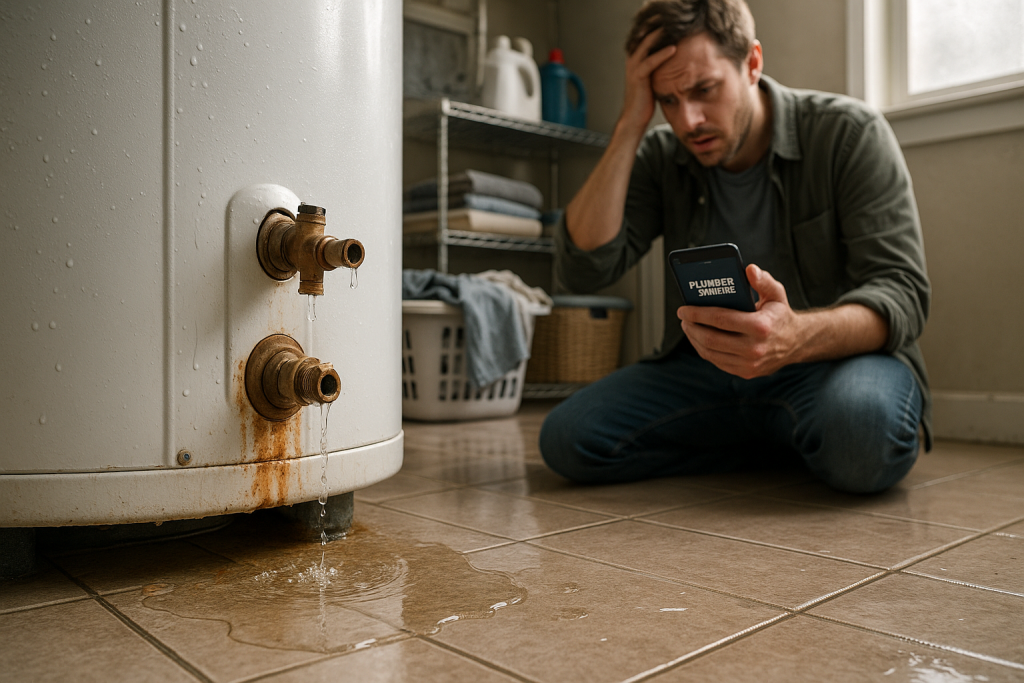
Water pooling near the heater is one of the most urgent warning signs. Even small puddles can point to active leaks from a valve, fitting, pipe connection, or the tank itself.
Some leaks are repairable. A loose connection, worn gasket, or faulty relief valve may need a part replacement or adjustment. Other leaks are more serious. If the tank has rusted through, the unit may need replacement because a corroded tank cannot usually be repaired safely.
Check the area around the heater often, especially if the unit is in a basement, garage, utility closet, or other space you don’t visit every day. Leaks in hidden areas can continue for days before homeowners notice damage.
| Warning Sign | What It May Mean | Why It Needs Attention | Recommended Action |
| Water pooling near the base | Tank, valve, or connection leak | Can damage flooring and nearby walls | Call for inspection right away |
| Visible leaks from pipes or fittings | Loose or worn plumbing connection | May worsen under pressure | Shut off nearby water if safe and call a plumber |
| Dripping from the relief valve | Pressure or temperature concern | May point to unsafe pressure buildup | Schedule urgent service |
| Rusty water around the tank | Corrosion inside or outside the unit | Can signal tank failure | Ask about repair versus replacement |
| Hot water runs out fast | Sediment or heating element problem | Unit may be working harder than normal | Request diagnosis and repair |
Leaks can also create mold problems. Moisture trapped under floors or behind walls may lead to indoor air quality concerns and expensive repairs. For that reason, any unexplained puddles near your water heater are immediate red flags.
If you see active leaking, avoid touching electrical parts or standing water around the unit. Call Emergency Plumbing Squad for 24/7 plumbing support and fast water heater troubleshooting.
Inconsistent Water Temperature or Cold Showers
Inconsistent water is one of the most common signs your water heater needs repair immediately. You may notice hot water that turns cold too quickly, showers that shift from warm to cold, or water that becomes too hot without warning.
A steady temperature depends on working thermostats, heating elements, sensors, and proper flow through the tank. If one part stops doing its job, the heater may struggle to maintain the temperature your household expects.
For electric water heaters, worn heating elements are a frequent cause. If the upper element fails, you may get little or no hot water. If the lower element fails, the heater may produce some hot water, but the supply runs out quickly. Thermostat problems can create similar symptoms.
Gas water heaters may have burner, pilot, gas control, or venting issues. These problems should be handled by a professional because gas systems involve combustion and safety controls.
Inconsistent temperature can also come from sediment. When minerals collect in the tank, the water has less direct contact with the heating surface. The heater may take longer to warm up and may not recover quickly after showers, laundry, or dishwashing.
Watch for these temperature warning signs:
- Hot water runs out much faster than usual
- Water stays lukewarm even after adjusting the setting
- Showers turn cold without warning
- Water becomes scalding hot at the faucet
- The unit takes longer to heat after use
- The reset button trips more than once
Do not keep raising the temperature setting to force better performance. If the system is malfunctioning, a higher setting can increase safety risks without fixing the cause. A plumber can test the heating element, thermostat, wiring, gas control, or burner to find the source.
Discolored, Smelly, or Contaminated Water
Clean hot water should not look rusty, cloudy, or gritty. It should not have a strong metallic smell or rotten odor. If the water coming from hot taps changes color or smell, the heater may need service.
Rust-colored hot water may mean corrosion inside the tank or rust in connected plumbing. If the problem appears only when using hot taps, the water heater is more likely involved. If both hot and cold taps show discoloration, the issue may be in the broader plumbing supply.
Smelly water may point to bacteria inside the tank, an anode rod issue, or stagnant water. A rotten egg odor is often linked to a reaction inside the tank, especially in homes with certain water conditions. Cloudy or gritty water can suggest sediment buildup or minerals moving through fixtures.
Contaminated water concerns should be handled quickly because the problem may affect bathing, washing, cooking routines, and appliance performance. Sediment can also clog aerators, showerheads, washing machine screens, and dishwasher inlets.
A plumber may recommend flushing the tank, inspecting the anode rod, testing water quality, or checking whether corrosion has reached a point where replacement is safer. Emergency Plumbing Squad can identify whether the problem comes from the heater, the plumbing lines, or the water source entering the home.
Higher Bills, Poor Heating, and Aging Water Heaters
A water heater that suddenly costs more to run may be working harder than it should. If your energy bill rises while usage stays the same, poor heating efficiency could be the reason.
Sediment forces the heater to work longer. Worn heating elements can draw power without producing enough heat. A failing thermostat can cycle too often or not often enough. Leaks can waste heated water and cause the unit to refill and reheat more frequently.
Age matters too. Many traditional tank water heaters last around 8 to 12 years, although lifespan depends on maintenance, water quality, installation, and usage. If your unit is near or past 10 years old and needs frequent repair, replacement may be the smarter long-term choice.
If he repair cost is 50% or more of replacement cost, replacing the old unit may be worth considering. That type of guidance helps homeowners avoid pouring money into a heater that is close to failure.
A plumber can inspect the tank, review its age, check the heating system, and compare repair options with replacement. If repair is still practical, service may restore performance. If the tank is rusted, leaking, or outdated, replacing it can reduce future emergencies.
Call Emergency Plumbing Squad for Fast Water Heater Help
Water heater problems rarely fix themselves. Strange sounds, visible leaks, water pooling, inconsistent water temperature, rusty water, smelly water, and rising energy bills all deserve attention. Waiting can allow damage to spread and may leave your home without hot water when you need it most.
Emergency Plumbing Squad is available 24/7 for water heater repair, urgent plumbing problems, and replacement guidance. A certified plumber can inspect your unit, find the cause, and explain the best repair path for your home.
Call Emergency Plumbing Squad today if your water heater needs to be repaired, inspected, or replaced. Fast service can help protect your home, restore comfort, and keep your hot water system working safely.
