Weather can affect a home or business in ways that are easy to overlook until a plumbing problem happens. A sudden storm, a cold snap, extreme heat, or days of heavy rainfall can place added stress on pipes, drains, fixtures, sewer lines, and water heaters. When the system is already worn, clogged, exposed, or poorly protected, bad weather can turn a small issue into an emergency.
Understanding how weather causes plumbing emergencies can help property owners respond faster and reduce the risk of water damage. Freezing temperatures can cause cracks in pipes. Heavy rain can overwhelm drains and sewer lines. Extreme heat can dry out seals, increase water use, and place stress on plumbing systems. Even quick temperature changes can create pressure that leads to leaks, bursts, and backups.
Emergency Plumbing Squad helps homeowners and businesses deal with urgent plumbing problems caused by weather conditions. Whether water is backing up, a pipe has burst, a drain has stopped working, or you suspect a hidden leak, fast action matters. Our team is available 24/7 to help protect your property and restore your plumbing as quickly as possible.
Why Weather Conditions Put Plumbing Under Stress
Plumbing systems are built to move water safely through a property, but they are not immune to weather. Pipes, joints, seals, drains, and fixtures all respond to changes in temperature, moisture, and ground conditions. When weather shifts quickly, your plumbing system may have to handle pressure it was not ready for.
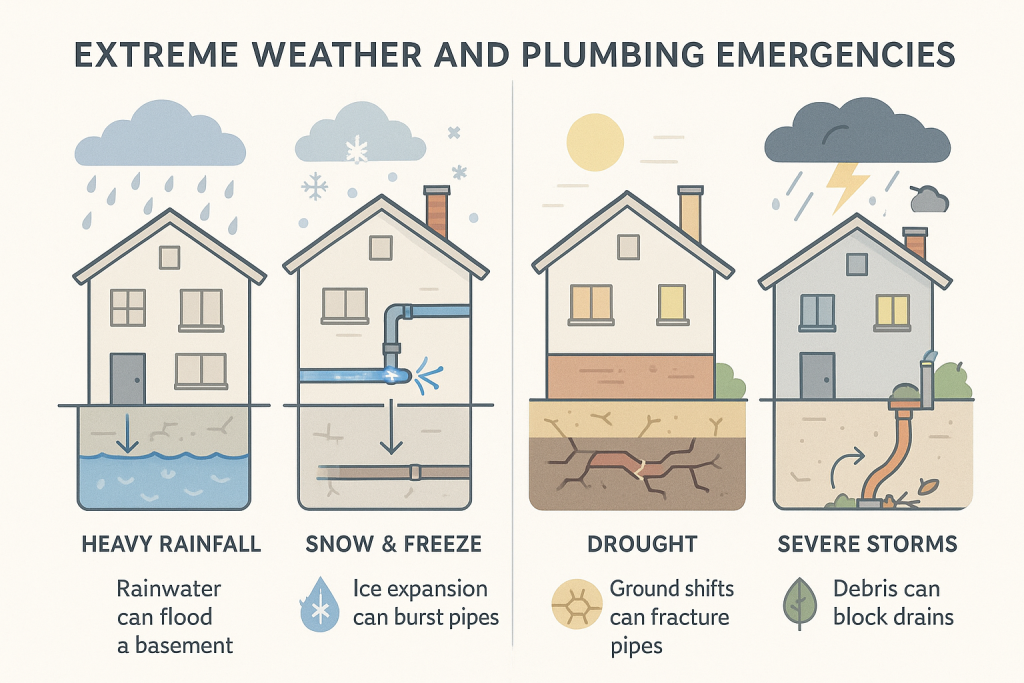
Cold weather is one of the most common causes of winter plumbing trouble. When water freezes inside a pipe, it expands. That expansion creates internal pressure. If the pressure becomes too high, the pipe can crack or burst. The damage may not be obvious until the ice begins to thaw and water starts flowing through the broken area.
Heat can also cause problems. During long hot spells, materials may expand, rubber seals may dry out, and water demand may rise. Outdoor plumbing, exposed pipes, irrigation lines, and older pipe materials may be affected first. A small pipe leak may begin in an area that is rarely checked, such as a garage, crawl space, attic, or utility room.
Rain and storms create a different kind of risk. Heavy rainfall can push water toward foundations, basement drains, and sewer systems. If a drain is already slow or a sewer line has a blockage, stormwater can make the problem worse. Water sitting around a foundation can also reveal weak spots in walls, slabs, or pipe entry points.
Weather does not always create the first problem. Often, it exposes a problem that was already forming. Loose fittings, weak pipe joints, aging fixtures, slow drains, and small leaks may stay hidden until a major weather event puts the system under stress.
| Weather Event | Plumbing Impact | Possible Emergency | What to Do |
|---|---|---|---|
| Freezing temperatures | Water freezes and expands inside pipes | Frozen pipes, cracks, bursts, loss of water flow | Shut off water if needed and call for emergency help |
| Heavy rainfall | Drains and sewer lines may become overwhelmed | Backups, basement flooding, water intrusion | Avoid using affected drains and call a plumber |
| Extreme heat | Seals dry out and water demand increases | Leaks, low pressure, fixture problems | Watch for damp areas and rising water bills |
| Storms and wind | Debris blocks drains and outdoor lines | Slow drainage, backups, standing water | Clear visible debris and request service if water will not drain |
| Sudden thaw | Ice melts and water pressure returns | Burst pipes, hidden leaks, wall or ceiling damage | Check exposed areas and call if water appears |
Freezing Temperatures, Frozen Pipes, and Burst Pipes
Freezing temperatures can cause some of the most serious plumbing emergencies. Pipes in unheated areas face the highest risk. This may include pipes in garages, basements, attics, crawl spaces, exterior walls, cabinets, and outdoor hose lines. When these areas lose heat, the water inside the pipes can freeze.
Once water freezes, pressure builds inside the line. The pipe may not burst at the frozen spot. Sometimes the break happens farther along the line where pressure has nowhere to go. This is why a frozen pipe can seem manageable at first, then suddenly turn into a major water emergency when temperatures rise or the line thaws.
The potential damage freezing temperatures can have depends on where the pipe is located and how long the issue continues. A burst pipe behind a wall can soak insulation, drywall, flooring, and framing. A broken line in a basement can flood stored items and damage electrical equipment. A frozen outdoor line can also affect indoor fixtures connected to the same supply.
Common warning signs include little or no water coming from a faucet, strange sounds when a fixture is turned on, frost on exposed pipes, damp walls, water stains, or a sudden drop in water pressure. If you notice any of these signs during freezing weather, it is safer to act quickly.
You can reduce winter plumbing risk by insulating exposed pipes, sealing gaps where cold air enters, opening cabinet doors near sinks, and allowing a small trickle of water to move through vulnerable lines during extreme cold. These steps can help, but they do not replace fast service when a pipe is already frozen or damaged.
If you think a line is frozen, do not use an open flame to thaw it. That can create a fire hazard and may damage the pipe further. Call Emergency Plumbing Squad for help. Our plumbers can assess the situation, locate the affected area, and help reduce the risk of a burst.
Heavy Rainfall, Sewer Backups, and Drain Problems
Heavy rainfall can create urgent plumbing problems even when the pipes inside the building seem fine. During a major storm, large amounts of water move through gutters, downspouts, storm drains, yard drains, sump systems, and sewer lines. If any part of that system is clogged, blocked, damaged, or overwhelmed, water may start moving where it should not go.
Basements and lower levels are often the first places to show trouble. Water may come up through floor drains, seep through foundation gaps, or collect around fixtures. A slow drain that was only a small nuisance before the storm may become a full backup when the sewer line or main drain is under pressure.
Sewer issues need fast attention. Wastewater can create odor, mess, and health concerns inside a home or business. If sewage backs up into a bathtub, shower, toilet, sink, or floor drain, stop using water in the building and call for emergency plumbing service. Running extra water may make the backup worse.
Outdoor debris can also affect drainage during storms. Leaves, branches, dirt, and trash can block exterior drains and vent openings. When water cannot move away from the property, it may collect near the foundation or flow toward low points. Over time, this can increase the chance of leaks, dampness, and damage around pipe openings.
Property owners can take simple steps before storm season to lower the chance of a plumbing emergency:
- Clear gutters, downspouts, and visible yard drains.
- Test the sump pump before heavy rain arrives.
- Watch for slow drains, gurgling sounds, and sewer odors.
- Move valuables off basement floors when storms are expected.
- Know where the main water shutoff valve is located.
- Call for help if water backs up, pools indoors, or drains stop working.
Heavy rainfall can be stressful because problems often happen fast. Emergency Plumbing Squad provides 24/7 service for drain problems, sewer backups, flooding concerns, and urgent water issues. If water is entering your property or backing up through fixtures, call right away.
Extreme Heat, Pipe Leaks, and Seasonal Wear
Extreme heat may not seem as dangerous to plumbing as winter weather, but it can still create serious problems. Hot weather can affect pipes, seals, fixtures, outdoor plumbing, water heaters, and drainage systems. The longer the heat lasts, the more seasonal stress your plumbing may experience.
High temperatures can cause certain materials to expand. When pipes, fittings, and seals expand and contract over time, small gaps may form. Rubber washers and seals can dry out. Older pipes may become weaker. Outdoor hose bibs, irrigation lines, and exposed pipes may show signs of wear first because they face direct heat and sun.
Extreme heat can create higher water demand as well. Households may use more water for showers, laundry, landscaping, and cooling needs. Businesses may see heavier bathroom and kitchen use. When demand rises, existing plumbing weaknesses may become easier to notice. Low pressure, dripping fixtures, and sudden leaks can all point to heat-related strain.
Water heaters also need attention during hot weather. They may not seem like a summer concern, but they still support daily routines. If a heater is already aging or under strain, heavy use can reveal problems such as leaking, popping sounds, rust-colored water, or uneven temperature. Any leak near a water heater should be checked quickly to avoid damage to floors, walls, and nearby equipment.
Dry soil can cause another issue. During long hot periods or drought, the ground may shift. This movement can affect underground pipes, sewer lines, and water service lines. A hidden pipe leak outside may show up as soggy spots in the yard, greener patches of grass, lower water pressure, or higher water bills.
Extreme weather can cause significant damage when a small weakness goes unnoticed. If you see signs of leaks, cracks, low water flow, or fixture trouble during a heatwave, contact Emergency Plumbing Squad. Quick leak repair can help prevent a larger emergency later.
How to Respond When Weather Damages Your Plumbing
When weather damages plumbing, the first few minutes matter. A calm response can help protect your home or business while you wait for professional service. The right steps depend on the problem, but the goal is always the same: reduce water flow, keep people safe, and prevent the damage from spreading.
If a pipe bursts or water is flooding an area, shut off the main water supply if you can reach it safely. Many homes have a main shutoff valve near the water meter, in a basement, in a utility room, or along an exterior wall. Businesses may have shutoff locations in mechanical rooms or service areas. Knowing this location before an emergency can save time.
If water is near electrical outlets, appliances, or panels, keep away from the area. Do not step into standing water if there may be an electrical risk. If sewage is involved, avoid direct contact and keep children and pets away. Sewer water should be handled as a serious concern.
For frozen pipes, stop using affected fixtures and call for help. If water is not flowing, pressure may be building in the line. For drain backups, stop running water into sinks, tubs, showers, toilets, washers, or dishwashers until a plumber checks the system. For leak concerns, place a bucket under active drips if possible, move belongings away, and take note of where the water appears.
Before help arrives, these steps can make the situation easier to manage:
- Turn off the main water valve if water is actively flooding the area.
- Shut off power to the affected space only if it is safe to do so.
- Move furniture, rugs, boxes, and electronics away from water.
- Take photos of visible damage for your records.
- Avoid using nearby fixtures until the plumbing problem is checked.
- Place towels or containers near minor leaks when safe.
- Keep walkways clear so plumbers can access the damaged area quickly.
Emergency Plumbing Squad can help with urgent weather-related plumbing problems, including frozen pipes, burst pipes, pipe leak issues, drain backups, sewer concerns, water heater leaks, and storm-related water problems. Our team is available day and night because weather emergencies do not wait for regular business hours.
Fast service can also help limit repair costs. Water spreads quickly through flooring, drywall, cabinets, and ceilings. The sooner the plumbing problem is addressed, the easier it may be to protect nearby materials and reduce cleanup needs.
Get Fast Help for Weather-Related Plumbing Emergencies
Weather-related plumbing problems can happen quickly. A cold snap can freeze a line overnight. Heavy rainfall can overwhelm a drain during a storm. Extreme heat can reveal leaks, weak seals, or pressure problems that were not obvious before. When these issues affect your home or business, waiting can make the damage worse.
Emergency Plumbing Squad is ready to help when weather puts your plumbing under stress. Our team handles urgent leaks, frozen pipes, burst pipes, sewer backups, drain problems, water heater concerns, and other emergency plumbing issues. We understand how stressful it feels when water is spreading, fixtures stop working, or a hidden pipe problem becomes visible.
If you notice signs of water damage, low pressure, sewage odors, slow drains, frozen lines, or leaking fixtures after a weather event, call right away. Fast help can reduce damage, restore your system, and give you a clear plan for the repair.
Call Emergency Plumbing Squad today for 24/7 help with weather-related plumbing emergencies.