

Call the number above now
Get connected to a licensed plumber for water pressure problems, 24/7.
First, figure out how widespread it is: test a few different faucets. If only one fixture is weak, it’s likely a clogged aerator or showerhead — a simple fix. If pressure is low everywhere, check that your main shutoff valve is fully open, then look for signs of a hidden leak before assuming the worst.
A sudden pressure drop can come from something as minor as mineral buildup in a showerhead, or something as serious as a hidden leak, failed pressure regulator, or damaged supply line. Narrowing down whether it’s one fixture or the whole house is the fastest way to tell which you’re dealing with.
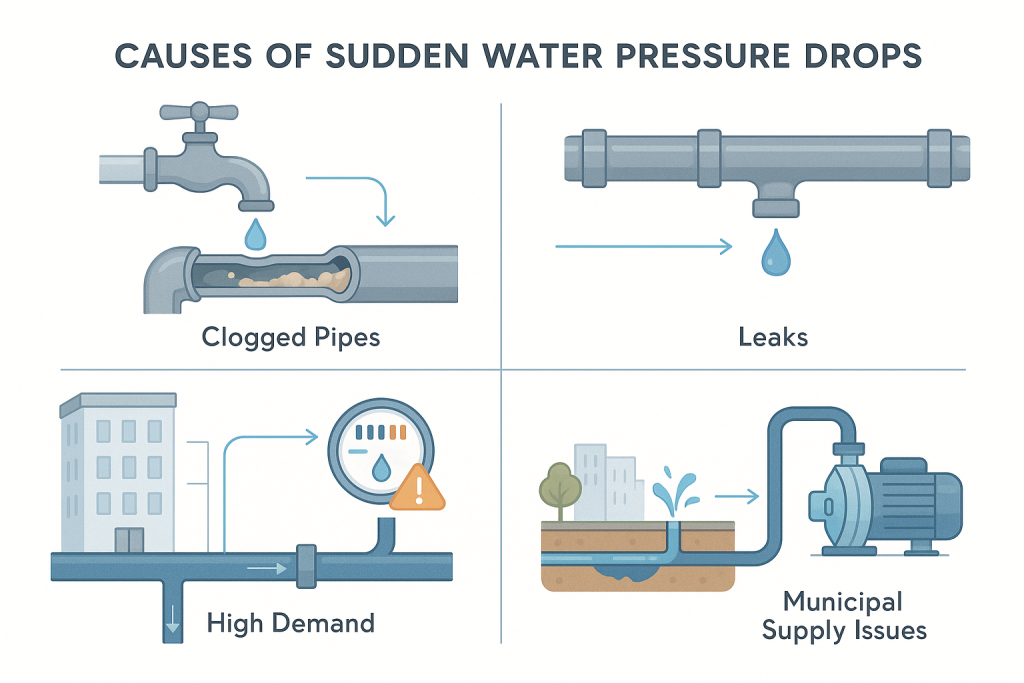
Step 1: Check Faucets, Valves, and the Main Line
Turn on several faucets — sinks, showers, outdoor hose bibs, anything you can safely access. If only one fixture is weak, the cause is probably local: a clogged aerator or mineral buildup in a showerhead, both easy fixes. If several fixtures are affected, check that all shutoff valves serving the home are fully open — a valve partly closed after a repair or appliance install can quietly choke flow throughout the property.
The main water valve is usually where the line enters the building — a basement, crawl space, utility room, or near the meter. Turn it carefully; if it’s stuck, leaking, or won’t move, don’t force it — call a plumber instead.
| What You Notice | Possible Cause | What to Try First |
|---|---|---|
| One faucet has weak flow | Clogged aerator or fixture issue | Clean the aerator or test another fixture |
| One shower has weak flow | Mineral buildup in showerhead | Clean or replace the showerhead |
| Whole house has low pressure | Main valve, supply issue, leak, or pump problem | Check valves and look for leaks |
| Hot water pressure is low | Water heater valve, tank issue, or hot line problem | Check hot-side valves and call for service |
| Pressure drops then returns | Pressure regulator, pump, or supply fluctuation | Track timing and request inspection |
| Pressure dropped after repair work | Valve may not be fully open | Check your main shutoff and fixture valves |
Step 2: Look for Hidden Leaks
A drop in pressure often means water is escaping the system before it reaches your fixtures. Walk through the property checking cabinets, walls, ceilings, and utility areas for moisture. Listen for running water when everything is turned off — a hissing or dripping sound behind a wall is a real clue, not something to ignore.
Also check around toilets, near the water heater, and around the washing machine. A higher-than-usual water bill, soggy patches in the yard, or a musty smell can all point to a leak you haven’t spotted visually yet.
Step 3: Rule Out Supply and Equipment Issues
Not every pressure problem starts inside the home. Municipal water main work or high local demand can drop pressure across a whole block — if neighbors report the same issue, the cause is likely outside your plumbing. A failing pressure regulator can also cause inconsistent pressure throughout the day, sometimes with banging pipes as a secondary symptom.
Homes with well systems have extra parts to consider: a failing pump or pressure tank can cause water to start strong then fade, or cycle on and off. And if the pressure dropped right after a freeze, storm, or repair, that timing is a meaningful clue worth mentioning when you call.
For reference, EPA WaterSense guidance puts normal residential water pressure in the 40 to 80 psi range — pressure well outside that band, or that changes suddenly without an obvious cause, is worth having checked rather than adjusted to.
When to Call Rather Than Keep Troubleshooting
Call if you notice any of the following, since these point to something beyond a simple fixture fix:
- Pressure drops across the whole property, not just one fixture
- No water from multiple fixtures at once
- Water leaking from walls, ceilings, floors, or pipes
- A main or shutoff valve that’s stuck, leaking, or broken
- Running water sounds when every fixture is off
- Low pressure paired with visible water damage or wet areas
Frequently Asked Questions
Is low water pressure always a sign of a leak?
Not always. A single weak fixture is often just a clogged aerator or mineral buildup. Whole-house pressure drops are more likely to involve a leak, closed valve, regulator issue, or supply problem — worth checking rather than assuming.
Why does only my hot water have low pressure?
That usually points to something specific to the hot side — a partially closed valve on the water heater, sediment buildup in the tank, or an issue with the hot water line itself, rather than a whole-system problem.
Should I try to adjust my pressure regulator myself?
It’s better not to open or adjust regulator, pump, or water heater components you’re not familiar with. Misadjusting a regulator can cause pressure that’s too high, which risks damaging pipes and fixtures elsewhere in the system.
Emergency Plumbing Squad connects you with a licensed 24 hour plumber near me any time a pressure drop doesn’t have an obvious explanation.
