Call the number above now
Get connected to a licensed plumber for repairs, installs, or emergencies, 24/7.
In short: plumbers repair leaks, clean drains, service water heaters, replace fixtures, inspect pipes, handle sewer repair, install new plumbing components, and provide emergency response when water problems can’t wait.
Plumbing problems show up in a lot of different ways — a faucet that’s dripped for weeks, a drain that slows overnight, a water heater that quits right before the morning rush. Some are routine. Others can cause real damage if they sit too long. Knowing the range of what a plumber actually handles makes it easier to know who to call and when.
Common Repairs
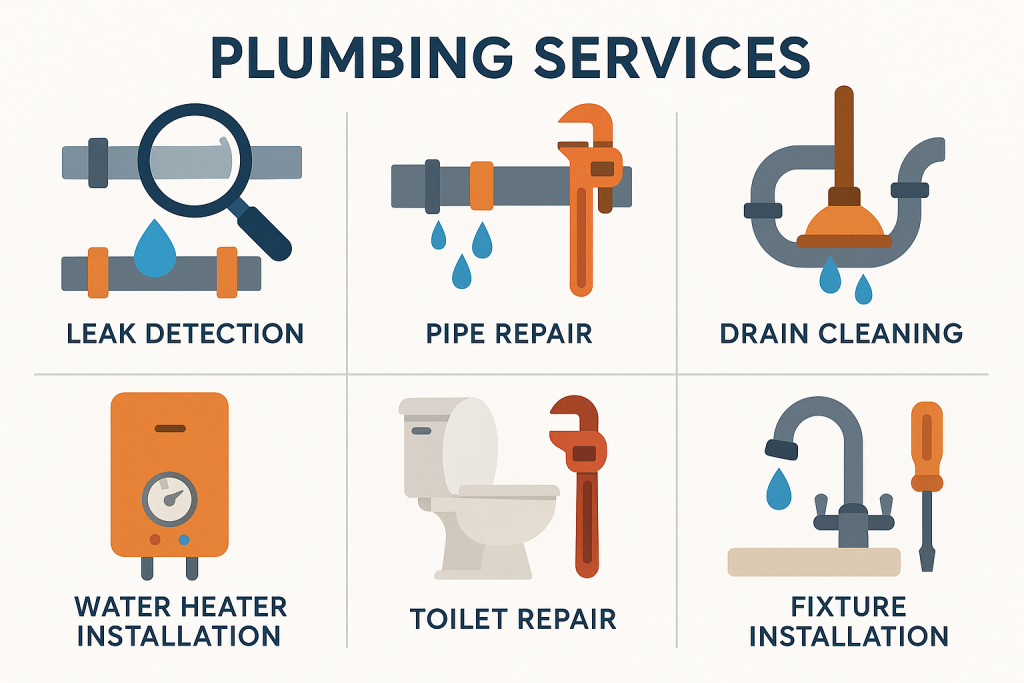
Most calls to a plumber are for repairs, not upgrades — dripping faucets, running toilets, leaking pipes, broken shutoff valves, low water pressure, clogged sinks, damaged garbage disposals, and loose fixtures are the most common.
Leaks are one of the most frequent reasons people call. Some are obvious — water pooling under a sink. Others hide behind a musty smell, a water stain, soft drywall, or an unexplained jump in the water bill. Toilets need frequent service too: constant running, poor flushing, repeat clogging, or leaking around the base can trace back to a worn flapper, a faulty fill valve, or something further down the line.
Emergency Services, Available Around the Clock
A burst pipe, overflowing toilet, major leak, sewer backup, or failed water heater doesn’t wait for business hours. Emergency service typically includes shutting off water, locating the source, stopping active leaks, clearing major blockages, replacing damaged parts, and explaining what full repair will involve.
- Water spreading across floors, ceilings, or walls
- Sewage backing up into tubs, toilets, or sinks
- No working water throughout the home
- A leaking or failed water heater
- A burst or frozen pipe
- Strong sewage odors from drains
- A drain clog affecting several fixtures at once
A good plumber should explain the problem and provide pricing before work begins, plus tell you whether the fix is temporary or permanent.
Drain Cleaning and Sewer Repair
| Service Type | Common Signs | What a Plumber May Do |
|---|---|---|
| Drain cleaning | Slow sink, tub, or shower drain | Clear buildup with tools or cleaning equipment |
| Main line clearing | Several fixtures draining slowly | Inspect and clear the main drain line |
| Sewer cleaning | Gurgling toilets or sewage odor | Remove deeper blockage and check flow |
| Sewer repair | Frequent backups or yard wet spots | Locate damage and recommend repair options |
| Pipe repair | Leaks, corrosion, or cracked lines | Seal, replace, or reroute affected pipe |
| Preventive maintenance | Recurring clogs or older pipes | Inspect, clean, and recommend care steps |
A single clogged sink is an inconvenience; a main sewer blockage can stop several fixtures at once. For simple clogs, a plumber may use a drain snake or auger. For tougher blockages, camera inspection or hydro jetting can locate the problem and clear the line without guesswork.
Sewer repair usually comes up when a line is cracked, collapsed, root-blocked, or damaged by shifting soil — gurgling toilets, recurring clogs, sewage smells, or wet patches in the yard are the usual warning signs. Avoid harsh chemical drain cleaners as a routine fix; they can damage pipes over time and often don’t solve deeper blockages. If a clog returns after one attempt, that’s the signal to call rather than keep forcing it.
Water Heater Service, Installation, and Repair
Plumbers commonly service both traditional tank units and tankless models — a faulty thermostat, heating element, pilot light, burner assembly, pressure relief valve, or drain valve are common culprits behind no hot water, rusty water, popping noises, or leaks around the base. Water heating is a significant piece of a home’s utility bill — the U.S. Department of Energy estimates it accounts for roughly 18% of the average home’s energy use — so a unit that’s failing or running inefficiently isn’t just an inconvenience, it’s a cost.
Maintenance extends equipment life: flushing sediment, inspecting connections, checking the anode rod, and testing pressure are all part of routine service, especially in homes with hard water. Proper installation matters too — water heaters connect to water lines, power, venting, and sometimes gas, and incorrect installation can lead to leaks or safety concerns.
Fixture, Appliance, and Full Installation Work
Beyond repairs, plumbers install and replace faucets, toilets, sinks, showers, garbage disposals, dishwashers, refrigerator water lines, washing machine hookups, and outdoor hose bibs. During remodels or new construction, they handle full plumbing installation — water lines, drain lines, shutoff valves, sump pumps, and water heaters — so everything is set up correctly from the start rather than needing correction later.
Simple Maintenance Habits That Help
- Check under sinks for moisture once a month.
- Keep grease, coffee grounds, and food scraps out of drains.
- Use drain screens in showers and bathroom sinks.
- Learn where the main water shutoff valve is located.
- Schedule service when clogs, leaks, or pressure issues return.
- Insulate exposed pipes before freezing weather.
- Flush the water heater as recommended by the manufacturer.
Frequently Asked Questions
Do plumbers handle both repairs and new installations?
Yes. Most plumbers handle both — repairing existing fixtures and lines, and installing new ones during remodels, additions, or upgrades.
What’s the difference between drain cleaning and sewer repair?
Drain cleaning clears buildup within a single fixture’s line. Sewer repair addresses damage to the larger line that carries wastewater away from the home — a bigger job, usually signaled by multiple fixtures backing up at once.
Can a plumber tell me whether to repair or replace a fixture?
Yes — a plumber can inspect the fixture’s condition and explain whether a repair is cost-effective or whether replacement makes more sense long-term, based on age, damage, and repeat issues.
Emergency Plumbing Squad connects you with a licensed 24 hour plumber near me for anything from a routine repair to a middle-of-the-night emergency. Before you call, it’s also worth knowing how to verify a plumber’s qualifications and when a job is safe to DIY versus when it needs a professional.
