A toilet overflow can turn into a stressful mess within seconds. Water may rise in the toilet bowl, spill onto the floor, and spread toward nearby walls, cabinets, vents, or flooring. If the water is dirty, the cleanup becomes even more serious because bacteria and odors can spread through the bathroom.
Knowing what to do if toilet overflows suddenly can help you protect your home or business before the damage gets worse. The first goal is to stop the water flow. The second goal is to keep the area safe and limit the mess. After that, you can decide whether the clog is simple enough to address or whether you need to call a plumber.
Emergency Plumbing Squad is available 24/7 for toilet overflow problems, clogged toilet issues, sewer backups, drain line trouble, and urgent plumbing repair. If the overflowing toilet will not stop, water is backing up into other fixtures, or you are unsure what caused the problem, call for emergency service right away.
Stop the Water Flow and Shut Off the Toilet
When a toilet starts overflowing, do not flush again. Flushing can push more water into the toilet bowl and make the overflow worse. Move quickly, but stay calm. The faster you act, the easier it is to limit water damage.
Start by finding the shutoff valve. It is usually located on the wall or floor behind the toilet. Turn the valve clockwise until it stops. This should shut off the water supply immediately and prevent more water from entering the toilet tank.
If the shutoff valve is stuck or you cannot reach it, remove the tank lid. Look inside the toilet tank and push the flapper down. The flapper is the rubber piece at the bottom of the tank that lifts when you flush. Closing it can stop water from moving from the tank into the bowl. You can also lift the float to keep the tank from refilling.
If water keeps flowing and you cannot stop it at the toilet, you may need to turn off the main water supply to the property. This step is especially important if the toilet overflows repeatedly, the valve behind the toilet does not work, or you see water spreading fast.
Once the water flow has stopped, keep people and pets away from the bathroom. If water is close to electrical outlets, cords, or appliances, avoid stepping into the area until it is safe. Standing water can create slip risks and may damage flooring, baseboards, drywall, and nearby rooms.
Find the Blockage and Avoid Making the Overflow Worse
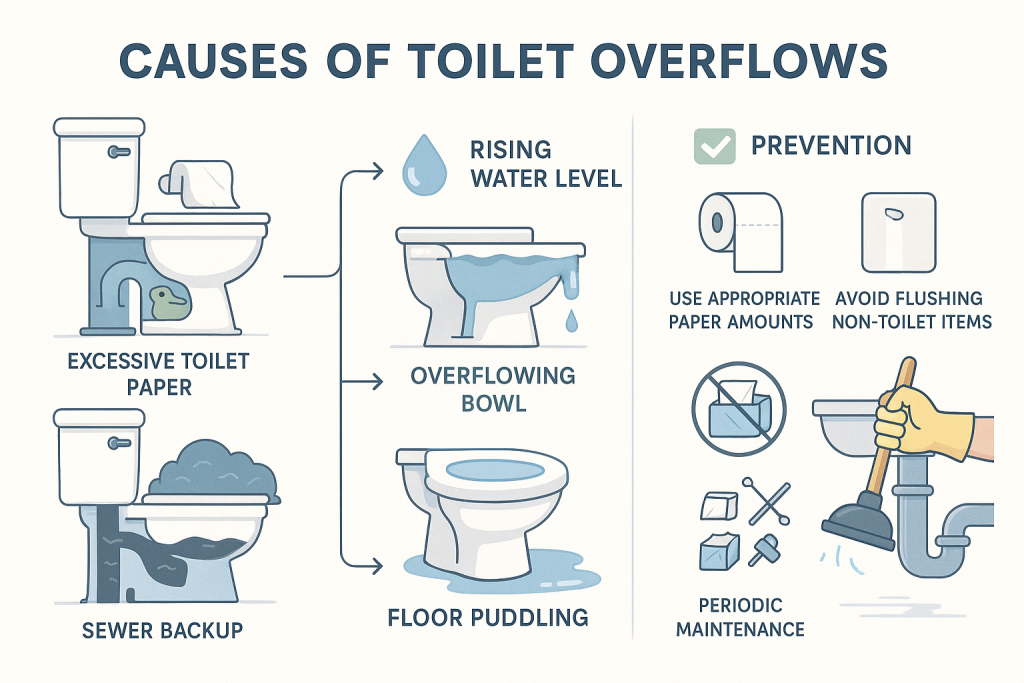
A toilet overflow often happens because of a blockage in the toilet, trap, drain line, or sewer system. Sometimes the cause is too much toilet paper. Other times, wipes, paper towels, hygiene products, toys, or other items may have been flushed. Even products labeled as flushable can cause a clog because they may not break down fast enough.
A clogged toilet may be simple if only one toilet is affected and water is not backing up anywhere else. In that case, a plunger may help. Use a flange plunger made for toilets, not a flat sink plunger. Place it over the drain opening in the bowl, create a seal, and use steady pressure. Avoid hard, messy plunging that splashes water around the bathroom.
If plunging does not work, a toilet auger or drain snake may help reach a deeper clog. A drain snake can break through or pull back material that is stuck past the bowl. Be careful with the tool because forcing it can scratch the toilet or push the clog deeper.
Do not pour random chemicals into the toilet. Strong drain products may damage pipes, create fumes, or splash back during plunging. They may also make cleanup more dangerous if the toilet continues overflowing.
A single clogged toilet is one type of problem. Multiple slow drains are another. If sinks, showers, tubs, or floor drains are also backing up, the blockage may be in the sewer line or main drain. That is when you should stop using all water in the home and call a plumber. Running more water can add pressure to the system and push wastewater into the bathroom.
| What You Notice | Possible Cause | What to Do |
|---|---|---|
| Water rises after one flush | Local toilet clog | Stop flushing, shut off the valve, try a plunger |
| Water keeps entering the bowl | Tank or flapper issue | Close the flapper and turn off the water supply |
| Other drains gurgle or back up | Drain line or sewer problem | Stop using water and call Emergency Plumbing Squad |
| Water leaks from the base | Seal, clog, or toilet connection issue | Avoid using the toilet and request repair |
| Overflow happens often | Deeper blockage or worn toilet parts | Schedule service before the next overflow |
Clean Up the Water Safely After a Toilet Overflow
After the overflowing toilet is under control, cleaning comes next. Fast cleaning can reduce damage and help prevent odors. The cleanup method depends on the type of water involved. Clean water from the tank is different from dirty water from the bowl. If waste is present, treat the area carefully and use protective gear.
Wear rubber gloves before touching towels, flooring, or fixtures. Use old towels, a mop, or a wet/dry vacuum to remove standing water. Do not use a regular vacuum. If the water touched rugs, bathmats, towels, or soft items, place them in a bag or wash them separately with hot water if they can be cleaned safely.
Disinfect hard surfaces after the water is removed. Clean the floor, toilet base, nearby walls, cabinets, door handles, faucet handles, and any other surfaces that may have been touched by overflow water. Keep the bathroom ventilated by turning on a fan or opening a window.
Watch for hidden moisture. Water can move under baseboards, into grout lines, below vinyl flooring, or around cabinet bases. If the overflow was large, check nearby rooms, hallways, and ceilings below the bathroom. A small stain, musty smell, or soft flooring may mean the water traveled farther than expected.
Use these steps after the water is stopped:
- Put on gloves before cleaning any affected area.
- Remove standing water with towels, a mop, or a wet/dry vacuum.
- Keep dirty towels and cleaning materials separate from other laundry.
- Disinfect the toilet base, floor, and nearby surfaces.
- Run a fan or dehumidifier to help dry the room.
- Watch for odors, stains, soft flooring, or damp baseboards.
- Call for plumbing service if the overflow involved sewage or keeps returning.
If the overflow was large or involved sewage, professional cleaning may be needed along with plumbing repair. Removing the water is only part of the process. The cause also needs to be fixed so the problem does not return.
Know When to Call a Plumber for an Overflowing Toilet
Some toilet overflow problems can be handled with quick action and a plunger. Others need a plumber right away. If the toilet keeps overflowing, the clog will not clear, or water is backing up into other fixtures, professional help is the safer choice.
Call a plumber if the shutoff valve does not stop the water, the toilet overflows after every flush, or the water level rises even when no one is using the toilet. You should also call if the toilet makes gurgling sounds, drains in the home are slow, or sewage appears in a tub, shower, or floor drain. These signs can point to a deeper drain or sewer issue.
A plumber can check the toilet, tank, valve, flapper, drain, and sewer line to locate the cause. The repair may involve clearing a clog, using a drain snake, replacing worn tank parts, fixing a valve, resetting the toilet, or addressing a deeper sewer blockage. If water is leaking from the base of the toilet, the toilet may need to be removed and resealed.
Emergency Plumbing Squad responds day or night because toilet overflows do not wait for normal business hours. A toilet overflowing after a flush, during a business day, in the middle of the night, or during a holiday can still cause damage if it is not handled quickly.
Businesses should act fast when a bathroom toilet overflows. Standing water and odors can affect customers, employees, and building safety. Homes also need quick service, especially when the bathroom is upstairs or near bedrooms, hallways, or finished spaces.
If you are not sure whether the problem is serious, call and describe what is happening. Emergency Plumbing Squad can help you decide the next step and send help when needed.
Prevent Future Toilet Overflows
Once the bathroom is cleaned and the toilet is working again, prevention matters. Many toilet overflow problems come from habits, worn parts, or drain issues that build up over time. A few simple changes can lower the risk of another mess.
Only flush toilet paper and waste. Keep wipes, paper towels, cotton products, dental floss, hygiene products, and small trash out of the toilet. These items can catch inside the drain line and create a clog. In homes with children, keep the toilet lid closed when possible to prevent toys or small objects from falling in.
Pay attention to the toilet tank. If you hear running water, ghost flushing, or hissing, the flapper, fill valve, or float may need attention. A worn flapper can allow water to move from the tank to the bowl when it should not. A fill valve problem can also cause the tank to refill incorrectly.
Slow flushing is another warning sign. If the bowl drains weakly or the water rises before going down, there may be a partial clog. Gurgling sounds in the toilet or nearby drain can also point to a developing blockage. Getting service early can prevent a full overflow.
Older toilets may also need repair if parts are worn, loose, cracked, or no longer sealing. In some cases, installation issues can cause leaks or movement around the base. If the toilet rocks, leaks, or often clogs, it should be checked by a plumber.
Regular plumbing service can help find problems before they become emergencies. Emergency Plumbing Squad can inspect the toilet, drain, and related lines, clear blockages, and repair parts that may cause another overflow.
Get 24/7 Help for a Toilet Overflow Emergency
A sudden toilet overflow can damage flooring, create odors, and make the bathroom unsafe to use. Acting quickly can make a big difference. Stop the water, avoid flushing again, clean what you can safely, and call for help when the problem does not clear or the water keeps coming back.
Emergency Plumbing Squad provides 24/7 emergency plumbing service for overflowing toilets, clogged drains, sewer backups, toilet repair, water heater concerns, and other urgent plumbing problems. Our team can help stop the damage, find the cause, and restore the bathroom as quickly as possible.
Call Emergency Plumbing Squad right away if your toilet overflows suddenly and you cannot stop the water, clear the clog, or tell where the problem is coming from. Fast help can protect your home or business and give you a clear plan for repair.