A steady supply of hot water depends on a water heater that can sense, control, and hold the right temperature. When the thermostat fails, your home may deal with lukewarm showers, sudden cold water, water that gets too hot, or a unit that will not heat at all.
For many homeowners, the problem starts with small changes. The shower cools off faster than usual. The reset button trips again. The temperature dial no longer seems accurate. These signs can point to a thermostat issue, a heating element problem, wiring trouble, sediment buildup, or a mix of several concerns.
Emergency Plumbing Squad helps homeowners respond fast when hot water problems interrupt daily life. With 24/7 plumbing support, the team can inspect your water heater, identify the source of the issue, and recommend safe repair or replacement options when needed.
Use the information below to understand how the thermostat works, how to check water heater thermostat issues and what symptoms to watch for.
How a Water Heater Thermostat Controls Hot Water
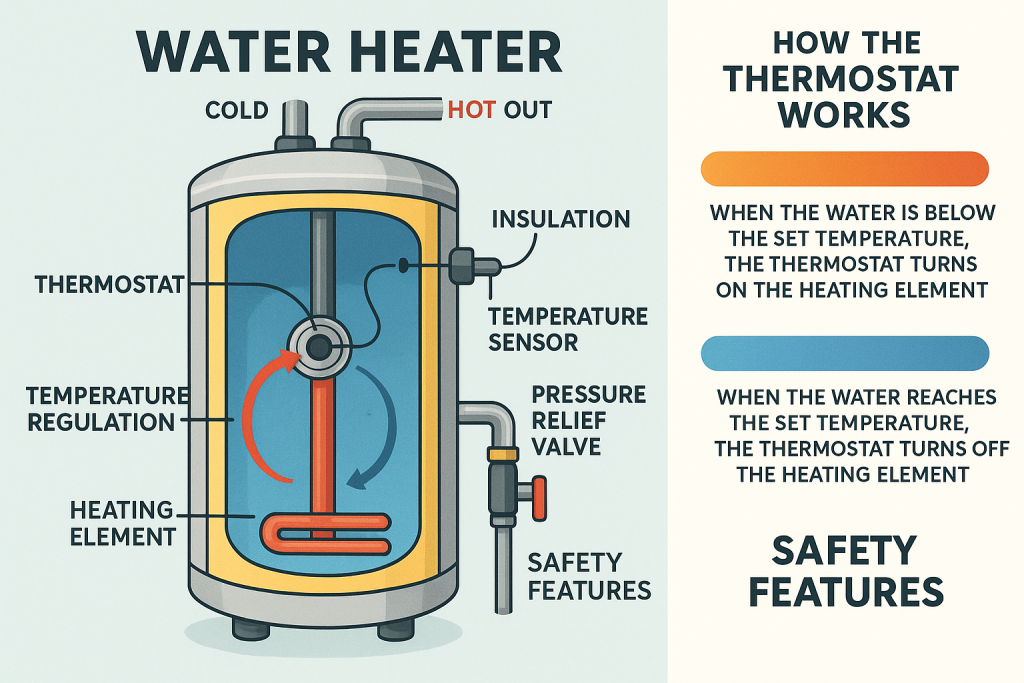
A water heater thermostat monitors water temperature and tells the heating parts when to turn on or off. In an electric water heater, the thermostat sends power to the heating element when the water cools below the set temperature. Once the water reaches the setting, it stops that call for heat.
Many electric water heaters have two thermostats. The upper thermostat manages the top portion of the tank and usually gets priority. Once the upper part reaches temperature, the lower thermostat helps heat the rest of the tank. If either part fails, hot water may become unreliable.
Gas water heaters work differently. Many use a gas control valve with a built-in thermostat. The valve senses temperature and controls the burner. Because gas systems involve fuel lines, combustion, and venting, homeowners should not attempt the same testing steps used on electric models.
A safe thermostat temperature is often around 120°F for many households. If it’s set too high, water may become unsafe at fixtures and may increase energy use. If it is set too low, showers may feel lukewarm and the tank may struggle to meet demand.
Common thermostat-related symptoms include:
- Hot water runs out quickly
- Water stays lukewarm even after the dial is adjusted
- Water gets too hot at faucets
- The reset button trips often
- The unit stops heating without warning
- Temperature changes from hot to cold during normal use
When these symptoms happen once, the cause may be a temporary power or setting issue. When they keep returning, schedule an inspection before the unit shuts down completely.
Signs Your Water Heating Thermostat May Be Bad
A bad thermostat often shows up as inconsistent hot water. You may get 10 minutes of hot water, then a sudden temperature drop. You may also notice that the water never reaches the temperature shown on the dial.
If the upper thermostat fails, the water heater may produce little or no hot water because the top of the tank does not heat properly. If the lower thermostat fails, you may get some hot water at first, but the supply runs out faster than normal. This is why short showers are often linked to lower tank heating problems.
A thermostat stuck in the on position can create water that is too hot. A stuck thermostat in the off position can keep the heating element from turning on. Both conditions need attention because overheating can create safety risks, while no-heat problems can leave the household without usable hot water.
Look for physical clues as well. Any visible damage around the access panel, wiring, thermostat face, or terminals should be taken seriously. Burn marks, melted insulation, corrosion, moisture, or a loose wire can point to electrical trouble.
| Symptom | Likely Cause | What It May Mean | Best Next Step |
| No hot water | Upper thermostat, breaker, or heating element issue | The top of the tank may not be heating | Turn off power and call for testing |
| Hot water runs out fast | Lower thermostat or lower element issue | Only part of the tank may be heating | Request thermostat and element inspection |
| Water is too hot | Stuck thermostat or setting problem | The unit may not be shutting off correctly | Lower setting and schedule service |
| Reset button keeps tripping | Electrical issue, overheating, or faulty control | Safety cutoff is being activated | Do not keep resetting without inspection |
| Lukewarm water | Sediment, thermostat setting, or worn parts | Heat transfer may be weak | Flush, inspect, and test the unit |
| Burn marks or corrosion | Wiring or moisture damage | Electrical safety concern | Stop use and call a licensed plumber |
Emergency Plumbing Squad can check the unit, confirm whether the thermostat is the source, and handle repair safely. If the tank is older, the inspection may also show whether replacement is a smarter choice than repeated repairs.
Main Causes of Thermostat Problems in Water Heaters
Thermostat problems often develop from age, wear, sediment, and electrical issues. A thermostat works through repeated heating cycles. Over time, contacts can wear down, sensors can lose accuracy, and controls may stop responding the way they should.
Sediment is another common cause. Minerals in hard water settle at the bottom of the tank. That buildup can cover heating parts, trap heat, and make the thermostat read the tank temperature incorrectly. The result may be overheating, weak hot water, or longer recovery time after showers, laundry, or dishwashing.
Electrical trouble can also affect performance. A loose connection, damaged terminal, tripped breaker, or power surge can interrupt the signal between the thermostat and heating element. In some cases, the thermostat is not the only part that needs repair. The wiring, reset switch, or element may also need service.
Moisture should never be ignored. If water reaches electrical controls, the risk of short circuits and unsafe operation increases. A leak near the tank, condensation, or rust around access panels needs prompt attention.
Thermostat issues are not always isolated. A full inspection may need to include the thermostat, heating element, wiring, breaker, tank condition, sediment level, and plumbing connections.
Homeowners with hard water, older water heaters, or frequent hot water demand should be especially alert. Preventive service can catch worn parts before a complete outage happens.
How to Check and Test Water Heater Thermostat Issues Safely
A visual check can help you decide whether to call for help, but thermostat testing requires caution. Electric water heaters carry dangerous voltage. Always turn power off at the breaker before removing access panels or touching any internal parts.
Start with the simple items. Check the thermostat setting. Someone may have moved the dial during cleaning, repair work, or inspection. Next, check whether the breaker has tripped. If it trips again after being reset, do not continue resetting it. Repeated trips can point to a wiring issue, faulty element, or unsafe condition.
A homeowner may also inspect the outside of the unit for leaks, rust, moisture, or burned smells. Remove no panels unless power is off. If you see damaged wires, scorch marks, or melted insulation, stop and call Emergency Plumbing Squad.
A multimeter can be used for a thermostat test on many electric water heaters, but only when the power is off and the person testing understands the model. Testing often involves checking continuity at the upper and lower thermostat terminals and comparing readings to the manufacturer’s instructions.
For homeowners who are not comfortable with electrical tools, there are still safe checks that do not require a multimeter:
- Confirm the temperature setting has not been changed.
- Check whether the breaker has tripped.
- Listen for unusual buzzing, popping, or hissing.
- Look for leaks, rust, or water near access panels.
- Track whether hot water runs out faster than normal.
- Call a licensed plumber if symptoms repeat.
Testing without a multimeter cannot confirm the thermostat condition with certainty, but it can help narrow down the problem. A plumber can measure the thermostat, test the heating element, inspect wiring, and decide whether repair or replacement is needed.
Repair, Replacement, and When to Call a Plumber
Some thermostat problems can be fixed with adjustment or part replacement. Others point to a larger water heater issue. The safest path depends on the age of the unit, the symptom, the condition of the wiring, and whether the tank shows signs of rust or leaking.
A water heater thermostat replacement is usually less expensive than replacing the whole unit, but it may not solve the problem if the heating element is also damaged. If sediment has caused overheating or tank corrosion, the plumber may recommend flushing, element replacement, anode rod inspection, or a new unit.
Call Emergency Plumbing Squad right away if you notice:
- No hot water after checking the breaker and setting
- Water that becomes dangerously hot
- A reset button that keeps tripping
- Burning smells, scorch marks, or melted wires
- Leaking near the tank or access panels
- A unit that is old, rusty, or making unusual noises
Emergency Plumbing Squad’s 24-hour service is built for urgent plumbing problems and stressful hot water failures. A trained plumber can diagnose the cause, explain the repair options, and help restore safe, steady hot water.
For many homes, fast service also prevents extra damage. A thermostat that overheats the tank can strain the heating element. A leak near electrical parts can create safety concerns. A worn control may leave the household without hot water when it is needed most.
Prevention Tips for More Reliable Hot Water
Regular maintenance helps water heaters last longer and perform better. A yearly inspection can catch loose wiring, worn thermostats, sediment buildup, and early corrosion before those issues interrupt your home.
Tank flushing is also helpful in homes with hard water. Removing sediment improves heat transfer and reduces strain on heating parts. If buildup returns quickly, a plumber may recommend filtration or a water treatment option based on local water conditions.
Keep the thermostat set at a safe level. Around 120°F works well for many homes, but household needs vary. If water feels too hot or not hot enough after adjustment, the thermostat may not be reading correctly.
Basic maintenance habits include checking for leaks, listening for new noises, monitoring hot water supply, flushing the tank as recommended, keeping the area around the unit clear, and scheduling service when performance changes.
Do not ignore small symptoms. Lukewarm water, short hot water supply, or frequent reset problems often get worse. A quick inspection can help avoid surprise breakdowns and costly plumbing repair.
Get Help with Water Heater Thermostat Issues Today
A water heater thermostat problem can affect comfort, safety, and daily routines. If your shower turns cold after a few minutes, the water gets too hot, or the unit stops heating, the thermostat may be only part of the issue. Wiring, sediment, heating parts, and age can all play a role.
Emergency Plumbing Squad is ready 24/7 to inspect, repair, and restore your hot water system. Whether you need thermostat testing, water heater repair, or advice on replacement, a licensed plumber can help you make the right call for your home.
Call Emergency Plumbing Squad today for fast service and dependable plumbing support when your hot water cannot wait.
