
A sudden drop in water pressure can interrupt almost everything you do at home or in a business. Showers slow down. Faucets barely run. Appliances may not work properly. In some cases, the issue is minor. In others, low water pressure can point to a broken pipe, hidden leak, main valve problem, pump failure, or supply issue that needs fast attention.
Knowing what to do if water pressure suddenly drops can help you respond without panic. Start by checking whether the problem affects one fixture or the whole house. Then look for visible leaks, inspect valves, and decide whether the issue may be connected to your plumbing system or the local water supply.
Emergency Plumbing Squad helps homeowners and businesses deal with urgent plumbing problems 24/7. If your water pressure has dropped, water is leaking, or you cannot find the cause, our team can help inspect the system, find the source, and restore normal water flow as quickly as possible.
Why Water Pressure Can Drop Without Warning
Water pressure can change for several reasons. Some causes are simple, while others need professional repair. A faucet aerator may be clogged. A showerhead may have mineral buildup. A shutoff valve may be partly closed. These are common issues that may affect one fixture or one area of the home.
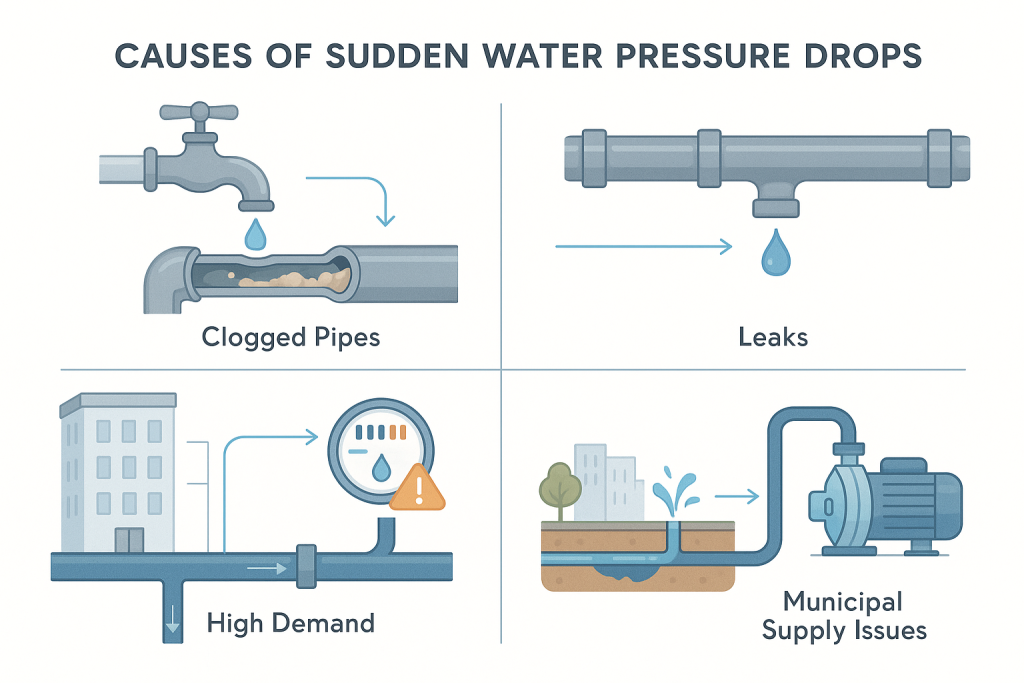
A larger pressure problem may affect the whole house. This can happen when the main valve is not fully open, a supply line is damaged, a pressure regulator is failing, or there are plumbing leaks somewhere in the system. If water escapes through a hidden leak, less water reaches your fixtures, which can make the pressure drop quickly.
Supply issues outside the property can also affect water flow. City maintenance, water main repairs, high local demand, or a neighborhood supply problem can all reduce pressure for a short time. If your neighbors are having the same issue, the cause may be outside your plumbing.
For properties with a well system, the problem may involve the pump, pressure tank, or related controls. A failing pump can reduce water flow throughout the house. A tank problem may cause pressure to rise and fall unevenly. If pressure suddenly changes and then comes back, the system may need inspection.
The best first step is to narrow down the source. Check whether the issue affects hot water, cold water, one room, or every fixture. That information helps determine whether you are dealing with a fixture problem, valve issue, supply concern, or leak.
Check Faucets, Valves, and the Main Water Line
Before assuming the worst, check a few simple areas. Start by turning on several faucets. Test sinks, showers, bathtubs, outdoor hose bibs, and any other fixtures you can safely access. If only one fixture has low pressure, the issue may be a clogged aerator, buildup inside the fixture, or a local valve problem.
If several fixtures have low water pressure, check your main shutoff valve. Make sure all shutoff valves that serve your home are fully open. A valve that is partly closed can reduce flow throughout the property. This can happen after a repair, inspection, appliance installation, or accidental bump.
Your main water valve is often located where the water line enters the building. It may be in a basement, crawl space, utility room, garage, or outside near the meter. Some homes have a round handle. Others have a lever. Turn carefully and avoid forcing an old or stuck valve. If it leaks, feels loose, or will not move, call a plumber.
You can possibly check a few visible pipes and connections too. Look under sinks, behind toilets, near the water heater, around the washing machine, and along exposed basement piping. Moisture, rust, dripping, or pooling water may point to a leak.
| What You Notice | Possible Cause | What to Try First |
|---|---|---|
| One faucet has weak flow | Clogged aerator or fixture issue | Clean the aerator or test another fixture |
| One shower has weak flow | Mineral buildup in showerhead | Clean or replace the showerhead |
| Whole house has low pressure | Main valve, supply issue, leak, regulator, or pump problem | Check valves and look for leaks |
| Hot water pressure is low | Water heater valve, tank issue, or hot line problem | Check hot-side valves and call for service |
| Pressure drops then returns | Pressure regulator, pump, or supply fluctuation | Track timing and request inspection |
| Water pressure dropped after repair work | Valve may not be fully open | Check your main shutoff valve and fixture valves |
If the simple checks do not restore normal flow, Emergency Plumbing Squad can inspect the system and find the cause.
Look for Water Leaks and Plumbing Leaks
Water leaks can cause a sudden drop in pressure because water is leaving the system before it reaches your fixtures. Some leaks are easy to see. Others stay hidden behind walls, under floors, below slabs, or underground near the main supply line.
Walk through the property and look for signs of moisture. Check cabinets, walls, ceilings, flooring, baseboards, and utility areas. Listen for running water when all fixtures are off. A hissing sound, dripping sound, or damp smell can point to a hidden leak.
You may also notice higher water bills, wet soil outside, moldy odors, or stains that were not there before. In a business, pressure problems may show up first in restrooms, kitchens, cleaning areas, or equipment that depends on steady flow.
Plumbing leaks should be handled quickly because water can spread into materials you cannot see. A small leak behind a wall may damage drywall, insulation, framing, flooring, or cabinets. If the leak is near electrical outlets or appliances, stay away from the area and wait for professional help.
Use this quick leak check if pressure drops:
- Make sure all faucets and water-using appliances are off.
- Listen for running water in walls, floors, or ceilings.
- Check under sinks and around toilets for moisture.
- Look near the water heater, washing machine, and dishwasher.
- Check the yard for soggy spots or pooling water.
- Watch your water meter if you know how to read it.
- Call a plumber if water appears or the source is hidden.
If you see active leaking, shut off the water if it is safe to do so. Emergency Plumbing Squad can help with leak detection, repair, and pressure problems that may be tied to hidden damage.
Understand Supply Issues, Regulators, and Pumps
Not every pressure issue starts inside the home. Sometimes the water supply is the cause. If work is being done on municipal lines or a water main has a problem nearby, pressure may drop across the block or neighborhood. Contact your water provider if neighbors are affected too.
If the issue is only at your property, the pressure regulator may be involved. A regulator helps control water pressure entering the building. When it fails, pressure may become too high, too low, or inconsistent. You may notice pressure changes at different times of day, banging pipes, weak flow, or sudden pressure shifts.
Homes with wells have extra parts to consider. The pump moves water into the plumbing system, while the pressure tank helps maintain steady flow. If either part fails, pressure may drop across the house. The water may start strong, then fade. It may also cycle on and off.
Water heater valves can also affect pressure. If only the hot side has low flow, the issue may involve the heater, tank, valve, sediment buildup, or hot water line. Do not open or adjust parts you are not familiar with. If water is leaking near the heater, call for service.
Your water pressure might suddenly change because of several connected factors. That is why it helps to track what is happening. Note whether the issue affects hot water, cold water, one fixture, one floor, or the entire house. Also note when the problem started and whether any plumbing work was recently done.
When pressure suddenly drops and basic checks do not explain it, professional inspection is the safest path.
When to Call Emergency Plumbing Squad
Some water pressure problems can wait for a scheduled appointment. Others need fast service. If low pressure is paired with water leaks, no water, flooding, sewer odors, damaged pipes, or unusual sounds, call for help right away.
A sudden drop that affects the whole house can be a sign of a main line issue, failed valve, hidden leak, pump problem, or broken pipe. Waiting may allow water damage to spread if a leak is involved. If pressure dropped after a freeze, storm, repair, or visible water event, the issue should be checked quickly.
Call Emergency Plumbing Squad if you notice:
- Water pressure drops across the whole property.
- No water comes from multiple fixtures.
- Water is leaking from walls, ceilings, floors, or pipes.
- The main valve or shutoff valve is stuck, leaking, or broken.
- A pressure regulator may be failing.
- A pump or tank problem is affecting a well system.
- Hot water pressure drops and the water heater shows signs of trouble.
- Water pressure changes after a plumbing repair or storm.
- You hear running water when all fixtures are off.
- Low pressure comes with water damage or wet areas.
Our team is available 24/7 to help identify the cause and restore service. We can inspect valves, pipes, regulators, pumps, supply lines, and fixtures so you are not left guessing.