
Rusty water from a faucet can be alarming, especially when it appears during a shower, while washing dishes, or when filling a glass from the sink. If the discoloration shows up only when you use hot water, your water heater may be the source.
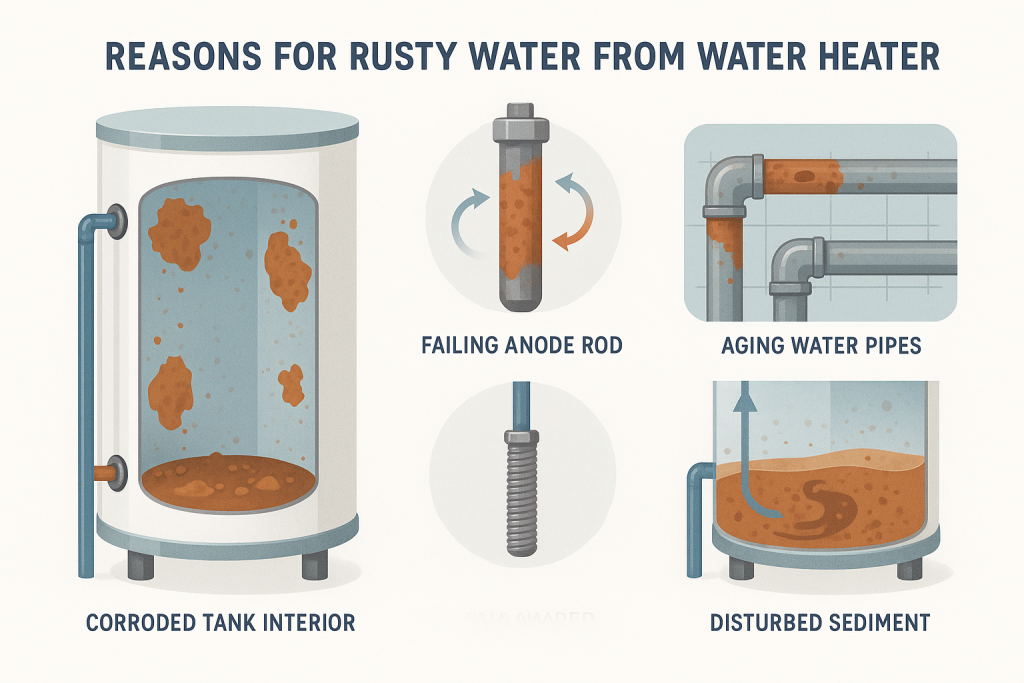
You’re asking why water heater produces rusty water. Rust in hot water can point to a worn anode rod, tank rust, sediment, internal corrosion, hard water minerals, or aging plumbing. Some problems are simple to fix with maintenance. Others may mean the tank is close to leaking or failing.
Emergency Plumbing Squad helps homeowners respond quickly when water heater problems affect comfort, water quality, and daily routines. If your hot water looks brown, orange, cloudy, or metallic, fast inspection can help you avoid larger repair costs and protect your plumbing system.
Why Rusty Water Often Starts in Your Water Heater
A water heater stores hot water inside a metal tank. The tank is built with protective lining and a sacrificial anode rod, but those parts can wear down over time. Once protection weakens, rust can form inside the tank or on connected metal parts.
Water heater rust happens when metal, oxygen, and moisture react. This process is called oxidation. Inside a heater, oxidation can create rust particles that break loose and move into the hot water supply. That is why you may see rusty water when opening a hot tap.
The anode rod plays a major role in preventing corrosion. This rod is designed to corrode before the tank does. In simple terms, it sacrifices itself to help protect the inside of the water heater. When the rod is too worn, the tank lining and metal surfaces become more vulnerable.
A corroded anode rod can cause rusty water to appear slowly. At first, the water may look slightly tinted. Later, it may turn brown, orange, or reddish. You may also notice a metallic taste, stains in sinks or tubs, or small flakes settling in basins.
Rusty hot water does not always mean the heater needs replacement, but it does mean the system needs attention. If your water heater tank starting to rust is caught early, a plumber may be able to replace the anode rod, flush sediment, and inspect the tank before the damage spreads.
How to Tell If Brown Water Comes from the Heater or Plumbing
Not all colored water comes from the water heater. Discolored water can also come from municipal water work, aging pipes, pressure changes, iron in the supply, or plumbing repairs that stirred up sediment. The pattern of the problem can help you narrow down the source.
Start by comparing hot and cold taps. Turn on the cold water first and let it run for a short time. Then test the hot water. If cold water runs clear but hot water looks rusty, the water heater is a likely source. If both hot and cold water look brown, the issue may be in the supply line or home plumbing.
Also check where the discoloration appears. If every hot tap in the home shows rusty water, the heater should be inspected. If only one faucet has colored water, the problem may be in that fixture, nearby pipe, or shutoff valve.
Pay attention to timing. Brown water that appears after a water main repair, hydrant flushing, or neighborhood plumbing work may come from the outside supply. Brown water that appears only after the heater has sat unused overnight may point to rust or sediment inside the tank.
Use these quick checks before calling for service:
- Test cold water and hot water separately at the same faucet.
- Check several fixtures, including a sink, tub, and laundry area.
- Note whether the water clears after running or stays rusty.
- Look for rust stains, leaks, or moisture around the heater.
- Ask neighbors if they have the same water discoloration.
- Record when the problem started and whether it happens daily.
If the issue is limited to hot water, Emergency Plumbing Squad can inspect the heater, check the anode rod, assess the tank, and recommend the right repair.
Main Causes of Rust inside Water Heaters
Rust inside water heaters usually develops from age, worn parts, water chemistry, and poor maintenance. The earlier you find the cause, the better chance you have of avoiding tank failure.
| Cause | What You May Notice | Why It Matters | Best Next Step |
| Worn anode rod | Gradual rusty water from hot taps | The tank loses corrosion protection | Inspect and replace the rod |
| Internal corrosion | Rusty water, flakes, or stains | The tank may be weakening | Schedule a plumber inspection |
| Sediment buildup | Cloudy, gritty, or brown water | Minerals trap heat and speed wear | Drain and flush the heater |
| Hard water minerals | Scale, reduced heating, repeated discoloration | Mineral deposits strain the system | Consider filtration or treatment |
| Aging tank | Rust near base, leaks, poor hot water | Replacement may be needed | Compare repair and replacement options |
| Rusty plumbing | Colored water from hot and cold taps | Pipes may be corroding | Inspect plumbing lines and supply |
A failing anode rod is one of the most common causes. Anode rods wear out naturally. If they are not checked or replaced, the tank becomes the next target for corrosion. Many homeowners do not know this part exists until rusty water appears.
Sediment can also create problems. Minerals and iron settle at the bottom of the tank. When hot water is used, those particles can stir and travel through faucets. Sediment can also reduce heating performance, which makes the heater work harder.
Hard water speeds up many of these issues. Minerals collect inside the tank and around heating parts. Over time, the extra buildup can damage the heater and increase repair needs.
Age matters as well. Many tank water heaters last about 8 to 12 years, depending on maintenance, installation, usage, and water quality. A newer heater with rusty water may only need service. An older heater with rust, leaks, and poor performance may need replacement.
How Rust Affects Water Quality, Fixtures, and Appliances
Rusty water affects more than appearance. It can stain sinks, tubs, toilets, laundry, and tile. It can leave orange marks around drains and make hot water smell or taste metallic.
Rust particles can also move through fixtures and appliances. Over time, they may clog faucet aerators, showerheads, washing machine screens, dishwasher inlets, and small valves. When buildup reaches these parts, water flow can slow down and appliances may work less efficiently.
For most healthy adults, small amounts of rust in water are usually not the same as a confirmed health hazard. Still, rusty water should not be ignored. Discoloration may come with bacteria, old sediment, heavy mineral content, or corrosion inside the tank. Families with infants, older adults, or people with sensitivities should treat persistent discoloration with care and request professional guidance.
Rust is also a warning about the condition of the heater. If internal corrosion has advanced, the tank may be at risk of leaking. A leak from a water heater can damage flooring, drywall, framing, storage items, and nearby electrical components.
Watch for these signs that rust may be affecting more than water color:
- Orange or brown stains in sinks, tubs, or laundry
- Metallic taste from hot water
- Small flakes or grit in the water
- Reduced hot water pressure
- Rust or moisture around heater fittings
- Water pooling near the heater base
- Hot water that runs out faster than normal
If rusty water appears along with leaks, pressure changes, or poor heating, call Emergency Plumbing Squad right away. Those symptoms may point to a heater that needs urgent repair or replacement.
What to Do When Hot Water Turns Rusty
When hot water turns rusty, start with safe steps. Do not ignore the issue, and do not assume it will clear up on its own. A brief discoloration after local water work may pass, but recurring rusty hot water needs inspection.
First, test whether the issue is hot water only. If cold water is clear and hot water is rusty, avoid using large amounts of hot water until the heater has been checked. Running rusty hot water through appliances may spread particles into screens and valves.
Next, look around the heater. Do not touch electrical parts or wet areas near wiring. Check for visible rust, moisture, puddles, or signs of leaking around the base, drain valve, top connections, and relief valve.
Some heaters may need a drain and flush. Flushing can help remove sediment and rust particles from the tank. However, if the heater is old or the drain valve is corroded, forcing a flush can create new leaks. When the tank has not been serviced in years, it is safer to have a plumber handle the process.
The anode rod may need replacement if it is depleted. Replacing anode rods at the right time can help slow corrosion and protect the tank. If the tank itself is already rusted through, a rod replacement will not fix the damage.
Emergency Plumbing Squad can inspect the heater, drain the tank if appropriate, replace worn parts, check for leaks, and explain whether repair or replacement makes sense.
Get Fast Help for Water Heater Rust Problems
Rusty water is a sign that your water heater or plumbing system needs attention. It may come from a worn anode rod, sediment, hard water, internal corrosion, aging pipes, or a failing tank. The faster you identify the source, the easier it is to protect your home from stains, leaks, appliance damage, and surprise hot water loss.
Emergency Plumbing Squad is available 24/7 for water heater repair, thermostat inspection, rust concerns, and replacement guidance. If your hot water looks brown, smells metallic, leaves stains, or comes with leaks near the heater, schedule service before the problem spreads.
Call Emergency Plumbing Squad today for fast help with rusty water, water heater repair, and reliable plumbing support for your home.