Low hot water pressure can make daily routines harder than they need to be. A weak shower, slow kitchen sink, or dishwasher that takes too long to fill can quickly turn into a real headache. When cold water runs fine but hot water comes out slowly, the problem is usually tied to the hot side of the plumbing system.
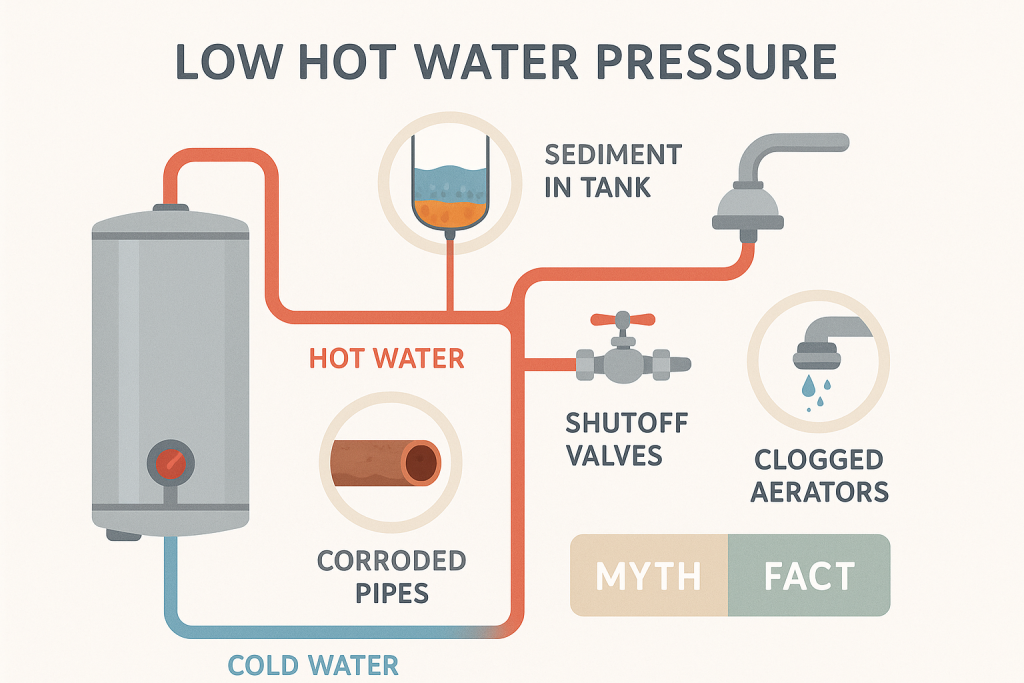
The cause may be simple, such as a partially closed valve or a clogged showerhead. It may also point to sediment inside the water heater, mineral deposits in water lines, corroded pipes, a faulty tempering valve, or a pressure regulator problem.
Emergency Plumbing Squad helps homeowners deal with water pressure issues, water heater repair needs, and urgent plumbing problems 24/7. If your hot water pressure drops suddenly, keeps getting worse, or comes with leaks or rusty water, fast service can prevent further damage and restore comfort sooner.
Use the steps below to understand what may be causing the problem and how to fix low hot water pressure before calling a plumber.
How Low Hot Water Pressure Affects Your Home
Low hot water pressure usually appears in one of three ways. It may affect only one fixture, such as a shower or kitchen faucet. It may affect every hot tap in the house. Or it may appear suddenly after plumbing work, water heater service, a leak, or a pressure change.
The first step is to compare hot and cold water. If cold water pressure is normal but hot water is weak, the issue is likely tied to the water heater, hot water line, fixture, valve, or hot-side piping. If both hot and cold pressure are low, the problem may involve the main supply, pressure regulator, whole-home plumbing, or municipal water service.
Low water pressure can affect comfort and efficiency. Showers take longer. Washing dishes becomes harder. Laundry may not run as expected. Appliances that depend on steady hot water may fill slowly or perform poorly.
Weak hot water flow can also be an early sign of a larger plumbing issue. A leak, blocked pipe, failing valve, or corroded connection can reduce pressure while damaging the home behind walls, under floors, or near the water heater.
Start by noting where the problem happens.
Is hot water pressure low but cold fine in the shower?
Is hot water pressure low but cold fine in the kitchen sink?
Is the issue only in one tap, or is every fixture affected?
These details help narrow the source and save time during repair.
Emergency Plumbing Squad’s pressure-drop service page notes that water pressure can change for simple reasons, such as clogged aerators, or for problems that need professional repair. The company also states that its team can inspect the system, find the source, and restore normal water flow as quickly as possible.
Sediment Build-Up and Water Heater Problems
A water heater is one of the most common places to find the cause of low hot water pressure. Over time, minerals, rust particles, and debris can collect inside the tank. This sediment build-up can restrict movement through the tank, clog fittings, and reduce hot water flow.
Hard water makes the problem more likely. Calcium and magnesium can settle inside the hot water tank and collect around valves, fittings, and heating components. As buildup increases, the water heater may work harder while delivering weaker pressure.
Sediment can also move beyond the tank. When hot water travels through the plumbing system, loosened particles can reach faucet aerators, showerheads, appliance screens, and small valves. These pieces can block flow and make one fixture seem weaker than the rest.
Common signs of sediment or water heater trouble include:
- Hot water coming out slowly at several fixtures
- Rumbling, popping, or crackling sounds from the water heater
- Cloudy, rusty, or gritty hot water
- Hot water that runs out faster than normal
- Pressure that improves briefly, then drops again
- A drain valve that clogs during maintenance
If you are only getting 5 minutes of hot water, that may be a separate but related problem. Short hot water supply can come from sediment, a failing dip tube, a thermostat issue, a damaged heating element, or an undersized unit. Low pressure and short hot water supply together deserve professional inspection.
Flushing the tank may help if sediment is the cause. However, older units or tanks that have not been maintained in years can develop corroded drain valves or weak tank walls. If you see rust, leaks, or moisture near the heater, call a plumber before attempting maintenance.
Emergency Plumbing Squad provides water heater repair and installation support, and its site identifies water heater repair as one of its common emergency services.
Water Lines, Valves, and Pressure Issues
When the water heater is not the clear cause, inspect the path hot water takes through the home. A single closed valve, kinked connector, or restricted water line can create pressure issues at one fixture or across several areas.
Valves are a good place to start. A valve near the water heater, under a sink, behind a washing machine, or near a shower may be partially closed. This often happens after repairs, cleaning, installation work, or a quick shutoff during an emergency.
Turn accessible valves gently counterclockwise to confirm they are open. Do not force stuck valves. An old valve may break or start leaking if handled too aggressively.
A pressure regulator can also affect water pressure. If the regulator is set too low or failing, the whole house may have weak flow. This usually affects hot and cold water. If only hot water is low, the regulator is less likely to be the main cause, though a plumber may still test it during diagnosis.
| Problem Area | What You May Notice | Likely Cause | Best Next Step |
| Water heater valve | Low pressure at all hot taps | Valve partially closed | Open gently or request service |
| One fixture | Low hot water pressure only in one tap | Clogged aerator, valve, or supply hose | Clean fixture parts and check shutoff |
| Whole house | Hot and cold water both weak | Pressure regulator or main supply issue | Call for pressure testing |
| Hot side only | Cold water fine, hot water slow | Heater, hot line, valve, or sediment issue | Inspect hot-side plumbing |
| After repairs | Sudden pressure drop | Closed valves or debris in lines | Check valves and flush fixture screens |
| Older plumbing | Gradual decline in flow | Corrosion or mineral buildup | Schedule plumbing inspection |
Flexible supply hoses can also cause trouble. A hose under a sink or behind an appliance may become kinked or pinched. Even a small bend can reduce flow. If the hose is damaged, replace it instead of trying to reshape it.
Water lines can also be restricted by poor installation. Too many tight bends, undersized pipe, or old patchwork repairs can slow flow. If pressure has been poor since remodeling or fixture installation, the layout may need review.
Corroded Pipes, Mineral Deposits, and Fixture Blockages
Older plumbing can slowly lose capacity. Galvanized steel pipes, in particular, can corrode from the inside. As corrosion grows, the opening inside the pipe narrows and water flow drops. Rust can also break loose and clog nearby fixtures.
Mineral deposits cause similar problems. Hard water leaves deposits inside pipes, faucets, showerheads, and valves. These deposits build up gradually, so many homeowners do not notice the decline until hot water is coming out slowly throughout the home.
Fixture blockages are common and often easy to spot. If one shower or faucet has low pressure, remove and clean the aerator or showerhead. White crust, grit, rust flakes, or debris can block small openings and reduce flow.
Soaking removable parts in white vinegar may help loosen mineral deposits. Scrub with a small brush, rinse, and reinstall. If pressure returns, the fixture was likely the problem. If it stays weak, the restriction may be deeper in the line or shutoff valve.
Corroded pipes can also affect water quality. Brown, orange, or metallic-tasting water may point to rust in the system. If discoloration appears only from hot taps, the water heater may be involved. If both hot and cold water are affected, pipes or the main supply may be the source.
Do not ignore sudden drops, especially when paired with damp spots, musty smells, stains, or bubbling paint. Weak water pressure and unexplained moisture can be signs that help is needed from an emergency plumber, especially when problems are hidden behind walls or under flooring.
Safe DIY Checks to Improve Hot Water Flow
Some low hot water pressure fixes are safe for homeowners to try. Others require professional plumbing tools and experience. Start with visible, low-risk checks before opening plumbing lines or working near the water heater.
Try these steps first:
- Run only the hot water at the affected fixture for one minute and watch whether the flow changes.
- Compare the same fixture using cold water.
- Check other hot taps to see if the issue is local or whole-home.
- Confirm accessible valves are fully open.
- Remove and clean faucet aerators and shower heads.
- Inspect supply hoses for kinks, bends, or damage.
- Look around the water heater for leaks, rust, or moisture.
- Note any noises, discolored water, or sudden changes.
If the problem is isolated to one fixture, cleaning the aerator, shower head, or supply line screen may solve it. If multiple hot fixtures are affected, the issue is more likely in the heater, hot water line, or shared valve.
Be careful with water heater maintenance. Draining or flushing a tank can help remove sediment, but it can also expose problems in older systems. A corroded drain valve may leak after being opened. A tank with internal rust may not respond well to flushing.
If you suspect a faulty tempering valve, call a plumber. This valve mixes hot and cold water to control outlet temperature. When it fails, it can reduce hot water flow or create inconsistent temperatures. It should be diagnosed and adjusted by a professional.
Avoid using harsh chemical cleaners in plumbing lines unless a plumber recommends them for your system. Chemicals can damage older pipes, seals, fixtures, or appliance connections. Mechanical inspection and targeted repair are safer for long-term performance.
When to Call Emergency Plumbing Squad
Call a plumber when low hot water pressure affects the whole home, appears suddenly, returns after basic cleaning, or comes with signs of damage. Fast help is especially important if you see leaks, rusty water, water heater noises, or pressure changes after a repair.
A professional plumber can test pressure, inspect valves, check the regulator, review the water heater, flush sediment if appropriate, and locate hidden leaks or blocked lines. The goal is not only to improve flow, but to prevent repeat problems.
Professional service is the right choice when:
- Hot water pressure is low all of a sudden
- Hot water pressure is low but cold is fine throughout the house
- Low pressure appears after water heater installation or repair
- You see puddles, leaks, rust, or moisture near the heater
- The water heater makes rumbling or popping sounds
- Multiple fixtures have weak hot water flow
- A valve is stuck, corroded, or leaking
- You have older galvanized pipes or recurring debris
Emergency Plumbing Squad can identify whether the problem comes from the heater, plumbing lines, valves, fixtures, or pressure controls. If repair is practical, the plumber can explain the needed work. If the water heater or pipes are near failure, the team can discuss replacement options.
Restore Hot Water Pressure with Fast Plumbing Help
Low hot water pressure may start as a small inconvenience, but it can signal sediment, mineral deposits, closed valves, corroded pipes, leaks, water heater trouble, or pressure regulator issues. The right fix depends on where the pressure drops and whether the problem affects one fixture, the hot side only, or the whole home.
Start with simple checks, such as cleaning shower heads, opening valves, and comparing hot and cold water. If pressure does not improve, avoid guessing. A missed leak or failing water heater can lead to larger repair costs.
Emergency Plumbing Squad is available 24/7 to help restore hot water flow, diagnose plumbing problems, and provide fast support when your home needs reliable service. Call today to schedule help with low hot water pressure and get your plumbing system back to normal.